
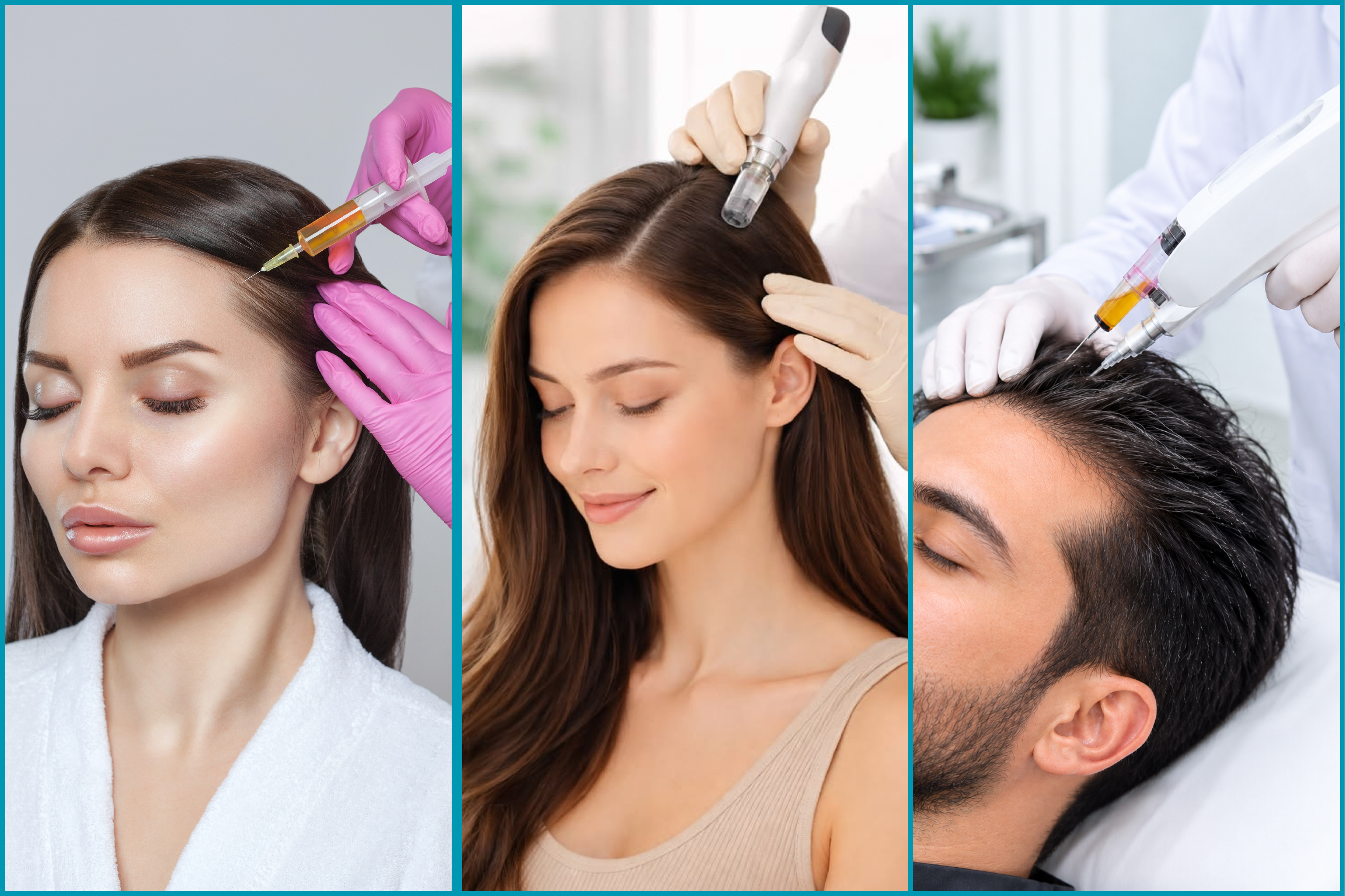
PRP Hair Treatment
PRP Hair Treatment is a non-surgical procedure that uses platelet-rich plasma prepared from a small sample of your own blood. It is injected into selected areas of the scalp to support existing hair follicles and improve the appearance of thinning hair.
What Is PRP Hair Treatment?
During PRP Hair Treatment, a small amount of blood is collected and placed into a centrifuge. This process separates the platelet-rich plasma from the other blood components. The prepared plasma is then carefully injected into targeted areas of the scalp.
PRP contains naturally occurring growth factors associated with tissue repair and cellular activity. Treatment suitability, the number of sessions and expected outcomes depend on the cause and extent of hair thinning, scalp condition and individual response.
Benefits of PRP Hair Treatment
Non-Surgical Procedure
The treatment does not require surgical incisions or a hair transplant procedure.
Uses Your Own Plasma
Platelet-rich plasma is prepared from a small sample of the patient’s own blood.
Targets Thinning Areas
PRP is administered to selected scalp areas according to the treatment plan.
Minimal Downtime
Most patients can return to their normal activities shortly after treatment.
PRP Hair Treatment FAQs
Find answers to common questions about PRP Hair Treatment, treatment sessions, suitability, recovery and results.
PRP Hair Treatment uses platelet-rich plasma prepared from a sample of your own blood. After separation in a centrifuge, the plasma is injected into selected areas of the scalp to support existing hair follicles.
PRP may be considered for some adults experiencing early-stage hair thinning or certain forms of hair loss. A professional assessment is required because results depend on the underlying cause and the condition of the existing hair follicles.
The number and frequency of sessions vary according to the cause of hair thinning, scalp condition and individual response. An initial series followed by maintenance sessions may be recommended after your assessment.
Downtime is generally minimal. Temporary scalp tenderness, redness, swelling, bruising or mild headache may occur. Patients should follow the aftercare instructions provided by their practitioner.
Hair growth occurs gradually, so any visible changes may take several months. Results vary between individuals and cannot be guaranteed. Progress may be assessed using scalp examinations and photographs.