
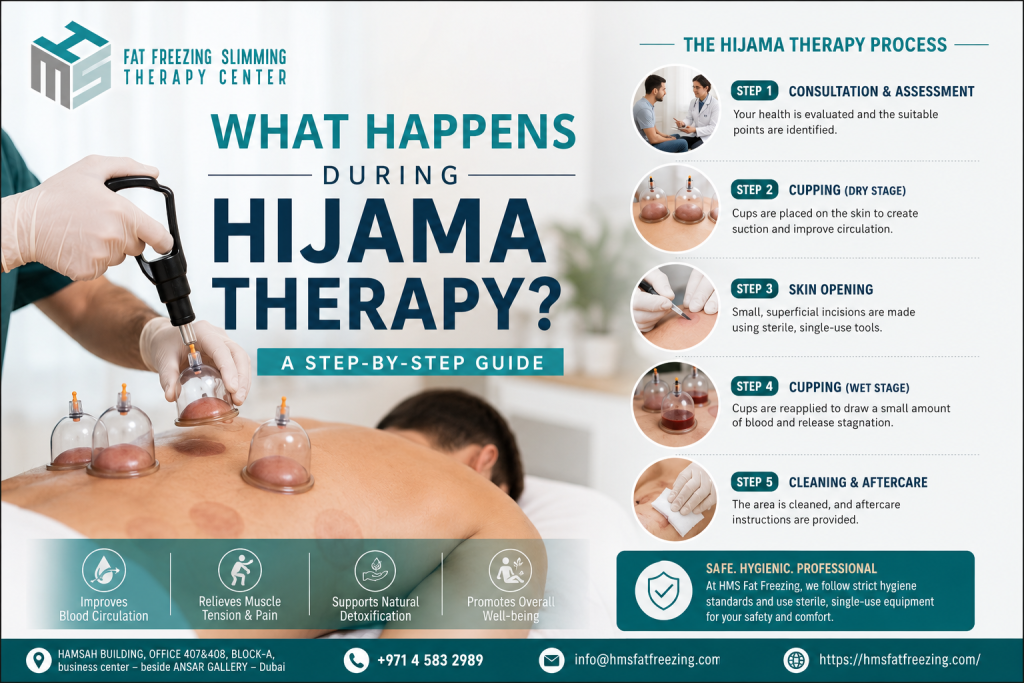
What Happens During a Hijama Therapy? A Step-by-Step Guide from HMS Fat Freezing
For someone trying Hijama for the first time, the treatment can look more complicated than it actually is. You may have seen photographs of circular marks on the back, heard terms such as wet cupping and dry cupping, or wondered exactly when the small skin incisions are made.
Understanding the sequence beforehand makes the experience easier to evaluate realistically.
Hijama Therapy is a traditional form of wet cupping in which suction is applied to selected areas of the skin, followed in some techniques by very small superficial skin openings and a second application of cups. The purpose and cultural interpretation of Hijama vary, but from a modern safety perspective, the most important factors are practitioner competence, hygiene, appropriate screening, sterile or single-use equipment, and realistic expectations.
The U.S. National Center for Complementary and Integrative Health describes cupping as a traditional practice used in several parts of the world. It distinguishes dry cupping, where the skin is not pierced, from wet cupping, where the skin is pierced and some blood is drawn into the cup. It also notes that research on cupping remains limited and that stronger evidence is needed for many claimed benefits.
At HMS Fat Freezing in Dubai, Hijama is offered as part of its wellness services, with the clinic describing its approach as professional and hygiene-focused.
Contact HMS Fat Freezing for Hijama Therapy
This guide focuses on a question many first-time clients ask: What actually happens during Hijama Therapy from the moment you arrive until you leave?
What Is Hijama Therapy?
Hijama is commonly described as wet cupping.
During Hijama Therapy, a practitioner creates negative pressure inside cups placed on selected parts of the body. Depending on the method being used, the cups may be removed after an initial suction stage, the skin may then be opened superficially with sterile single-use instruments, and the cups may be reapplied briefly to draw a small amount of blood.
This differs from dry cupping, which uses suction alone.
The key point is that Hijama is not simply “placing cups on the back.” A properly managed session includes assessment, site selection, infection-control measures, controlled suction, observation of the skin response, aftercare, and guidance on what symptoms are normal afterward.
Contact HMS Fat Freezing for Hijama Therapy
What Happens Before Hijama Therapy Starts?
A responsible session begins before any cup touches the skin.
1. Initial Consultation and Health Screening
The practitioner should first ask why you are considering Hijama Therapy and review relevant health information.
This may include questions about:
- current medications;
- blood-thinning medicines;
- previous cupping experience;
- skin conditions;
- tendency to bleed or bruise;
- recent illness;
- pregnancy;
- anemia or history of low blood count;
- allergies;
- recent surgery;
- chronic health conditions.
This screening is not a formality.
Wet cupping involves breaking the skin, which means the practitioner needs to consider bleeding risk and infection risk before starting.
NCCIH notes that cupping may cause skin discoloration, scarring, burns or infection, and that repeated wet cupping has rarely been associated with anemia from blood loss.
If you have a medical condition or take medication that affects bleeding or healing, it is sensible to discuss Hijama Therapy with your healthcare professional first rather than treating cupping as a replacement for medical care.
Contact HMS Fat Freezing for Hijama Therapy
2. Discussion of Your Goals
People book cupping for different reasons.
Some are interested in muscle relaxation. Others have heard about traditional uses for back discomfort, stiffness or general wellness.
This is where expectations should be clarified.
A responsible practitioner should not promise that Hijama Therapy cures diseases or guarantees a specific medical outcome.
Research into cupping exists, including studies for pain, but NCCIH says much of the evidence is low quality and that there is not enough strong research to draw firm conclusions for many conditions.
That distinction matters.
A wellness treatment should complement appropriate medical care, not replace diagnosis or evidence-based treatment when those are needed.
Step 1: Preparing the Treatment Area
Once the consultation is complete, the practitioner identifies the body areas to be treated.
Common areas may include the upper back, shoulders, lower back or other sites depending on the reason for the session and the practitioner’s assessment.
The skin should be examined for:
- open wounds;
- infections;
- severe irritation;
- active eczema or psoriasis;
- recent burns;
- unusual lesions.
The treatment area is then prepared using appropriate hygiene procedures.
This stage is particularly important for Hijama Therapy because the skin may later be opened superficially.
Contact HMS Fat Freezing for Hijama Therapy
Step 2: First Cup Placement
The practitioner places cups on selected areas and creates suction.
Modern clinics usually generate suction mechanically rather than using an open flame.
As air is withdrawn from the cup, the skin rises slightly inside it.
What Does the Suction Feel Like?
Most people describe it as:
- tightness;
- pulling;
- pressure;
- mild warmth;
- a stretching sensation.
The feeling should be noticeable, but severe pain is not the objective.
If suction feels excessively painful, tell the practitioner immediately.
During this first stage of Hijama Therapy, the practitioner monitors the skin and adjusts suction if necessary.
Contact HMS Fat Freezing for Hijama Therapy
Step 3: The Initial Cups Are Removed
After a short period, the first cups are removed.
The skin may already look pink, red or darker in circular areas.
These marks occur because of the local effects of suction on the skin and superficial blood vessels.
They are not proof that “toxins” have been removed.
That is an important distinction because online descriptions sometimes use dramatic explanations that are not well supported scientifically.
NCCIH confirms that temporary circular marks are common after cupping and advises people to mention recent cupping to healthcare professionals so the marks are interpreted correctly.
Contact HMS Fat Freezing for Hijama Therapy
Step 4: Superficial Skin Opening in Wet Hijama
This is the stage that separates wet Hijama Therapy from ordinary dry cupping.
The practitioner makes very small, superficial openings in the skin using sterile single-use equipment.
This should not involve deep cutting.
Clients often expect this stage to be much more painful than it actually feels. Because the skin has already been under suction, many people describe only brief scratching, stinging or mild discomfort.
However, pain tolerance varies.
Why Hygiene Matters So Much Here
Once the skin barrier is broken, infection-control standards become especially important.
NCCIH warns that cupping equipment contaminated with blood can potentially spread bloodborne infections such as hepatitis B or hepatitis C if equipment is reused without proper sterilization.
For that reason, anyone considering Hijama Therapy should feel comfortable asking:
- Are the blades or lancets single-use?
- Are gloves changed appropriately?
- Are cups single-use or properly processed between clients?
- How is contaminated material disposed of?
These are reasonable healthcare questions, not signs of distrust.
Step 5: Second Cup Application
After the superficial skin openings are made, cups are placed over the same areas again.
Suction causes a small amount of blood and fluid to collect inside the cup.
The cups remain in place for a controlled period while the practitioner observes the response.
This is often the part people associate most strongly with Hijama Therapy, but it is only one stage of the complete process.
The amount of blood should not be used as a measure of whether the treatment “worked.”
More blood does not automatically mean a better treatment.
An experienced practitioner should prioritize controlled technique rather than trying to maximize blood removal.
Step 6: Removing the Cups and Cleaning the Skin
The cups are then carefully removed.
The practitioner cleans the treated areas and checks the skin.
Because the sites have been opened superficially, gentle cleaning and infection prevention are important.
Depending on the clinic’s protocol and the condition of the skin, a suitable dressing or aftercare product may be used.
This is also the point when the practitioner should explain what changes are expected over the next several hours.
What Does Hijama Therapy Feel Like?
The experience varies considerably.
Some clients find suction relaxing. Others notice more pressure.
The superficial skin-opening stage may cause brief stinging.
After Hijama Therapy, common sensations can include:
- mild tenderness;
- tightness;
- warmth;
- sensitivity;
- temporary soreness.
Circular discoloration can remain visible for several days.
These marks may look dramatic even when discomfort is mild.
However, worsening redness, significant swelling, pus, persistent bleeding, severe pain or fever should not simply be assumed to be normal aftercare symptoms. Those signs warrant medical attention.
Contact HMS Fat Freezing for Hijama Therapy
What Happens Immediately After the Session?
The practitioner will usually allow you a few minutes to sit comfortably before leaving.
Some people feel completely normal immediately afterward.
Others may feel temporarily tired or light-headed, particularly if they arrived dehydrated, anxious or had not eaten appropriately beforehand.
The safest response is not to rush.
If you feel dizzy after Hijama Therapy, tell the practitioner before standing up or leaving.
Hijama Therapy vs Dry Cupping vs Massage
| Feature | Hijama Therapy | Dry Cupping | Massage |
|---|---|---|---|
| Uses suction cups | Yes | Yes | No |
| Skin opened | Yes, in wet cupping | No | No |
| Blood drawn | Small amount | No | No |
| Typical skin marks | Common | Common | Usually minimal |
| Infection-control importance | Very high | High | Standard |
| Main sensation | Suction + brief superficial skin opening | Suction | Pressure/manipulation |
| Recovery | Usually short | Usually short | Usually immediate |
| Research evidence | Limited/mixed depending on condition | Limited/mixed | Varies by condition |
None of these treatments should automatically be considered “better.”
They use different techniques and may appeal to different people.
Massage, for example, uses manual pressure rather than suction or skin penetration. NCCIH notes that massage generally has a low risk of harmful effects, although rare serious complications have been reported.
What Should You Do Before a Hijama Session?
Preparation should be simple rather than extreme.
Stay Hydrated
Normal hydration is sensible before any wellness treatment.
You do not need to force unusually large quantities of water.
Avoid Arriving Exhausted
If possible, avoid scheduling your first Hijama Therapy session immediately after intense exercise, long-distance travel or significant sleep deprivation.
Tell the Practitioner About Medication
This is particularly important for medicines that affect bleeding or clotting.
Never stop prescribed medication simply because you plan to have cupping. Discuss medication changes with the healthcare professional who prescribed them.
Wear Practical Clothing
Loose clothing makes it easier to expose the required treatment area without unnecessary discomfort.
Hijama Therapy Aftercare
Aftercare deserves as much attention as the treatment itself.
Keep the Area Clean
Follow the clinic’s instructions for caring for the treated skin.
Because wet Hijama Therapy creates superficial openings, avoid unnecessary touching with unwashed hands.
Avoid Aggressive Scrubbing
Do not immediately scrub the circular marks or use harsh exfoliating products.
Allow the skin to settle.
Be Careful With Heat
Very hot showers, steam rooms or saunas may irritate recently treated skin.
Your practitioner can advise you on when normal activities can be resumed.
Monitor the Skin
Some redness and circular discoloration are expected.
Signs of possible infection should not be ignored.
Pros and Cons of Hijama Therapy
Potential Advantages
Traditional wellness practice: Hijama has a long history in several cultures and remains meaningful to many clients.
Non-drug approach: It does not rely on medication.
Sessions are relatively short: Treatment does not generally require prolonged downtime.
Some evidence for pain-related uses: Research has explored cupping for musculoskeletal pain, although evidence quality remains limited.
Can be incorporated into a wider wellness routine: Some clients use it alongside appropriate exercise, physiotherapy, sleep management or medical care.
Potential Disadvantages
Temporary marks: Circular discoloration may remain visible for days.
Skin irritation: Tenderness or sensitivity can occur.
Bleeding: Wet Hijama Therapy intentionally involves superficial bleeding.
Infection risk: Poor technique or contaminated equipment can introduce infection.
Not appropriate for everyone: Individual health conditions may make wet cupping unsuitable.
Evidence is not strong for many claims: Cupping should not be marketed as a proven cure for unrelated diseases.
Who Should Be Especially Cautious?
Individual suitability should be assessed rather than relying on a generic online checklist.
Extra caution may be necessary for people with:
- bleeding disorders;
- severe anemia;
- active skin infections;
- impaired wound healing;
- certain chronic medical conditions;
- medicines that affect clotting;
- pregnancy;
- significant immune suppression.
NCCIH advises people considering complementary health approaches to consider their individual health circumstances and to discuss them with healthcare providers where appropriate.
Contact HMS Fat Freezing for Hijama Therapy
Expert Recommendations from HMS Fat Freezing
Based on the practical considerations involved in a professional Hijama Therapy session, HMS Fat Freezing recommends focusing on four areas before booking.
Choose Hygiene Before Convenience
Do not choose a practitioner purely because they are nearby or inexpensive.
With wet cupping, cleanliness and blood-exposure precautions are central to safety.
Explain Why You Want the Treatment
Tell the practitioner whether your interest relates to muscle tension, general wellness, previous cupping experience or another reason.
This helps create a more appropriate session.
Do Not Chase Extreme Cupping Marks
Darker marks are not automatically evidence of a superior treatment.
Good Hijama Therapy should be controlled, not aggressive.
Treat Hijama as Complementary Care
If you have persistent pain, unexplained fatigue or another ongoing symptom, seek appropriate medical evaluation.
Hijama should not delay diagnosis.
HMS Fat Freezing describes itself as a Dubai-based slimming and facial treatment center offering a range of wellness and aesthetic services.
Clients interested in the clinic’s dedicated cupping service can read more about Hijama Cupping Therapy at HMS Fat Freezing.
For a broader overview, the clinic also provides a detailed guide to Hijama Cupping Therapy in Dubai.
Those exploring complementary body treatments can review Fat Freezing in Dubai and browse the HMS Fat Freezing treatment website for available services.
Trusted Medical Resources About Cupping and Complementary Therapy
For an evidence-based overview of the practice, read the National Center for Complementary and Integrative Health guide to cupping. It summarizes current evidence, common adverse effects and hygiene considerations.
The NCCIH complementary health safety guide explains why individual health status matters when assessing complementary therapies.
For people specifically researching back discomfort, the NCCIH review of complementary approaches for low-back pain discusses the limitations of the current cupping evidence.
Researchers and patients who want to review published studies can also search PubMed for systematic reviews and clinical trials relating to cupping.
Frequently Asked Questions About Hijama Therapy
1. Is Hijama Therapy painful?
Most people describe the suction as tightness or pulling rather than sharp pain. During wet Hijama Therapy, the superficial skin openings may cause brief stinging or scratching sensations. Pain tolerance varies, and severe pain should be reported immediately.
2. How long does a Hijama session take?
The exact time depends on consultation, number of cup sites and the method used. The actual cupping stages are usually relatively short, but a professional appointment should allow enough time for screening, preparation and aftercare.
3. How long do Hijama marks stay?
Circular marks commonly last several days, although duration varies according to skin type, suction intensity, body area and individual healing.
4. Is bleeding normal during Hijama?
A small amount of bleeding is an intentional part of wet Hijama Therapy. Heavy or persistent bleeding is not the objective and should be evaluated.
5. Can I shower after Hijama Therapy?
You should follow your practitioner’s aftercare advice. Because the skin has been opened superficially, it is generally sensible to avoid very hot water, harsh products and aggressive rubbing immediately afterward.
6. Can Hijama remove toxins from the body?
Claims that cupping removes undefined “toxins” are difficult to support scientifically. The kidneys, liver, lungs and other systems perform the body’s normal waste-processing functions. Cupping should not be presented as a medically proven detoxification procedure.
7. Does Hijama Therapy help back pain?
Some studies have investigated cupping for back pain, but the evidence is not definitive. NCCIH notes that some studies reported improvements while limitations in study quality make firm conclusions difficult.
8. How often should Hijama Therapy be done?
There is no universally proven schedule that is appropriate for everyone. Frequency should depend on individual health, reason for treatment, skin recovery and practitioner assessment. Repeated wet cupping also increases cumulative blood loss, so more frequent treatment is not automatically better.
9. Can I exercise after Hijama?
Many people prefer to avoid strenuous exercise immediately after the session, particularly if the treated areas are tender. Your practitioner can advise you based on the number and location of the treated sites.
10. How do I know if a Hijama clinic is safe?
Ask about practitioner qualifications, screening procedures, single-use skin-opening instruments, gloves, cup handling, surface disinfection and disposal of blood-contaminated materials. For wet Hijama Therapy, infection control should be one of your highest priorities.
Conclusion: A Good Hijama Session Is Defined by Control, Hygiene and Realistic Expectations
The most important part of understanding Hijama Therapy is separating the actual treatment process from exaggerated claims surrounding it.
A professional session should have a clear sequence:
assessment, skin preparation, initial suction, removal of the cups, superficial skin opening when wet cupping is being performed, controlled second suction, cleaning and aftercare.
Nothing about the process should feel rushed or mysterious.
You should understand why a particular area is being treated, what equipment is being used, what sensations to expect and how to care for your skin afterward.
Equally important, Hijama Therapy should be approached with evidence-aware expectations. Some people use cupping for wellness or musculoskeletal discomfort, and there is research exploring certain pain-related applications. However, the overall scientific evidence remains limited, and Hijama should not replace necessary medical diagnosis or treatment.
The practical standard is straightforward: choose a qualified practitioner, insist on good hygiene, disclose relevant medical information, and judge the treatment by professionalism rather than dramatic marks or promises.
For people in Dubai considering their first session, HMS Fat Freezing offers Hijama Therapy within its wellness services and can provide information about suitability, procedure and aftercare before treatment.
Contact HMS Fat Freezing
HMS Fat Freezing
Location: HAMSAH BUILDING, OFFICE 407 & 408, BLOCK-A, Business Center – beside Ansar Gallery – Dubai
Phone: +971 4 583 2989
Email: info@hmsfatfreezing.com
Website: https://hmsfatfreezing.com/
The clinic’s published contact page confirms its Dubai location, telephone number and email address.