
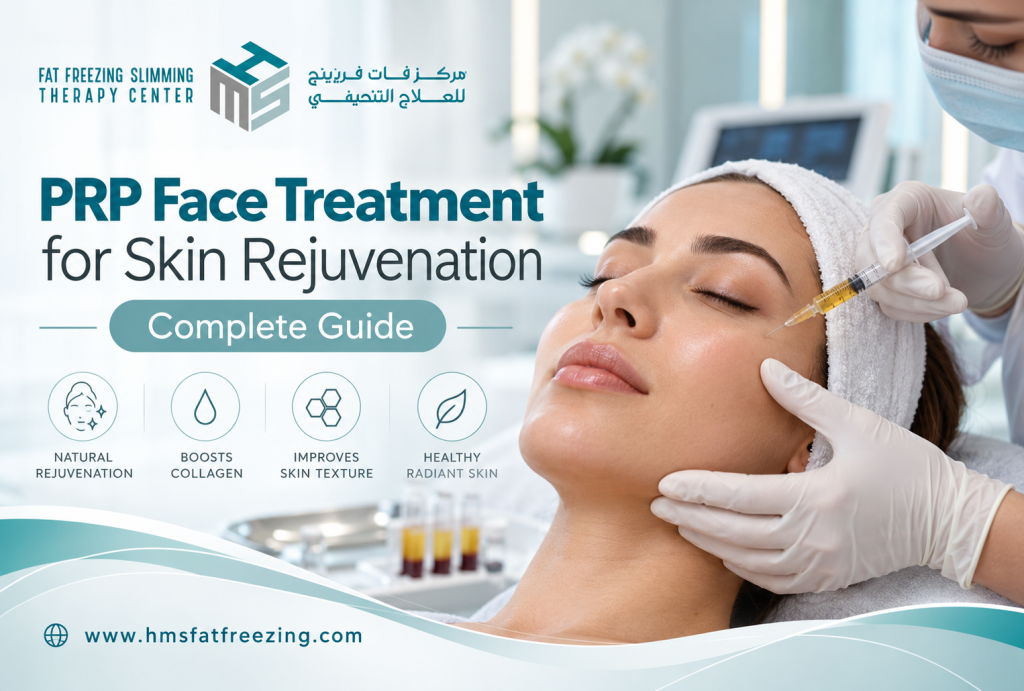
PRP Face Treatment for Skin Rejuvenation: Complete Guide
Healthy-looking skin is not simply about having fewer wrinkles. Smooth texture, even tone, natural elasticity and a comfortable skin barrier all contribute to a refreshed appearance. As people become more interested in treatments that support their skin without dramatically changing their facial features, PRP Face treatment has gained attention as an option for facial rejuvenation.
Unlike conventional facials that primarily cleanse or hydrate the surface, PRP Face treatment uses platelet-rich plasma prepared from a person’s own blood. The intention is to use platelet-associated biological factors to support tissue repair processes and potentially improve selected aspects of skin quality.
However, PRP is not a guaranteed anti-ageing solution. Research into its effectiveness for facial rejuvenation is still developing, and outcomes depend on the treatment method, individual skin characteristics and specific concerns being addressed.
At HMS Fat Freezing, PRP Face rejuvenation is presented as a personalised aesthetic treatment for people interested in improving the appearance of their skin.
This comprehensive guide explains how PRP Face treatment works, its potential benefits, what happens during a session, realistic results, recovery, safety considerations and how it compares with other skin rejuvenation procedures in Dubai.
What Is PRP Face Treatment?
PRP Face treatment is a minimally invasive aesthetic procedure involving platelet-rich plasma, commonly abbreviated as PRP.
Platelets are components of blood best known for their role in clotting. They also contain substances involved in tissue signalling and repair. In PRP procedures, a blood sample is processed to produce plasma containing a higher concentration of platelets than ordinary circulating plasma.
The resulting preparation may be injected into selected facial areas or used as part of another professionally administered treatment protocol.
The purpose of PRP Face rejuvenation is generally to improve selected aspects of skin quality, including texture and overall appearance, rather than significantly alter facial structure.
Why Is It Called a Natural Skin Rejuvenation Treatment?
The term natural is frequently associated with PRP Face because the plasma comes from the patient’s own blood rather than a manufactured dermal filler.
However, natural origin does not automatically establish safety or effectiveness.
The process still involves blood collection, preparation and potentially multiple needle injections. Proper patient selection, sterile processing, professional qualifications and aftercare remain essential.
How Is PRP Different From an Ordinary Facial?
A traditional facial usually works on the skin’s surface through cleansing, exfoliation, moisturising and selected cosmetic products.
PRP Face treatment involves preparing a biological material from blood and administering it according to a defined clinical protocol.
This makes PRP fundamentally different from a spa facial, even though both may be marketed for skin rejuvenation.
How Does PRP Face Treatment Work?
Understanding the biological principle behind PRP Face treatment helps explain why results tend to be gradual and why treatment effectiveness can vary.
Step 1: Platelet Concentration
A healthcare professional collects a blood sample and places it in a specialised centrifuge.
The machine spins the sample to separate its components based on their physical properties.
A platelet-rich plasma preparation is then obtained according to the equipment and processing protocol.
PRP preparations are not identical. Platelet concentration, white blood cell content, activation methods and preparation techniques may differ.
These variations make it difficult to assume that every PRP Face treatment delivers the same results.
Step 2: Growth-Factor Signalling
Platelets contain biological substances involved in tissue repair, including platelet-derived growth factor and transforming growth factor-beta.
Researchers are investigating how these substances interact with skin cells and structures associated with wound healing and collagen maintenance.
Although laboratory mechanisms provide a scientific rationale for treatment, they do not prove that every PRP procedure produces clinically significant facial rejuvenation.
Step 3: Facial Application or Injection
Depending on the treatment plan, prepared PRP may be injected into selected facial areas.
Some protocols also involve microneedling, although combined methods have separate safety and regulatory considerations.
The U.S. Food and Drug Administration states that microneedling devices have not been cleared for delivering platelet-rich plasma into the skin. Patients should therefore discuss the specific method, regulatory status and risks with their treating professional.
Step 4: Gradual Skin Response
PRP Face is intended to support biological processes rather than provide instant facial volume.
Any meaningful improvement in skin quality may become noticeable gradually, although some patients experience little or no visible benefit.
A 2024 overview of systematic reviews concluded that the available evidence was insufficient to establish firm conclusions about PRP effectiveness for facial rejuvenation. This is why realistic expectations are especially important.
Potential Benefits of PRP Face Treatment
Interest in PRP Face treatment comes from its possible effects on different aspects of skin quality.
The benefits described below are potential outcomes, not guaranteed results.
1. Improvement in Skin Texture
Uneven texture can make skin appear older even when deep wrinkles are absent.
PRP Face may provide modest improvements in skin smoothness for some people.
Patients with mild roughness or early textural changes may be interested in this approach, but significant acne scarring generally requires a more targeted assessment.
2. Support for Early Ageing Concerns
As skin ages, collagen organisation, elasticity and moisture retention change.
PRP Face is being studied for its possible contribution to the appearance of fine lines and skin quality.
It should not be expected to remove deep wrinkles or replace established treatments for pronounced facial ageing.
3. Natural-Looking Rejuvenation Goals
Some patients prefer treatments that do not add substantial facial volume.
Because PRP Face does not introduce a conventional volumising filler, it may appeal to people seeking subtle skin-quality improvement rather than facial reshaping.
This does not mean a visible result is assured.
4. Improvement in Overall Skin Appearance
For suitable individuals, PRP Face treatment may contribute to a fresher-looking complexion.
However, dryness, pigmentation, dullness and roughness can have different causes. Not all of them are best treated with platelet-rich plasma.
For example, someone whose skin appears dull primarily because of congestion or dehydration may benefit more from cleansing, hydration and an improved skincare routine.
HMS Fat Freezing also discusses how environmental exposure affects facial appearance in its guide to treatments for dull skin caused by Dubai heat and pollution.
5. Personalised Treatment Planning
PRP Face can be considered as one component of an individualised skin rejuvenation plan.
Treatment areas, number of sessions and any complementary procedures should depend on a professional assessment.
The advantage of personalisation is not that every problem can be treated with PRP. It is that unsuitable candidates can be directed toward more appropriate options.
Who Is a Suitable Candidate for PRP Face?
PRP Face treatment may be discussed by adults concerned about early skin ageing, mild uneven texture or a loss of overall skin freshness.
A suitable candidate generally has realistic expectations, understands the limitations of available evidence and is medically appropriate for a procedure involving blood collection and injections.
Skin Concerns Worth Discussing
A consultation may be useful when someone has:
- Mildly uneven facial texture
- Early visible fine lines
- General concerns about skin quality
- A preference for subtle aesthetic changes
- Interest in treatments using their own plasma
The presence of these concerns does not automatically make PRP the best choice.
Who May Need to Avoid or Postpone Treatment?
A healthcare professional may advise against or delay PRP Face treatment in people with certain medical circumstances, including significant platelet disorders, active infections, some blood-related conditions or particular medications.
Additional assessment may be required for individuals who:
- Take anticoagulant or antiplatelet medicines
- Have a history of abnormal bleeding or bruising
- Have active facial infections or inflammatory skin conditions
- Have relevant immune or systemic illnesses
- Are pregnant or breastfeeding
- Have conditions that affect wound healing
Never stop prescribed medication simply to qualify for an aesthetic procedure.
A professional should review your complete health history before recommending PRP Face treatment.
Step-by-Step PRP Face Treatment Procedure
Knowing what happens during an appointment can make the decision more informed.
1. Initial Skin Consultation
The process should begin with an assessment of your medical history, skincare routine and primary aesthetic concerns.
The clinician may examine the face for signs of acne, pigmentation, irritation, scarring or significant laxity.
Photographs may be taken with consent to document the initial condition.
2. Blood Collection
A small quantity of blood is collected using appropriate sterile equipment.
The exact amount depends on the chosen PRP preparation system.
The collection process is similar in principle to an ordinary blood draw, although the intended use of the sample is different.
3. Plasma Preparation
The collected blood is processed in a centrifuge.
The healthcare professional prepares the platelet-rich fraction according to the selected system.
Blood must be handled using appropriate infection-control procedures, and disposable items should not be reused.
4. Skin Preparation
The treatment area is cleaned.
Depending on the method, the clinician may use a suitable topical anaesthetic to improve comfort.
The intended injection sites or treatment regions should already have been discussed.
5. PRP Administration
Prepared plasma may be injected into selected areas using a clinician-determined technique.
Patients can experience pinching, pressure or temporary discomfort.
If microneedling is proposed alongside PRP Face treatment, the clinician should explain the additional risks and why the combination is being considered.
6. Immediate Assessment and Aftercare
After treatment, the skin may look red or slightly swollen.
The practitioner should provide instructions covering cleansing, skincare products, sun exposure, warning signs and follow-up.
Do not judge the final result immediately after a session, when temporary swelling can affect appearance.
PRP Face vs Other Skin Rejuvenation Treatments
PRP Face is one of several aesthetic treatments that patients encounter when researching facial rejuvenation in Dubai.
Each option addresses a different concern, and no single treatment is best for everyone.
| Treatment | Primary approach | Common treatment goal | Important consideration |
|---|---|---|---|
| PRP Face | Plasma prepared from the patient’s blood | Potential skin texture and quality improvement | Limited and variable clinical evidence |
| Skin Boosters | Selected injectable formulations, often hyaluronic acid-based | Hydration and skin quality | Product selection and injection risks |
| RF Microneedling | Needles combined with radiofrequency energy | Scars, texture and selected wrinkles | Device-related risks and downtime |
| Chemical Peels | Controlled chemical exfoliation | Uneven tone, superficial texture and some acne concerns | Pigment changes and irritation |
| HydraFacial-style treatment | Cleansing, exfoliation and hydration | Surface congestion and temporary radiance | Limited effect on deeper structural changes |
| Dermal Fillers | Injectable volumising materials | Selected volume and contour concerns | Vascular and other injection complications |
PRP Face vs Skin Boosters
Skin boosters commonly use injectable formulations selected to improve skin hydration and surface quality.
PRP Face instead uses plasma prepared from the patient’s own blood.
Someone whose main concern is dehydration may wish to discuss a skin booster rather than assuming PRP will offer the same effect.
For a detailed explanation, read HMS Fat Freezing’s article on skin booster treatment benefits, procedures and results.
PRP Face vs RF Microneedling
RF microneedling combines controlled needle penetration with radiofrequency energy.
Its primary aim is tissue remodelling, and it may be considered for selected acne scars, texture concerns and facial wrinkles.
PRP Face involves a different biological approach and does not deliver the same controlled radiofrequency treatment.
For patients with visible acne scarring, it is useful to explore RF microneedling for acne scars before choosing a procedure.
PRP Face vs Dermal Fillers
Dermal fillers are generally used to restore or modify volume and contours.
PRP Face treatment is not designed to produce a comparable structural change.
If the main concern is substantial cheek volume loss or deep facial folds, PRP alone is unlikely to achieve the desired result.
Pros and Cons of PRP Face Treatment
Before choosing PRP Face, patients should consider both its potential advantages and limitations.
Pros
- Autologous preparation: PRP is produced from the patient’s own blood.
- Non-surgical approach: The procedure generally does not require surgery or large incisions.
- Subtle treatment goals: It is often considered for skin-quality concerns rather than significant facial reshaping.
- Personalised application: Treatment may be adapted to selected facial areas.
- Research interest: PRP continues to be investigated in dermatology and regenerative medicine.
Cons
- Uncertain effectiveness: High-quality evidence for facial rejuvenation remains limited.
- Variable results: Some individuals may experience little visible improvement.
- Needle-related discomfort: Blood collection and injections can be uncomfortable.
- Possible complications: Bruising, swelling, infection and other reactions can occur.
- Potential repeat appointments: Some protocols involve multiple sessions, increasing overall costs and treatment burden.
- Not suitable for every concern: Deep scars, major pigmentation disorders and significant sagging may require other treatments.
The decision should be based on whether the expected benefit justifies the cost, uncertainty and possible complications.
PRP Face Before and After: What Results Are Realistic?
Before-and-after photographs can influence expectations, but they need careful interpretation.
Lighting, camera angles, makeup, facial expression and temporary swelling can dramatically affect the apparent result.
A meaningful PRP Face assessment should focus on consistent photographs and specific changes rather than relying on promotional images.
Immediately After Treatment
Temporary redness, small injection marks, tenderness or swelling may be visible.
These changes are not evidence that collagen production has improved.
During the Following Weeks
Where PRP Face produces a benefit, patients may notice gradual changes in skin appearance.
There is no universal timeline that applies reliably to every patient because protocols and responses vary.
Longer-Term Results
The durability of PRP-related facial improvements is not firmly established.
Longer-term outcomes may depend on ageing, sun exposure, general skin health and the specific treatment method.
A Practical Example
Consider two people seeking PRP Face treatment.
The first has mild textural changes, generally healthy skin and realistic expectations about subtle improvement.
The second has deep acne scars, marked pigmentation and considerable facial sagging.
Even if both are medically eligible, PRP may be a more reasonable discussion for the first person’s goals.
The second person is likely to need a broader dermatological assessment, because those concerns involve different structures and may not respond adequately to PRP.
This is why identifying the exact problem matters more than choosing a popular treatment name.
How Many PRP Face Sessions Are Needed?
There is no single scientifically established session schedule that suits all facial rejuvenation patients.
Some aesthetic protocols use a series of appointments, while others assess response after an initial treatment.
The proposed number of PRP Face sessions should be explained in terms of the patient’s skin concern, the evidence supporting the chosen protocol and the expected treatment outcome.
Rather than automatically purchasing a package, patients can ask:
- Why is this number of sessions recommended?
- What improvement should reasonably be expected?
- How will the results be measured?
- What happens if the first treatment produces no benefit?
- Are there more established alternatives for my concern?
A responsible treatment plan should allow room for reassessment.
PRP Face Treatment Recovery and Aftercare
Recovery after PRP Face treatment depends on the administration method, the areas treated and individual skin sensitivity.
Mild redness, swelling, tenderness and bruising may occur.
Some people can resume ordinary non-strenuous activities relatively soon, while others need additional recovery time.
First 24–48 Hours
Follow the treating clinician’s specific aftercare advice.
General precautions may include keeping treated areas clean, avoiding unnecessary touching, not applying irritating skincare products and limiting activities that worsen swelling or discomfort.
Avoid using strong exfoliating acids or retinoids until your clinician confirms that the skin is ready.
Protect the Skin From Sun Exposure
Sun protection matters after facial procedures and remains an essential part of long-term anti-ageing care.
Use a suitable broad-spectrum sunscreen, generally SPF 30 or higher, once your treating clinician advises that it is appropriate to apply.
Hats, shade and reduced direct exposure provide additional protection.
When Should You Contact Your Clinician?
Seek prompt medical advice if you experience worsening redness, increasing pain, spreading swelling, discharge or fever.
Severe symptoms, including breathing difficulties or rapidly progressing swelling, require urgent medical care.
Do not assume every post-treatment reaction is normal simply because the procedure is described as minimally invasive.
Is PRP Face Treatment Safe?
PRP is often promoted as safe because the preparation comes from the patient’s own blood.
Although using autologous material avoids exposure to certain foreign injectable ingredients, it does not eliminate procedural risks.
Potential complications include bleeding, bruising, infection, inflammation, discomfort and undesirable cosmetic outcomes.
Blood handling adds another important layer of responsibility.
The sample must be collected, labelled, processed and administered using appropriate infection-control practices.
Why Clinic Licensing Matters in Dubai
PRP Face treatments should be performed by appropriately qualified and licensed healthcare professionals in facilities authorised for the procedure.
The Dubai Health Authority’s non-surgical cosmetic procedure standards regulate practitioner qualifications and treatment scopes.
Its updated standards specify that PRP injections are permitted for the face and hair, subject to the applicable professional and facility requirements.
Patients should verify the clinic’s licensing, the treating professional’s privileges and the procedure’s suitability rather than selecting a provider on price alone.
PRP Face Treatment in Dubai: Important Skin Considerations
Living in Dubai can influence both skin maintenance and recovery planning.
Strong Sun Exposure
Frequent ultraviolet exposure contributes to photoageing, uneven pigmentation and deterioration of skin quality.
PRP Face treatment does not protect against ultraviolet radiation.
Daily sun protection remains important regardless of which rejuvenation procedure is selected.
Air-Conditioned Environments
Extended time in air-conditioned offices, homes and vehicles can leave some people experiencing skin dryness or discomfort.
However, PRP should not automatically be selected for dry skin.
If the primary problem is a weakened skin barrier, adjusting cleansing habits and moisturising appropriately may be more useful.
Heat, Sweating and Outdoor Activities
Dubai’s outdoor temperatures may make post-procedure planning particularly relevant.
Patients who work outdoors, exercise heavily or travel frequently should discuss recovery requirements before arranging treatment.
Pigmentation-Prone Skin
People who develop dark marks after acne, irritation or minor injuries should mention this history during consultation.
Any needle-based facial procedure may create inflammation, and some patients are more vulnerable to post-inflammatory pigmentation changes.
Treatment planning should account for skin tone, pigmentation history and the risk of irritation.
Expert Recommendations From HMS Fat Freezing
When considering PRP Face rejuvenation, the most useful approach is to begin with the actual skin concern rather than the procedure’s popularity.
The following recommendations reflect a patient-centred approach to evaluating treatment options.
1. Identify the Main Skin Problem
Ask whether the primary concern is texture, dehydration, pigmentation, scarring, volume loss or skin laxity.
These problems have different causes.
Choosing PRP Face without identifying the underlying concern can lead to disappointing results.
2. Request an Individual Skin Assessment
A professional consultation should review medical conditions, medicines, previous cosmetic procedures and treatment expectations.
It should also clarify whether PRP is being proposed alone or alongside another procedure.
3. Ask About the Evidence
Patients should feel comfortable asking what results are supported by clinical research.
An appropriate explanation should distinguish biological theories from proven clinical outcomes.
PRP Face may be a reasonable option to discuss, but its uncertainty should not be concealed.
4. Avoid Unnecessary Treatment Combinations
Combining PRP with microneedling, lasers, peels or other procedures does not automatically produce better results.
Each additional treatment introduces potential benefits, risks and recovery requirements.
Combination plans should have a clear clinical rationale.
5. Maintain Consistent Skincare
No injectable treatment replaces the value of daily cleansing, moisturising and sun protection.
A consistent routine may provide more reliable long-term benefits than repeatedly undergoing procedures without maintaining basic skin health.
HMS Fat Freezing discusses this distinction further in its guide to professional skin treatments versus home skincare.
6. Evaluate Outcomes Objectively
Where possible, compare images taken under similar lighting conditions.
Pay attention to texture and other specific treatment goals rather than expecting a dramatic transformation.
A treatment is valuable only when its actual benefits are meaningful to the patient.
Common PRP Face Treatment Mistakes to Avoid
One common mistake is assuming that PRP Face works equally well for every sign of ageing.
Another is booking treatment after seeing an impressive before-and-after photograph without understanding the patient’s original condition or whether other procedures were performed.
Patients may also overlook the importance of practitioner qualifications because PRP uses their own blood.
Finally, some people schedule multiple aesthetic treatments too close together.
This can increase irritation and make it difficult to determine which procedure caused a particular reaction or improvement.
Good treatment planning should prioritise safety, clearly defined goals and sufficient time to evaluate results.
What Does Scientific Research Say About PRP Face?
Scientific interest in PRP Face rejuvenation has increased, but research quality is an important consideration.
Published studies differ in platelet preparation techniques, treatment intervals, administration methods, participant characteristics and outcome measurements.
A 2024 umbrella review examined 13 systematic reviews covering overlapping primary research.
The authors found that much of the evidence was low certainty and concluded that firm conclusions about PRP for facial rejuvenation could not be made.
A separate systematic review published in 2025 also evaluated PRP for facial rejuvenation, reflecting continuing research interest in the treatment.
These findings do not establish that PRP never works. They indicate that stronger, better-standardised clinical trials are needed before consistent benefits can be confidently promised.
Frequently Asked Questions About PRP Face Treatment
1. What is PRP Face treatment used for?
PRP Face treatment is used in aesthetic medicine with the aim of improving selected aspects of facial skin quality. Patients commonly investigate it for mild textural concerns, fine lines and general rejuvenation.
However, clinical evidence remains limited, and PRP should not be considered a guaranteed solution for these concerns. An assessment is necessary to determine whether it is appropriate.
2. Is PRP Face treatment painful?
PRP Face involves a blood draw and usually injections or another needle-based procedure.
Patients may experience pinching, stinging, pressure or temporary tenderness. A clinician may use topical anaesthetic depending on the technique.
Discomfort varies between individuals and treatment areas.
3. How long does PRP Face treatment take to show results?
Results vary, and some people do not experience noticeable improvement.
Where benefits occur, they may develop gradually over subsequent weeks rather than appearing immediately.
There is insufficient high-quality evidence to promise a precise timeline for all PRP Face patients.
4. How many PRP Face sessions are recommended?
The number of sessions depends on the treatment protocol, skin concern and clinician’s assessment.
Although some clinics offer packages containing multiple appointments, a universal evidence-based schedule has not been established.
Patients should understand why each proposed session is necessary.
5. Can PRP Face remove deep wrinkles?
PRP Face is unlikely to remove deep, established wrinkles or correct significant facial volume loss.
Its proposed benefits relate more to skin quality and subtle changes.
People with deeper wrinkles may require an assessment of treatments specifically designed for those concerns.
6. Does PRP Face help with acne scars?
PRP has been investigated for scar-related concerns, often alongside other procedures.
However, acne scars differ significantly in depth and structure.
Deep ice-pick, boxcar and rolling scars may require different treatment strategies. PRP alone should not be assumed to correct them.
7. Is PRP Face suitable for all skin types?
Skin type alone does not determine suitability.
A healthcare professional must consider medical history, active skin conditions, pigmentation risk, medications and treatment goals.
Individuals with darker skin tones should discuss the possibility of post-inflammatory pigmentation following needle-based procedures.
8. Can PRP Face be combined with microneedling?
Some clinical protocols combine PRP with microneedling.
However, the FDA has not cleared microneedling devices for delivering PRP into the skin, and the safety and effectiveness of such combinations have not been established through that clearance process.
Patients should discuss the precise method, potential benefits, risks and applicable local regulations before agreeing to combined treatment.
9. How long do PRP Face results last?
There is no reliable universal duration for PRP Face rejuvenation results.
If improvement occurs, its persistence may vary according to the treatment approach, ageing, skin condition and environmental exposure.
Patients should be cautious of guaranteed claims about long-lasting results.
10. How do I choose a PRP Face clinic in Dubai?
Choose a properly licensed facility with an appropriately qualified healthcare professional.
Ask about the PRP preparation method, sterile blood handling, realistic outcomes, treatment risks, aftercare and how complications would be managed.
A quality consultation should also explain when another treatment may be more appropriate.
Trusted Medical and Regulatory Resources
Patients interested in PRP Face treatment can explore these authoritative resources for additional information.
1. PRP for Facial Rejuvenation — Scientific Review — A peer-reviewed overview examining the quality and limitations of PRP research.
2. PubMed — Efficacy of PRP in Facial Rejuvenation — A systematic review assessing published evidence on facial PRP treatment.
3. U.S. FDA — Microneedling Devices — Official information about microneedling safety, limitations and potential risks of combination procedures.
4. Dubai Health Authority — Non-Surgical Cosmetic Procedure Standards — Dubai’s regulatory standards addressing professional qualifications, licensing and permitted procedures.
Conclusion: Is PRP Face Treatment Worth Considering?
PRP Face treatment offers an approach to facial rejuvenation that uses platelet-rich plasma prepared from the patient’s own blood.
Its appeal lies in the possibility of supporting subtle improvements in skin appearance without conventional volumising fillers or surgery.
However, potential biological activity should not be confused with guaranteed clinical effectiveness.
Scientific evidence for PRP Face rejuvenation remains limited, treatment techniques vary and individual outcomes are unpredictable.
For people in Dubai considering PRP Face, the most sensible starting point is a professional skin assessment.
Identify the concern, understand the available alternatives and discuss the treatment’s limitations before deciding whether the potential benefits justify its cost and risks.
At HMS Fat Freezing, patients can explore PRP Face rejuvenation as part of a personalised discussion about skin health, realistic aesthetic goals and suitable facial treatments.
The best rejuvenation plan is not necessarily the one involving the most procedures. It is the one that addresses the right concern, respects the skin’s limitations and prioritises safety.
Book a PRP Face Consultation at HMS Fat Freezing Dubai
Interested in finding out whether PRP Face rejuvenation is suitable for your skin concerns? Contact HMS Fat Freezing to enquire about a professional consultation, available treatment options and individual suitability.
Clinic Address
HAMSAH BUILDING, OFFICE 407 & 408, BLOCK-A, Business Center, Beside ANSAR GALLERY, Dubai, UAE
Phone
+971 4 583 2989
info@hmsfatfreezing.com
Websitewww.hmsfatfreezing.com
Explore PRP Face Treatment
Medical disclaimer: This article is intended for general educational purposes and does not replace medical advice, diagnosis or treatment. PRP Face suitability, procedural safety and expected outcomes should be discussed with an appropriately licensed healthcare professional.