
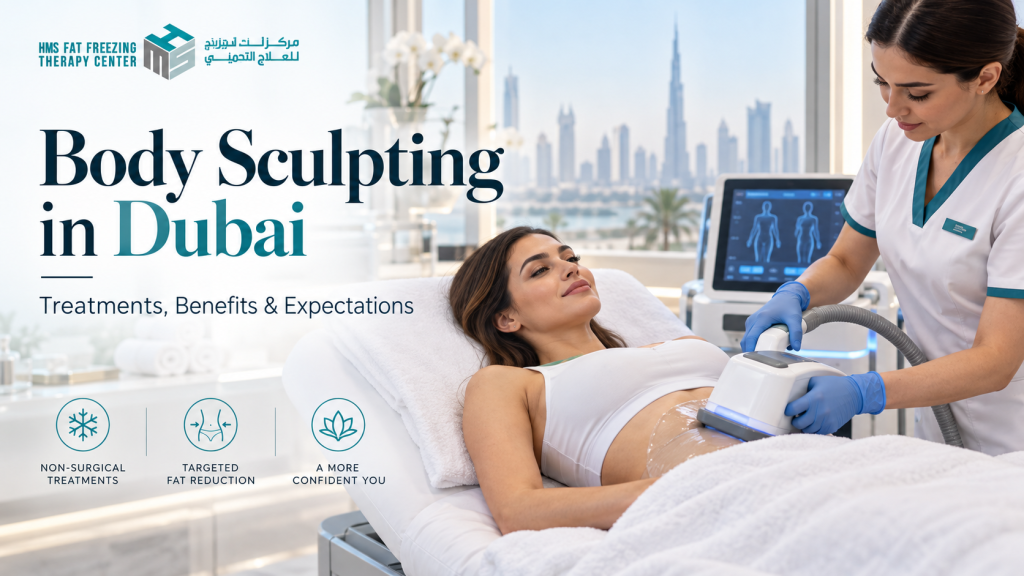
Body Sculpting in Dubai: Treatments, Benefits and Expectations
A flatter-looking abdomen, more defined waistline and smoother body contours are common aesthetic goals. Yet reaching a comfortable weight does not always produce the appearance someone expects. Stubborn fat around the stomach, uneven thigh contours, reduced muscle definition and loose-looking skin may remain even after months of consistent exercise.
This explains the growing interest in Body Sculpting in Dubai, where people are exploring non-surgical treatments that focus on particular body areas rather than overall weight loss.
However, Body Sculpting is not one treatment, and it is not a shortcut to losing substantial weight. Different technologies address different concerns. Some target localized fat cells, others stimulate muscles, while certain treatments aim to improve skin texture or the appearance of cellulite.
Choosing the right treatment requires understanding what is actually responsible for the concern.
At HMS Fat Freezing, individuals can explore body-contouring options designed around their aesthetic goals, treatment suitability and realistic expectations.
This guide explains the available treatments, their benefits and limitations, what happens during appointments, how long results can take and the important questions to ask before committing to a treatment plan.
What Is Body Sculpting?
Body Sculpting is a broad term for cosmetic procedures intended to improve the contours, proportions or appearance of selected body areas.
Depending on the technology, treatment may aim to:
- Reduce small deposits of subcutaneous fat.
- Improve visible muscle definition or firmness.
- Reduce the appearance of cellulite.
- Improve mild skin laxity.
- Refine the shape of the abdomen, waist, thighs or arms.
Non-surgical procedures generally use devices applied to the skin rather than surgical incisions.
The US Food and Drug Administration explains that non-invasive body-contouring procedures can change the appearance of specific areas but are not treatments for obesity or substitutes for medically appropriate weight management.
FDA
Body Sculpting vs Weight Loss: Understanding the Difference
Weight loss typically involves reducing overall body mass, including stored fat. Body-contouring treatments instead concentrate on selected cosmetic concerns.
For example, someone may have already reached a stable weight but continue to notice a small fat deposit above their waistband.
A suitable localized fat-reduction treatment might change how that area looks without significantly changing their weight.
Another individual may have little excess fat but want improved abdominal muscle definition. Muscle-stimulation treatment could be more relevant.
The most important distinction is that improving body shape and improving metabolic health are not the same objective.
Exercise, balanced nutrition and appropriate medical care remain essential for managing weight and supporting long-term health.
Why Is Body Sculpting Popular in Dubai?
Dubai’s active lifestyle, professional environment and demand for convenient aesthetic services have contributed to interest in treatments that can fit around work, exercise and social commitments.
Several practical considerations influence treatment decisions.
1. Limited Time for Recovery
Many residents have demanding schedules. Depending on the device and treatment area, a non-invasive procedure may allow a return to normal daily activities relatively quickly.
Nevertheless, minimal downtime should not be confused with zero side effects.
2. Persistent Localized Fat
Genetics, hormones, age and individual fat-distribution patterns influence where fat accumulates.
For some individuals, localized deposits remain despite maintaining consistent fitness and nutrition habits.
3. Interest in Natural-Looking Changes
Some people prefer gradual contour refinement rather than dramatic changes.
Certain non-invasive fat-reduction procedures produce results over weeks or months, allowing changes to develop progressively.
4. Multiple Aesthetic Concerns
The same person might experience stubborn abdominal fat, mild thigh cellulite and reduced muscle tone.
These concerns are related to different tissues and may require different treatment approaches rather than one universal procedure.
Popular Body Sculpting Treatments Available in Dubai
Understanding how technologies differ is essential before selecting a clinic or purchasing a package.
1. Fat Freezing (Cryolipolysis)
Fat freezing uses controlled cooling to target selected deposits of subcutaneous fat.
During treatment, an applicator is positioned over a suitable area. Depending on the technology, suction may draw the tissue into the applicator while controlled cooling affects fat cells.
The body gradually clears damaged fat cells during the following weeks and months.
Commonly evaluated areas include the lower abdomen, flanks, thighs, upper arms and certain back-fat deposits.
Potential benefits:
- Targeted reduction of suitable fat pockets.
- No surgical incision.
- Gradual visible changes.
- Usually limited interruption of normal activities.
Fat freezing does not directly remove visceral fat deep inside the abdomen. It also cannot correct significant loose skin.
The American Academy of Dermatology notes that non-invasive fat reduction generally produces subtler results than liposuction.
American Academy of Dermatology
Readers interested in this process can explore HMS Fat Freezing’s guide on what happens to fat cells after fat freezing.
2. Electromagnetic Muscle Stimulation
Some modern Body Sculpting systems use electromagnetic energy to produce repeated involuntary muscle contractions.
These contractions are designed to stimulate targeted muscles and may improve their tone, firmness and visible definition.
Treatment areas can include the abdomen and buttocks, depending on the device’s intended use.
This approach may suit someone who already has relatively low levels of excess fat but is concerned about muscle definition.
However, electromagnetic treatment cannot replace resistance training or provide the cardiovascular and metabolic benefits of exercise.
Results can also require maintenance.
HMS Fat Freezing discusses this technology in its article on choosing the best bodysculpting treatment in Dubai.
3. VelaShape III
VelaShape III combines technologies including radiofrequency energy, infrared light, vacuum suction and mechanical tissue manipulation.
It is commonly considered for improving the visible appearance of cellulite and supporting smoother-looking skin contours.
The treatment is particularly relevant for people whose primary concern is uneven skin texture rather than a large pocket of fat.
Potential treatment areas include the thighs, buttocks and abdomen, subject to assessment.
It is important to recognize that cellulite involves connective-tissue architecture, skin structure and fat distribution.
Consequently, reducing overall body fat does not guarantee the disappearance of cellulite.
Improvements from texture-focused treatments may also be temporary, and repeat sessions can be necessary.
4. Ultrasound Cavitation
Ultrasound-based contouring treatments use sound-wave energy directed into targeted tissue.
Certain therapeutic ultrasound devices are designed to affect fat cells and potentially reduce the circumference of selected body areas.
However, not every cavitation machine has the same mechanism, clinical evidence, safety profile or regulatory authorization.
A practitioner should explain the specific equipment being used, its approved indications and the evidence supporting its proposed benefits.
Ultrasound procedures may cause burns, swelling or nerve injury if used inappropriately.
5. Radiofrequency Skin Tightening
Radiofrequency treatments deliver controlled energy to heat selected tissues.
Depending on the device, this heating may stimulate changes in collagen and support improvements in skin firmness or the appearance of cellulite.
It may be considered when mild skin laxity is a more significant concern than localized fat.
However, it cannot reliably remove substantial hanging skin after major weight loss.
For significant skin excess, a surgical consultation may provide a more realistic assessment of available options.
Body Sculpting Treatments: Comparison Table
| Treatment | Main Objective | Typical Result Timeline | Important Limitation |
|---|---|---|---|
| Fat Freezing | Reduce localized fat | Several weeks to 3–6 months | Does not treat obesity or visceral fat |
| Electromagnetic Muscle Stimulation | Improve muscle tone | Gradual, after a treatment course | Does not replace exercise |
| VelaShape III | Improve cellulite appearance | Often assessed after a series of sessions | Improvements may require maintenance |
| Ultrasound Cavitation | Localized contour refinement | Varies by device and protocol | Evidence and effectiveness differ |
| Radiofrequency | Improve mild laxity and skin appearance | Gradual over weeks or months | Cannot remove significant excess skin |
| Liposuction | Surgical fat removal | Visible change after swelling resolves | Requires surgery and recovery |
Treatment timelines vary considerably according to the device, patient characteristics and number of sessions.
Key Benefits of Body Sculpting
When performed using an appropriate technology on a suitable candidate, Body Sculpting may provide several cosmetic benefits.
Targeted Contour Refinement
One important advantage is the ability to concentrate on a specific area.
Someone who is satisfied with their overall weight might simply want to address a persistent lower-abdominal bulge or improve the contour around the waist.
This targeted approach can be helpful when further overall weight loss is neither necessary nor desirable.
Non-Surgical Treatment Options
Many Body Sculpting procedures involve no incisions, stitches or general anesthesia.
This can make them appealing to individuals who do not want surgery or who prefer smaller cosmetic changes.
Nevertheless, non-invasive procedures still require appropriate medical screening, trained operators and careful equipment selection.
Gradual, Subtle Results
Gradual results can suit patients seeking modest changes rather than a dramatic transformation.
For example, reduced abdominal fullness may become noticeable through the fit of clothing before it appears significant on the weighing scale.
Improved Appearance of Muscle Definition
Electromagnetic technologies may support improvements in muscle firmness and definition.
Such treatments may be considered alongside a regular exercise routine rather than as a substitute for physical activity.
Potential Improvements in Skin Texture
Technologies targeting cellulite and mild laxity may help the skin appear smoother or firmer.
Results depend on the individual’s skin condition, treatment technology and response.
Which Body Areas Can Be Treated?
Body Sculpting can address several areas, although suitability varies by device and anatomy.
Abdomen and Waist
The abdomen is a common treatment area because several different concerns can affect its appearance.
A person may have pinchable lower-belly fat, reduced muscle definition, loose skin or fullness caused by deeper abdominal fat.
These require different approaches.
For example, cryolipolysis may be considered for a discrete subcutaneous fat pocket, while muscle stimulation may be more relevant when definition is the primary concern.
Read HMS Fat Freezing’s detailed Body Sculpting guide for the abdomen for further information.
Thighs and Buttocks
Common concerns include uneven thigh contours, cellulite and reduced skin firmness.
Cellulite-focused technologies may be relevant when dimpling is the main issue.
Muscle-toning devices may be considered for appropriate candidates seeking firmer-looking buttocks.
Upper Arms
Some individuals notice localized arm fat or mild laxity, especially following changes in weight.
Fat-reduction procedures may help selected fat deposits, but significant excess skin can remain even after fat reduction.
Flanks and Back
Fat deposits around the waist and back may respond to suitable localized fat-reduction technologies.
The important question is whether the tissue is accessible subcutaneous fat and whether the selected applicator can treat it safely.
Who Is a Good Candidate for Body Sculpting?
The best candidates are not necessarily people seeking the biggest transformation.
Often, they are individuals who can identify a limited aesthetic concern and understand what treatment can realistically achieve.
Suitable candidates may include people who:
- Have relatively stable body weight.
- Experience small, localized fat deposits.
- Want modest improvements in body proportions.
- Have realistic expectations about treatment outcomes.
- Understand that multiple appointments may be necessary.
- Can maintain consistent lifestyle habits.
- Have no medical contraindications to the proposed technology.
Who Should Avoid or Postpone Treatment?
Some conditions require delaying treatment, avoiding certain devices or obtaining medical clearance.
For example, fat freezing may be unsuitable for individuals with cold-sensitivity disorders such as cryoglobulinemia or cold urticaria.
Electromagnetic and some radiofrequency devices may be inappropriate for individuals with pacemakers or certain metallic implants.
Pregnancy, active skin infections, recent surgery, abdominal hernias, impaired sensation or relevant medical conditions can also affect suitability.
A thorough consultation should include medical history, medication review and assessment of the proposed treatment area.
What to Expect During a Body Sculpting Appointment
Understanding the treatment process helps prevent uncertainty and unrealistic expectations.
Step 1: Initial Consultation
The first appointment should focus on the patient’s concerns, health history and treatment objectives.
A practitioner may examine fat distribution, skin quality, muscle definition and the overall shape of the area.
This is also an opportunity to discuss the expected results, number of sessions, side effects and treatment costs.
Step 2: Personalized Treatment Planning
A treatment plan should identify:
- Which concern is being addressed.
- Which technology is appropriate.
- How many sessions may be required.
- What changes are realistically achievable.
- What side effects or complications may occur.
- When follow-up assessment should take place.
For example, someone with a noticeable fat pocket and very loose skin may not achieve their desired result through fat reduction alone.
Step 3: The Treatment Session
The experience depends on the technology.
During fat freezing, patients may initially feel suction and intense cooling, followed by numbness.
Radiofrequency-based treatment may produce a warming sensation, while electromagnetic stimulation causes repeated muscle contractions.
Session lengths depend on the device, treatment area and protocol. Some procedures take around 30–90 minutes, while others may differ.
Step 4: Recovery and Aftercare
Many non-invasive Body Sculpting procedures allow a relatively quick return to everyday activities.
However, temporary redness, tenderness, swelling, numbness or bruising may occur.
Patients should follow the specific aftercare advice provided by their qualified treatment professional.
Significant pain, blistering, increasing swelling or unusual changes should be reported promptly.
Step 5: Follow-Up Assessment
Follow-up appointments help determine whether the treatment is producing the expected changes.
Providers may use photographs, standardized measurements and physical examination.
Comparisons are most useful when lighting, posture, camera distance and measurement location remain consistent.
How Long Does It Take to See Body Sculpting Results?
There is no single timeline that applies to every treatment.
Fat freezing generally produces progressive changes because the body needs time to clear affected fat cells.
According to the American Academy of Dermatology, some patients notice changes within a few weeks, while fuller results may take approximately three to six months after treatment.
Muscle-toning results develop according to the device and treatment schedule.
Skin-texture improvements may be noticed over a series of sessions, although maintenance is sometimes necessary.
A Practical Example: Why Early Photos Can Mislead
Consider someone undergoing abdominal fat freezing.
During the first week, the treated area may remain swollen or tender. An early photograph could therefore show little improvement or even temporary fullness.
Several weeks later, swelling may have resolved, but the biological process of fat-cell clearance may still be ongoing.
This illustrates why judging Body Sculpting results immediately after a session can create unnecessary disappointment.
A more reliable approach is to agree on appropriate follow-up intervals before treatment begins.
How Many Body Sculpting Sessions Are Needed?
The number of sessions depends on treatment type, the size of the target area, individual response and desired outcome.
Cryolipolysis may involve one or more treatment cycles, while radiofrequency, VelaShape III and muscle-stimulation procedures are commonly delivered as a planned series.
More sessions do not automatically mean better results.
For instance, repeating fat freezing before an appropriate assessment interval may be unnecessary because the original treatment is still producing biological changes.
HMS Fat Freezing provides further guidance on how many fat-freezing sessions may be needed.
Body Sculpting in Dubai: Important Lifestyle Considerations
Dubai’s climate and daily routines can influence treatment planning and aftercare, even though they do not fundamentally change how body-contouring technologies work.
Heat and Hydration
Hot weather, outdoor activities and exercise can increase fluid loss through sweating.
Maintaining adequate hydration supports normal health and comfort, particularly for active residents.
However, drinking excessive water does not accelerate the destruction or removal of fat cells after treatment.
Gym Training and Recovery
Individuals following demanding workout schedules should discuss when to resume exercise after treatment.
Some procedures allow normal activity almost immediately. Others may cause tenderness that makes intense training uncomfortable temporarily.
Planning Around Events
A wedding, holiday or important social event may encourage someone to seek rapid changes.
However, Body Sculpting results are not generally instantaneous.
Anyone planning treatment before an event should discuss realistic timelines and possible temporary swelling or bruising rather than scheduling treatment immediately beforehand.
Maintaining Stable Weight
A stable weight is particularly relevant for maintaining fat-reduction results.
Even after some fat cells have been removed or destroyed, remaining fat cells can increase in size if weight increases.
A consistent nutrition and exercise routine therefore remains important.
Pros and Cons of Body Sculpting
| Advantages | Limitations |
|---|---|
| Several non-surgical options | Results are generally less dramatic than surgery |
| Can target specific cosmetic concerns | Not suitable for treating obesity |
| Often requires little downtime | May need multiple sessions |
| Can complement fitness routines | Does not replace exercise or healthy nutrition |
| Some fat-reduction effects can be long-lasting | Remaining fat can enlarge with weight gain |
| May improve cellulite or skin appearance | Some improvements are temporary |
| Personalized treatment options | Side effects and uncommon serious complications are possible |
Understanding Potential Risks
It would be misleading to describe all Body Sculpting treatments as completely risk-free.
Temporary effects may include discomfort, redness, bruising, swelling and altered skin sensation.
Certain technologies also carry less common but more serious risks.
For example, cryolipolysis has been associated with paradoxical adipose hyperplasia, a condition in which treated fatty tissue enlarges rather than decreases.
This complication may require surgical correction.
A systematic review published in Dermatologic Surgery identified both temporary side effects and more serious complications associated with cryolipolysis.
PubMed
Patients should understand the specific risks of their chosen treatment before providing informed consent.
Expert Recommendations from HMS Fat Freezing
A useful principle reflected in HMS Fat Freezing’s published treatment guidance is that the most appropriate procedure depends on the actual cosmetic concern rather than the popularity of a machine.
The following practical recommendations can help patients make better-informed decisions.
1. Identify the Tissue Responsible for the Concern
A protruding abdomen might result from subcutaneous fat, visceral fat, muscle separation, bloating or excess skin.
Treating these problems as if they were identical can lead to disappointing results.
A proper assessment is essential before recommending abdominal contouring.
2. Use the Right Technology for the Right Goal
If the objective is localized fat reduction, a fat-focused treatment may be appropriate.
If muscle definition is the concern, a muscle-stimulation approach may deserve consideration.
For cellulite or mild skin-texture concerns, a technology such as VelaShape III may be more relevant.
3. Avoid Aggressive Treatment Packages Without Assessment
Buying numerous sessions before understanding the diagnosis, expected response and treatment intervals can lead to unnecessary expense.
A personalized plan should explain why each session is being recommended.
4. Record Realistic Baseline Measurements
Photographs and circumferential measurements provide more useful follow-up information than relying exclusively on scale weight.
A waist measurement should be taken at the same anatomical point, with similar posture and positioning each time.
5. Choose Qualified Providers and Appropriate Equipment
Ask about operator training, equipment authorization for the proposed use and emergency procedures.
In Dubai, patients should also verify that the facility and healthcare professionals hold the appropriate local licenses for any regulated medical procedures.
6. Give Results Enough Time to Develop
Different technologies produce results at different speeds.
Treatment effectiveness should be judged using appropriate follow-up intervals, not simply by how the body looks on the day of treatment.
What Makes a Body Sculpting Consultation Valuable?
The quality of the initial assessment can matter as much as the technology being used.
A useful consultation should answer five questions:
- What is causing the area of concern?
- Which treatment can address that specific issue?
- What improvement is realistic?
- What risks, costs and maintenance requirements apply?
- What other options might be more appropriate?
Consider two individuals seeking a flatter abdomen.
Person A: A physically active adult has a small, pinchable fat pocket below the navel and relatively firm skin. Localized fat reduction may be worth discussing after screening.
Person B: Another adult has substantial abdominal fullness caused mainly by visceral fat, with very little pinchable tissue. Fat freezing is unlikely to address the main concern. Appropriate medical assessment and weight-management support may be more useful.
Both people describe their goal as a flatter stomach, but the suitable treatment pathways are different.
This is why personalized Body Sculpting assessment offers greater value than choosing a procedure based solely on advertising.
How Much Does Body Sculpting Cost in Dubai?
There is no universal price because treatments differ in technology, equipment, anatomical coverage and required session numbers.
Factors influencing the total cost include the area being treated, the number of applicators or treatment cycles, practitioner expertise, consultation arrangements and follow-up appointments.
Patients comparing packages should request an itemized quotation.
A less expensive single session may not provide better overall value if it addresses the wrong concern or if the expected number of sessions is unclear.
Likewise, a more expensive treatment is not automatically more effective.
Rather than selecting a package using price alone, compare the proposed clinical plan, qualifications, risks and expected outcomes.
Frequently Asked Questions About Body Sculpting in Dubai
1. Is Body Sculpting effective for reducing belly fat?
Body Sculpting can help reduce selected deposits of subcutaneous belly fat when an appropriate fat-reduction technology is used. However, it does not directly eliminate visceral fat surrounding internal organs. Results depend on the type of fat, treatment technology and individual suitability.
2. Is Body Sculpting painful?
Most non-invasive procedures are generally tolerable, but sensations vary. Fat freezing may cause intense cold, suction or temporary numbness. Electromagnetic treatments produce strong muscle contractions, while radiofrequency devices generate warmth. Some patients experience tenderness after treatment.
3. Can Body Sculpting replace gym workouts?
No. Exercise improves cardiovascular fitness, muscle strength, metabolic health and general well-being. Body Sculpting addresses selected cosmetic concerns and cannot provide the same overall health benefits. The two approaches may complement one another.
4. Are Body Sculpting results permanent?
Certain fat-reduction technologies destroy targeted fat cells, and those particular cells do not return. However, remaining fat cells can enlarge with weight gain. Results from muscle-toning, cellulite and skin-firming treatments may require maintenance.
5. How many Body Sculpting sessions will I need?
The number depends on the procedure, treatment area and aesthetic goal. Some localized fat deposits may need relatively few treatments, while muscle-toning or cellulite programmes commonly involve a series of appointments. Your provider should explain the proposed schedule before treatment.
6. Is Body Sculpting safe for everyone?
No. Medical conditions, pregnancy, implanted devices, certain medications and previous procedures can affect suitability. Although many patients experience only temporary side effects, serious complications are possible. Proper medical screening and qualified treatment supervision are important.
7. Can Body Sculpting tighten loose skin after weight loss?
Some radiofrequency-based procedures may improve the appearance of mild skin laxity. However, substantial hanging skin after major weight loss is unlikely to be corrected adequately through non-invasive treatments. A qualified specialist can assess whether surgical options are more appropriate.
8. What is the best Body Sculpting treatment in Dubai?
There is no single best treatment for everyone. Fat freezing may be considered for localized fat, electromagnetic stimulation for muscle tone, and VelaShape III for cellulite appearance. The most suitable option depends on the underlying concern, medical history and realistic goals.
9. How soon can I return to normal activities after treatment?
Many non-invasive Body Sculpting treatments require little downtime, and patients can often resume routine activities promptly. However, bruising, swelling, muscle soreness or tenderness may occur. Return to strenuous exercise should follow the treating professional’s specific advice.
10. Can Body Sculpting help me lose 10 kilograms?
No. Non-invasive Body Sculpting is not designed for substantial weight loss. Someone seeking to lose 10 kilograms should discuss evidence-based weight-management options with a qualified healthcare professional. Cosmetic contouring may be considered separately when suitable.
Trusted Medical Resources for Body Sculpting
For readers seeking independent, evidence-based information, these authoritative resources provide useful explanations of treatment mechanisms, clinical outcomes and potential risks.
1. US Food and Drug Administration – Non-Invasive Body Contouring Technologies Explains available technologies, treatment limitations, contraindications and possible complications.
2. American Academy of Dermatology – Non-Invasive Fat Removal Covers expected treatment results, recovery periods and suitable candidates.
3. PubMed – Safety and Efficacy of Cryolipolysis A systematic review examining the published evidence on fat-freezing outcomes and safety.
4. PubMed – Cryolipolysis Systematic Review and Meta-Analysis (2025) Reviews body measurements, patient satisfaction and adverse events reported in clinical studies.
Conclusion: Choosing Body Sculpting for the Right Reasons
Body Sculpting in Dubai offers several ways to address cosmetic concerns that may not respond fully to conventional fitness and nutrition routines.
However, successful treatment is not simply about removing fat or tightening skin. It begins with identifying the specific issue and selecting a technology capable of addressing it.
A localized abdominal fat pocket, mild cellulite and reduced muscle tone may require entirely different treatment strategies.
Non-surgical procedures can provide meaningful contour improvements for suitable candidates, but they cannot replace comprehensive weight management, exercise or surgical treatment when substantial changes are required.
At HMS Fat Freezing, individuals interested in Body Sculpting can explore available treatment options and discuss their aesthetic goals, suitability and realistic expectations.
The most worthwhile outcome is not necessarily the most dramatic transformation. It is an improvement that is appropriate for your anatomy, supported by realistic clinical evidence and achieved with a clear understanding of potential risks.
Book a Body Sculpting Consultation at HMS Fat Freezing Dubai
Interested in exploring non-surgical Body Sculpting, fat freezing, muscle toning or cellulite-focused treatments?
Contact HMS Fat Freezing to enquire about available services, treatment suitability, consultation arrangements and current pricing.
HMS Fat Freezing – Dubai
Hamsah Building, Offices 407 & 408, Block A, Business Center, beside Ansar Gallery, Dubai, UAE
+971 4 583 2989
info@hmsfatfreezing.com
Medical disclaimer: This article is for general educational purposes and does not replace an individualized medical consultation. Treatment suitability, outcomes, contraindications and potential complications should be discussed with an appropriately qualified healthcare professional.