
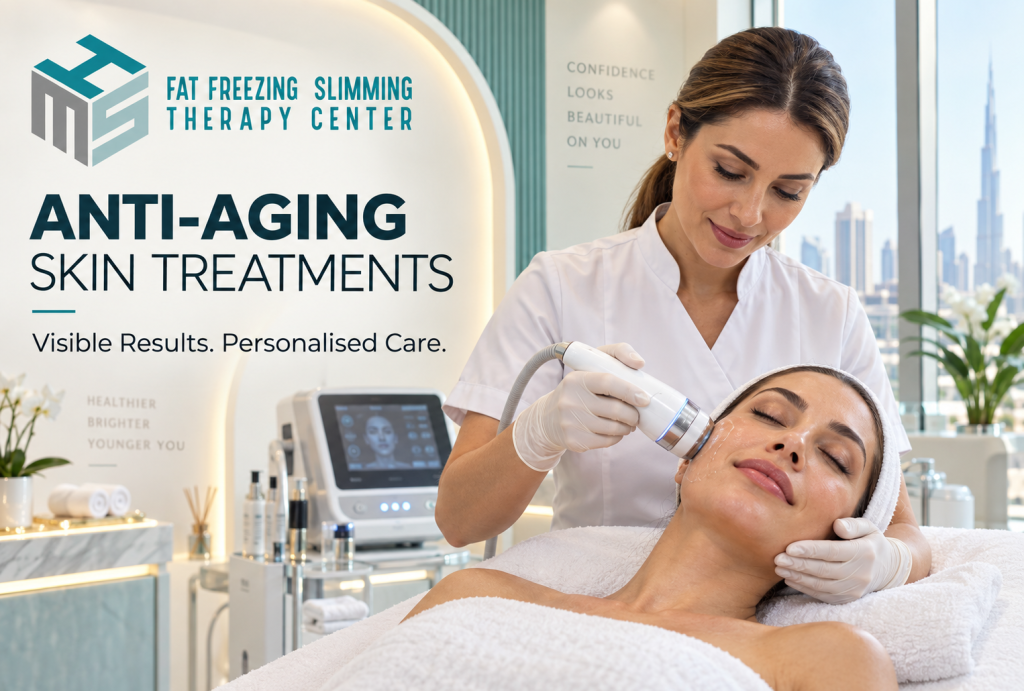
Anti-Aging Skin Treatments That Actually Deliver Results
The most effective Anti-Aging Skin Treatments do not promise to stop ageing or make every face look the same. They target a specific biological change such as collagen loss, sun damage, dehydration, uneven pigmentation or facial volume loss—with a procedure designed for that problem.
This distinction matters. A hydrating facial may make dry skin look fresher, but it cannot correct significant sagging. Botulinum toxin may soften expression lines, but it will not remove brown spots. A chemical peel can brighten uneven tone, yet it cannot replace lost cheek volume. Results become more predictable when the treatment mechanism matches the concern.
Modern Anti-Aging Skin Treatments range from evidence-based home care and superficial facials to microneedling, radiofrequency, chemical peels, laser resurfacing, injectables and ultrasound-based tightening. Some create a quick cosmetic refresh. Others trigger collagen remodelling that develops over several months.
This guide explains what these procedures can realistically achieve, where their limitations lie and how to build a sensible treatment plan rather than purchasing whichever procedure happens to be trending.
Contact HMS Fat Freezing for Anti-Aging Skin Treatments
This article is educational and does not replace an individual medical consultation. Suitability, contraindications and results differ between patients. Prescription products, energy-based procedures and injectables should only be recommended or administered by appropriately qualified professionals.
Why Does Skin Look Older?
Ageing skin is not a single condition. It is a collection of structural and surface-level changes that progress at different rates.
Collagen provides much of the skin’s strength, while elastin helps it return to position after movement. Their production and organisation change with age. Cell renewal slows, natural moisturising factors decline and repeated facial movement gradually creates visible lines. Facial fat, bone support and connective tissue also change, affecting contours in ways that a surface treatment cannot fully correct.
External exposure adds another layer. Ultraviolet radiation contributes to premature wrinkles, pigmentation and collagen degradation. Smoking, pollution, inadequate sleep, chronic stress and an impaired skin barrier can make these changes more noticeable.
Dubai introduces particular challenges: strong year-round ultraviolet exposure, heat, perspiration, dust and prolonged time in air-conditioned rooms. An effective plan for Anti-Aging Skin Treatments in Dubai must therefore address both sun protection and barrier hydration.
The visible concern should be identified before choosing a procedure:
- Fine expression lines are different from deep static wrinkles.
- Brown spots are different from redness or melasma.
- Dehydrated skin is different from structurally loose skin.
- Rough texture is different from facial volume loss.
- Mild laxity is different from substantial excess skin.
Treating the wrong layer is one of the most common reasons people spend money without seeing a meaningful result.
Contact HMS Fat Freezing for Anti-Aging Skin Treatments
The Foundation: Daily Treatments That Protect Every Result
Professional procedures cannot compensate for continuous unprotected sun exposure. A simple home routine is the foundation beneath all Anti-Aging Skin Treatments.
Broad-Spectrum Sunscreen
Daily broad-spectrum sunscreen is the most important preventive step. Choose at least SPF 30, apply an adequate amount to the face, ears and neck, and reapply when outdoors, perspiring or spending extended time near windows.
The American Academy of Dermatology’s anti-ageing guidance recommends beginning with sunscreen and introducing one anti-ageing product at a time. This measured approach reduces irritation and makes it easier to determine which product is helping.
In Dubai, sunscreen should be supported by shade, sunglasses, hats and sensible scheduling of outdoor activity. No laser, peel or injectable can make skin immune to ultraviolet damage.
Contact HMS Fat Freezing for Anti-Aging Skin Treatments
Retinoids and Retinol
Retinoids are among the best-studied topical options for fine lines, uneven texture and photoageing. Prescription retinoids are stronger, while over-the-counter retinol products are generally gentler but may work more slowly.
Start cautiously often two or three nights per week before increasing frequency if the skin tolerates it. Dryness, peeling and irritation can occur. People who are pregnant, planning pregnancy, breastfeeding or managing a skin disorder should discuss retinoid use with a qualified clinician.
Antioxidants and Barrier Support
Vitamin C can support an antioxidant-focused morning routine and may help improve the appearance of uneven tone. Niacinamide can support the skin barrier and help with redness or pigmentation in suitable formulations. Ceramides, glycerine and hyaluronic acid help reduce moisture loss and improve temporary plumpness.
These ingredients do not produce the same structural changes as energy-based Anti-Aging Skin Treatments, but they can improve comfort, appearance and recovery while protecting the investment made in professional care.
Contact HMS Fat Freezing for Anti-Aging Skin Treatments
Anti-Aging Skin Treatments Compared
| Treatment | Best suited to | Typical downtime | When improvement appears | Important limitation |
|---|---|---|---|---|
| Medical-grade skincare | Prevention, fine lines, mild pigmentation | None to mild irritation | Several weeks to months | Requires consistent use |
| Hydrating facial | Dryness, dullness, temporary glow | Usually none | Often immediate | Does not tighten substantial laxity |
| Chemical peel | Uneven tone, roughness, superficial lines | Varies by peel depth | Days to several weeks | Incorrect selection can worsen pigmentation |
| Microneedling | Texture, pores, selected scars and fine lines | Usually a few days | Progressive over weeks | Often requires a treatment series |
| RF microneedling | Texture plus mild laxity | Several days or longer | Progressive over months | Carries device- and operator-dependent risks |
| Fractional laser | Sun damage, texture, wrinkles and scars | Varies considerably | Weeks to months | Skin tone and pigmentation risk must be assessed |
| Radiofrequency facial | Mild laxity and collagen support | Usually minimal | Gradual | Cannot remove significant excess skin |
| Botulinum toxin | Dynamic expression lines | Usually minimal | Several days | Temporary; does not restore volume |
| Dermal filler | Selected folds and volume loss | Often swelling or bruising | Usually immediate | Rare but serious vascular complications are possible |
| HIFU/ultrasound | Mild-to-moderate tissue laxity | Usually limited | Gradual over months | Results are subtler than surgery |
Downtime is not a fixed guarantee. Treatment intensity, device settings, skin sensitivity, practitioner technique and aftercare can all change the recovery experience.
Which Treatments Actually Address Each Concern?
Fine Lines and Early Photoageing
For mild early changes, daily sunscreen, a suitable retinoid, moisturiser and antioxidant support may deliver more value than immediately beginning an intensive procedure.
Superficial chemical peels, microneedling and gentle fractional treatments can be considered when home care reaches a plateau. The objective is not to chase every line. It is to improve skin quality while preserving normal expression.
The best Anti-Aging Skin Treatments for early ageing are often conservative because younger skin may not need aggressive resurfacing or volume correction.
Contact HMS Fat Freezing for Anti-Aging Skin Treatments
Dynamic Forehead Lines and Crow’s Feet
Dynamic wrinkles appear primarily during facial movement. Botulinum toxin products temporarily reduce the muscle activity creating selected lines. They are different from dermal fillers and should be administered only after assessment by a properly qualified medical professional.
Results depend heavily on anatomy, dose and placement. Excessive treatment can produce an unnatural or heavy appearance, while imprecise placement may contribute to eyelid or brow drooping. The goal should be balanced softening, not a completely motionless face.
Rough Texture, Enlarged Pores and Acne Scars
Microneedling creates controlled micro-injuries intended to trigger a repair response. It may improve selected textural concerns, fine lines and acne scars over a planned series.
RF microneedling adds radiofrequency energy below the surface. It can address texture and mild laxity together, but greater energy does not automatically mean better results. In 2025, the FDA issued a safety communication about reports of burns, scarring, fat loss, disfigurement and nerve damage associated with certain uses of radiofrequency microneedling devices. Patients should ask which device will be used, who will perform the treatment, why the proposed settings are appropriate and how complications are managed.
Readers considering this option can review HMS Fat Freezing’s information about RF microneedling in Dubai before arranging an individual assessment.
Pigmentation and Sun Damage
Pigmentation is not one diagnosis. Freckles, post-inflammatory hyperpigmentation, melasma and solar lentigines respond differently. Treating all brown patches with the same laser or peel can make the problem worse.
Contact HMS Fat Freezing for Anti-Aging Skin Treatments
A professional assessment should determine the likely pigment type, depth and triggers. Superficial peels may help selected cases of uneven tone and roughness, while certain laser or light devices target specific pigment. Strict sun protection and maintenance skincare remain essential because treatment cannot prevent new pigment from forming.
A properly selected chemical peel may improve superficial discolouration and texture. Peel strength should reflect the patient’s skin tone, sensitivity, medical history and tolerance for downtime.
Mild Skin Laxity
Radiofrequency, focused ultrasound and RF microneedling aim to stimulate collagen remodelling at different depths. Improvements are usually gradual and more modest than a surgical lift.
These Anti-Aging Skin Treatments are most appropriate for early jowling, mild looseness or reduced firmness—not large amounts of excess skin. A patient who expects a surgical-level lift from a non-surgical device is likely to be disappointed, regardless of the marketing language used.
HMS Fat Freezing’s guide to non-surgical skin-tightening treatments provides further context on radiofrequency, ultrasound and other collagen-focused options.
Volume Loss and Deeper Folds
When facial volume has changed, resurfacing the skin alone may not correct the underlying issue. Hyaluronic acid and other approved dermal fillers can restore selected areas of volume or soften particular folds.
Filler placement is a medical procedure, not a routine beauty service. The FDA’s dermal filler guidance explains that common reactions include swelling, bruising and tenderness, while accidental injection into a blood vessel can cause tissue death, stroke or blindness.
The safest approach is conservative treatment by a licensed healthcare professional with detailed knowledge of facial anatomy and complication management. Avoid unapproved products, home injections and needle-free filler devices.
Contact HMS Fat Freezing for Anti-Aging Skin Treatments
Dull, Dehydrated Skin
Hydrating facials, gentle exfoliation and barrier-focused skincare can quickly improve dullness and temporary dehydration. These are valuable maintenance options, particularly after travel or prolonged air-conditioning exposure.
However, an immediate glow should not be confused with new collagen. Hydrating Anti-Aging Skin Treatments improve surface appearance and comfort; structural treatments address deeper changes. Both can be useful when their roles are understood.
For a broader overview, see HMS Fat Freezing’s guide to facial treatments and skin rejuvenation in Dubai.
Fractional Laser Resurfacing
Fractional lasers treat microscopic columns of skin while leaving surrounding tissue available to support healing. Depending on the technology and settings, treatment may improve sun damage, wrinkles, scars and uneven texture.
Ablative systems generally create more visible resurfacing and downtime than non-ablative systems. Skin tone is particularly important because post-inflammatory pigmentation can follow excessive heat or inflammation. The patient’s medications, recent tanning, cold-sore history and tendency to scar should be reviewed.
The NHS overview of laser treatment and possible risks reinforces the need for appropriate assessment, eye protection and realistic discussion of side effects.
Contact HMS Fat Freezing for Anti-Aging Skin Treatments
A Better Way to Choose Anti-Aging Skin Treatments
Instead of asking, “What is the strongest treatment?” ask five more useful questions.
1. What Is My Primary Concern?
Choose one priority: pigmentation, movement lines, texture, laxity, dehydration or volume loss. Trying to correct everything during one appointment increases cost and can increase irritation without producing a balanced result.
2. How Much Downtime Can I Accept?
A treatment cannot be considered practical if recovery conflicts with work, travel, religious observance, social events or sun exposure. Someone with an important event in seven days may benefit more from gentle hydration than aggressive resurfacing.
3. What Is My Pigmentation Risk?
People with darker skin tones or a history of post-inflammatory hyperpigmentation require thoughtful device and peel selection. A test spot or conservative initial session may be appropriate.
4. What Evidence Will Be Used to Track Results?
Consistent photographs are more reliable than memory. Take baseline images in the same room, lighting, distance and facial position. Review them at a biologically sensible interval. Collagen remodelling cannot be fairly judged after a few days.
Contact HMS Fat Freezing for Anti-Aging Skin Treatments
5. What Is the Maintenance Plan?
Most Anti-Aging Skin Treatments are not permanent because ageing and environmental exposure continue. Ask what home care, maintenance sessions and sun precautions will be required before committing.
A Practical 90-Day Treatment Framework
A staged plan is often safer and more informative than stacking several procedures immediately.
Days 1–30: Stabilise
Begin with a professional assessment. Simplify the routine to a gentle cleanser, moisturiser and broad-spectrum sunscreen. Introduce only one active product at a time. If the barrier is irritated, treat that before scheduling intensive procedures.
Days 31–60: Target
Select one intervention based on the priority concern. That could mean a peel for superficial pigment, microneedling for texture, botulinum toxin for expression lines or radiofrequency for mild laxity.
Avoid performing unrelated Anti-Aging Skin Treatments simply because they are offered as a package. Each element should have a clear purpose.
Contact HMS Fat Freezing for Anti-Aging Skin Treatments
Days 61–90: Review
Compare standardised photographs, symptoms and satisfaction. Look for measurable change not just a temporary post-treatment glow. Decide whether to repeat, adjust, maintain or stop.
This framework is particularly helpful for sensitive or pigmentation-prone skin because it makes the response to each intervention easier to identify.
Practical Examples
Example One: The Busy Professional
A 38-year-old professional has early forehead lines, mild dehydration and no time for visible peeling. An appropriate strategy may prioritise sunscreen, a carefully introduced nighttime retinoid, barrier support and consultation about dynamic lines. An aggressive laser would add downtime without necessarily addressing the main concern.
Example Two: Texture and Old Acne Marks
A 44-year-old client is bothered by shallow acne scars and enlarged pores. Hydrating facials may improve glow but are unlikely to remodel scars. A clinician might instead assess standard microneedling, RF microneedling or fractional resurfacing, considering skin tone and pigmentation history.
Example Three: Uneven Tone in Dubai
A 50-year-old has brown patches that become darker after outdoor activity. Before selecting Anti-Aging Skin Treatments, the pigment should be properly evaluated because melasma behaves differently from isolated sunspots. The initial plan may place greater emphasis on sun avoidance, appropriate topical care and conservative procedures.
These examples illustrate why a diagnosis-led plan usually produces better value than a menu-led purchase.
Contact HMS Fat Freezing for Anti-Aging Skin Treatments
Pros and Cons of Anti-Aging Skin Treatments
Advantages
- Treatments can be matched to wrinkles, pigmentation, texture, dehydration or laxity.
- Many options are non-surgical and require limited downtime.
- Collagen-stimulating procedures can create gradual, natural-looking improvements.
- Combination plans can address more than one layer when carefully sequenced.
- Professional assessment can identify unsuitable treatments before money is spent.
- Maintenance skincare can extend and protect visible improvement.
- Conservative treatment preserves expression and individual facial character.
Limitations and Risks
- No procedure stops biological ageing.
- Results vary according to skin condition, health, lifestyle and practitioner technique.
- A course of sessions may be required.
- Redness, bruising, swelling, peeling or pigment changes can occur.
- Device-based procedures can cause burns or scarring when poorly selected or performed.
- Injectables carry uncommon but potentially serious complications.
- Significant excess skin may require surgical assessment.
- Maintenance costs should be considered before treatment begins.
Expert Recommendations from HMS Fat Freezing
HMS Fat Freezing recommends approaching Anti-Aging Skin Treatments as a long-term skin-health programme rather than an isolated appointment.
Contact HMS Fat Freezing for Anti-Aging Skin Treatments
Begin With Assessment, Not Assumption
A consultation should examine skin type, primary concerns, medical history, medication, previous procedures, sensitivity, pigmentation tendency and expected downtime. Photographs can provide a useful baseline.
Select the Least Intensive Treatment That Can Meet the Goal
Aggressive treatment is not automatically more effective. If consistent skincare and a superficial procedure can address the concern, there may be no reason to accept the downtime and risk of a deeper intervention.
Do Not Stack Procedures Without a Clear Rationale
Combination therapy can be useful, but only when each component addresses a defined problem and recovery periods are respected. Too many treatments performed too close together can disrupt the skin barrier and increase inflammation.
Protect Results From Dubai’s Climate
Use broad-spectrum sunscreen every day, reapply during outdoor exposure and combine it with physical protection. Support the skin barrier when air conditioning causes dryness, and avoid scheduling photosensitising procedures immediately before intense sun exposure or travel.
Judge Collagen Treatments on the Correct Timeline
Many collagen-focused Anti-Aging Skin Treatments develop over weeks or months. Reviewing too early can lead to unnecessary additional procedures. Agree on the evaluation date before treatment.
Patients can also read the HMS guide to skin rejuvenation treatments to understand how different procedures target texture, tone, hydration and firmness.
Frequently Asked Questions
1. Which anti-aging treatment gives the best results?
There is no single best option. Botulinum toxin is more suitable for selected expression lines, filler can address selected volume loss, lasers and peels target surface damage, while radiofrequency or ultrasound may improve mild laxity. The best result comes from matching the procedure to the correct problem.
2. At what age should I begin Anti-Aging Skin Treatments?
There is no required starting age. Daily sunscreen and barrier care are useful at every adult age. Professional treatment should begin when a specific concern justifies it—not because a birthday has been reached. Preventive care is usually simpler than correcting years of accumulated sun damage.
3. How long do results last?
Duration varies widely. A hydrating facial may look best for days or weeks. Botulinum toxin and fillers are temporary. Collagen remodelling may remain visible longer but continues to be influenced by ageing, sun exposure and lifestyle. Maintenance is usually required.
4. Are non-surgical treatments completely safe?
No cosmetic procedure is completely risk-free. Even non-surgical Anti-Aging Skin Treatments can cause burns, infection, pigment changes, scarring, allergic reactions or unsatisfactory results. Risks are reduced through proper assessment, suitable technology, trained practitioners and careful aftercare.
5. Can I combine microneedling, peels and laser treatments?
They may be combined within a carefully sequenced plan, but not necessarily during the same appointment. Treatment intervals should allow the barrier to recover. Combining procedures too aggressively may increase inflammation and post-inflammatory pigmentation.
6. What treatment is best for sagging skin?
Radiofrequency, focused ultrasound and RF microneedling may improve mild-to-moderate laxity. Significant hanging or excess skin is unlikely to respond sufficiently to a non-surgical device and may warrant consultation with a qualified plastic surgeon.
7. Do collagen facials actually create new collagen?
The term “collagen facial” can describe very different services. A moisturising facial may temporarily plump the surface without meaningfully remodelling deep collagen. Procedures that create controlled heat or micro-injury aim to stimulate a wound-healing response, but the degree of change depends on the technology and treatment parameters.
8. How many treatment sessions will I need?
It depends on the procedure, severity of the concern and individual response. Some injectables or energy-based treatments may create improvement after one appointment, while peels, microneedling and gentler radiofrequency programmes commonly involve a series. The clinic should explain why each proposed session is necessary.
9. Can Anti-Aging Skin Treatments remove wrinkles permanently?
No. Treatments may soften wrinkles, improve texture or slow the appearance of further damage, but facial movement and biological ageing continue. Claims of permanent wrinkle removal should be treated cautiously.
10. How should I prepare for a consultation?
Bring a list of medications, supplements, allergies, existing products and previous cosmetic procedures. Explain any history of cold sores, keloid scarring, pigmentation, eczema or difficult wound healing. Avoid hiding recent procedures, as this information can materially affect safety.
Conclusion
The Anti-Aging Skin Treatments most likely to deliver satisfying results are not necessarily the newest, strongest or most expensive. They are the treatments chosen after the concern has been correctly identified, the patient’s risk factors have been considered and realistic outcomes have been discussed.
Sunscreen, barrier care and appropriate topical ingredients create the foundation. Peels and lasers can address selected surface concerns. Microneedling and radiofrequency can support texture and collagen remodelling. Injectables may treat movement lines or volume loss, while ultrasound and other tightening technologies may improve mild laxity. Each option solves a different part of the ageing process.
A strong treatment plan also knows when not to treat. Irritated skin should be stabilised. Pigmentation should be identified before heat or exfoliation is applied. Substantial laxity should not be disguised with unrealistic non-surgical promises.
At HMS Fat Freezing, the recommended approach is personalised, gradual and centred on natural-looking improvement. Begin with an assessment, establish a baseline, treat the highest-priority concern and evaluate the result at the correct time. This disciplined approach makes Anti-Aging Skin Treatments safer, more measurable and more worthwhile.
Contact HMS Fat Freezing
HMS Fat Freezing
HAMSAH BUILDING, OFFICE 407 & 408, BLOCK-A
Business Center, beside ANSAR GALLERY
Dubai, United Arab Emirates
Phone: +971 4 583 2989
Email: info@hmsfatfreezing.com
Website: https://hmsfatfreezing.com/