
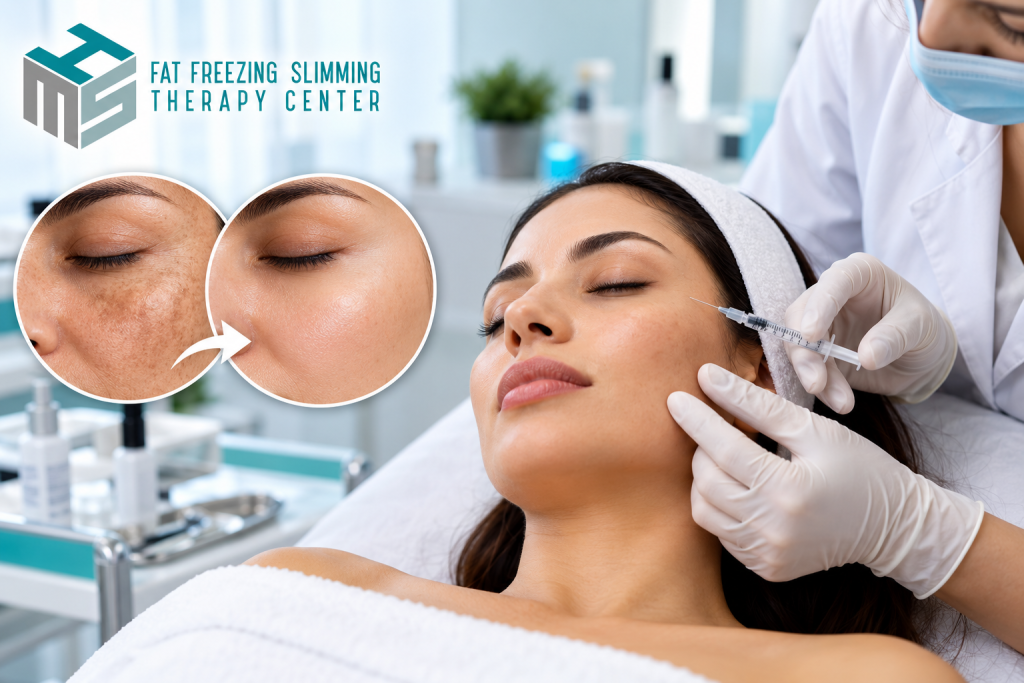
Anti Pigmentation Injection for Uneven Skin Tone: What to Expect
Uneven skin tone is one of those concerns that can look simple in the mirror but have several different causes beneath the surface. One person may be dealing with post-acne marks, another with sun-related pigmentation, while someone else may have melasma that repeatedly becomes darker after heat, sunlight or hormonal changes.
This distinction matters before considering an Anti Pigmentation Injection.
The term Anti Pigmentation Injection does not describe one universally standardized medicine. It is often used as a broad aesthetic term for injectable treatments intended to improve the appearance of unwanted pigmentation, dullness or uneven-looking skin tone. The exact formulation, method of administration and medical evidence can vary considerably.
HMS Fat Freezing’s treatment information similarly advises patients to confirm the exact ingredients and treatment approach before proceeding with an Anti Pigmentation Injection.
For this reason, the most important step is not simply asking, “Will this injection brighten my skin?” A better question is:
What type of pigmentation do I have, what exactly is being injected, and is that treatment appropriate for my skin?
This guide explains what an Anti Pigmentation Injection may involve, how pigmentation should be assessed, what you might experience during treatment, realistic timelines, advantages and limitations, aftercare and important safety questions to ask before treatment.
Why Does Skin Tone Become Uneven?
Skin colour is largely influenced by melanin, the natural pigment produced by cells called melanocytes.
Uneven-looking pigmentation occurs when certain areas produce, retain or display more pigment than surrounding skin.
Common examples include:
- Melasma
- Post-acne pigmentation
- Sun-related dark spots
- Pigmentation following inflammation or irritation
- Uneven tone caused by repeated sun exposure
- Pigmentation associated with certain hormonal influences
- Dullness combined with superficial discoloration
Melasma deserves particular attention because it is often chronic and can return even after successful treatment.
The American Academy of Dermatology notes that sunlight, pregnancy, hormonal medications and other factors can contribute to melasma, and treatment commonly requires a combination of sun protection, topical medication and sometimes professional procedures.
That is why treating every brown patch with the same Anti Pigmentation Injection would not be an appropriate approach.
Uneven skin tone is a symptom, not a diagnosis
Imagine two clients who both have dark patches across their cheeks.
The first developed pigmentation after repeated acne breakouts.
The second developed symmetrical brown patches during pregnancy.
Their skin may appear similar from a distance, but the biological causes can be different. Their treatment plans may therefore need to be different as well.
A proper pigmentation assessment should ideally come before deciding whether an Anti Pigmentation Injection is appropriate.
What Is an Anti Pigmentation Injection?
An Anti Pigmentation Injection is a broad term used for injectable aesthetic treatments intended to reduce the appearance of excessive pigmentation or help produce a more even-looking complexion.
It is important to understand that this name alone does not tell you which medication or active ingredient will be administered.
Depending on the clinic, country, indication and practitioner, injectable approaches discussed for pigmentation can involve different substances or techniques.
For example, research has investigated intradermal tranexamic acid injections for melasma. A 2025 systematic review and meta-analysis of randomized trials found that intradermal tranexamic acid can improve melasma severity, although treatment protocols vary and more standardized research remains useful.
Glutathione is another substance sometimes marketed internationally for skin lightening, but its evidence and safety profile—especially when given intravenously—are very different.
Therefore, never assume one Anti Pigmentation Injection is equivalent to another.
Before treatment, ask for:
- The exact ingredient
- Product name
- Concentration
- Route of administration
- Reason it is being recommended
- Expected benefits
- Possible side effects
- Alternatives
- Number of expected sessions
These questions transform a vague cosmetic treatment into an informed medical-aesthetic decision.
Anti Pigmentation Injection Is Not the Same as Skin Bleaching
One common misunderstanding is that pigmentation treatment should dramatically alter someone’s natural skin colour.
That should not be the goal.
Appropriate pigmentation treatment aims to reduce excessive or irregular pigment so that darker patches blend more naturally with the surrounding complexion.
Someone with naturally medium or deep skin should not be promised transformation into a completely different natural skin tone.
The goal should instead be improvement in concerns such as:
- Patchiness
- Post-acne marks
- Visible dark spots
- Uneven pigmentation
- Melasma
- Dull-looking complexion
This distinction also helps create realistic expectations before starting an Anti Pigmentation Injection treatment plan.
Which Pigmentation Concerns May Be Considered?
Depending on diagnosis and the active ingredient used, an Anti Pigmentation Injection may be discussed for concerns such as uneven-looking pigmentation or selected cases of melasma.
Research surrounding intradermal tranexamic acid, for example, has mainly focused on melasma rather than every form of pigmentation.
A 2025 randomized controlled trial involving people with Fitzpatrick skin types IV-V found greater improvement in melasma severity on the side treated with intradermal tranexamic acid compared with placebo, although the study was small and conducted at a single centre.
That does not mean tranexamic acid injections are automatically suitable for every dark spot.
A brown facial mark could potentially be caused by something completely different from melasma.
Professional assessment remains essential.
What Happens During an Anti Pigmentation Injection Consultation?
A good treatment usually begins before the needle is ever prepared.
Step 1: Your pigmentation history is reviewed
Your practitioner may ask:
- When did the pigmentation begin?
- Did it start after acne?
- Did it appear during pregnancy?
- Does sunlight make it darker?
- Have you used strong bleaching creams?
- Have you recently undergone laser treatment?
- Are you using retinoids or exfoliating acids?
- Have you previously experienced pigmentation after cosmetic procedures?
These details help determine whether an Anti Pigmentation Injection makes sense.
Step 2: Your skin is examined
The location, depth, pattern and colour of pigmentation provide important clues.
For persistent facial pigmentation, dermatologists may sometimes use tools such as dermoscopy or a Wood’s lamp to better assess pigmentation depth.
Step 3: The proposed formulation should be explained
Before consenting, you should know exactly what will be injected.
“Anti-pigmentation solution” alone is not enough information.
Ask your practitioner to explain the active ingredient, concentration, source and intended effect.
Step 4: Expectations are discussed
Pigmentation treatment generally produces gradual rather than overnight improvement.
Your practitioner should discuss what can realistically improve and what may recur.
What to Expect During the Treatment
The actual procedure depends on the formulation and technique selected.
For intradermal treatments, the practitioner may cleanse the skin and administer small amounts of the chosen formulation into targeted areas using fine injections.
You may experience:
- Mild pinching
- Temporary stinging
- Tenderness
- Small injection marks
- Mild redness
- Temporary swelling
Treatment duration varies depending on the size of the treatment area and technique.
Some studies investigating intradermal tranexamic acid for melasma used repeated treatment sessions spaced several weeks apart rather than relying on one session.
This is one reason you should be cautious about advertisements promising complete pigmentation removal after a single Anti Pigmentation Injection.
When Will You See Results?
There is no reliable universal timeline because the result depends on:
- Pigmentation type
- Pigmentation depth
- Active ingredient used
- Treatment technique
- Skin type
- Sun exposure
- Hormonal triggers
- Home skincare
- Treatment frequency
- Individual response
With chronic conditions such as melasma, improvement usually requires consistent management.
The American Academy of Dermatology notes that melasma treatment can take months, with some patients requiring approximately three to twelve months to see meaningful improvement from an overall treatment programme.
An Anti Pigmentation Injection should therefore be viewed as one possible component of a pigmentation plan rather than a guaranteed instant solution.
Comparison: Anti Pigmentation Injection vs Other Pigmentation Treatments
| Treatment | How It May Be Used | Advantages | Important Considerations |
|---|---|---|---|
| Anti Pigmentation Injection | Selected pigmentation concerns depending on formulation | Targeted treatment, clinician-controlled administration | Ingredient and evidence vary; diagnosis is essential |
| Prescription topical treatment | Melasma, dark spots and post-inflammatory pigmentation | Non-invasive and convenient for home use | Requires regular application and professional guidance |
| Chemical peel | Selected superficial pigmentation | Can improve texture and superficial discoloration | Incorrect strength may worsen pigmentation |
| Microneedling | Sometimes combined with pigmentation treatment | May support skin renewal and treatment delivery | Requires suitable technique for skin type |
| Laser/light treatment | Selected pigment conditions | Can target certain pigmentation patterns | Incorrect device/settings may trigger worsening pigmentation |
| Sun protection | Essential for nearly every pigmentation plan | Helps prevent recurrence and darkening | Must be used consistently |
AAD guidance emphasizes that melasma treatment frequently combines strict sun protection with topical medications and, when appropriate, procedures such as chemical peels, microneedling or laser/light treatments.
Why Sunscreen Can Matter as Much as the Injection
You could invest in several Anti Pigmentation Injection sessions and still struggle with recurring pigmentation if daily light protection is neglected.
UV radiation stimulates pigment production.
Visible light may also worsen melasma, especially in people with darker skin tones.
AAD guidance recommends broad-spectrum sunscreen of SPF 30 or higher and notes that tinted sunscreens containing iron oxide can offer additional visible-light protection for people with melasma.
In sunny environments such as Dubai, this becomes particularly relevant.
A practical pigmentation routine may involve:
- Broad-spectrum SPF 30-50+
- Regular sunscreen reapplication
- Hats when spending extended periods outdoors
- Avoiding unnecessary midday sun exposure
- Gentle skincare
- Avoiding products that repeatedly irritate the skin
Pigmentation treatment without photoprotection is often incomplete.
Can Anti Pigmentation Injection Treat Melasma?
Certain injectable treatments have been investigated specifically for melasma.
Tranexamic acid is one example.
A systematic review and meta-analysis published in 2025 evaluated 17 randomized controlled trials and concluded that intradermal tranexamic acid injection can be an effective treatment option for adult melasma.
Another randomized controlled study found improvement with intradermal tranexamic acid compared with placebo in participants with darker Fitzpatrick skin types.
However, melasma has a strong tendency to recur.
Treatment should therefore usually address triggers and maintenance rather than simply attempting to erase pigment temporarily.
If you are considering an Anti Pigmentation Injection primarily because of melasma, ask whether the pigmentation diagnosis has been confirmed.
What About Glutathione Injections?
This is an important distinction.
Glutathione is an antioxidant that has been widely marketed in some countries for skin brightening. Oral and topical glutathione have been studied, but evidence for intravenous glutathione used specifically for cosmetic skin lightening remains limited.
A 2024 systematic review concluded that evidence supporting IV glutathione for skin lightening is poor and highlighted safety concerns, while oral and topical formulations had comparatively more evidence.
There are also important product-quality concerns with injectable glutathione.
On August 27, 2026, the U.S. FDA reported adverse events in at least 30 patients who received compounded IV glutathione made using dietary-supplement-grade glutathione that was unsuitable for injectable drug production. Reported reactions included fever, chills, pain, dizziness and sepsis-like symptoms, with some hospitalizations.
The FDA also posted a September 2026 recall involving certain compounded glutathione injectable products because of elevated endotoxin levels.
These alerts concern specific compounded injectable products and ingredient-quality problems; they should not be interpreted as meaning that every treatment marketed as an Anti Pigmentation Injection contains glutathione.
They do reinforce one important rule:
Always ask exactly what is being injected.
If glutathione is proposed, discuss the route of administration, evidence, product quality, regulatory status and alternatives with an appropriately qualified healthcare professional.
Benefits of a Professionally Planned Anti Pigmentation Injection
Potential advantages depend entirely on the formulation and diagnosis, but may include:
1. Targeted treatment
Intradermal administration may allow treatment to be directed toward specific areas.
2. Professional assessment
A consultation provides an opportunity to determine whether pigmentation is superficial, recurrent or associated with conditions such as melasma.
3. Combination treatment potential
An Anti Pigmentation Injection may sometimes form one component of a broader plan involving skincare and sun protection.
4. Treatment monitoring
Progress can be assessed between sessions and the strategy adjusted if pigmentation is not responding.
Pros and Cons of Anti Pigmentation Injection
Pros
- May provide a targeted approach for selected pigmentation concerns
- Can be personalized according to skin assessment
- Some injectable approaches, such as intradermal tranexamic acid for melasma, have clinical research supporting their use
- May be combined with appropriate skincare and sun protection
- Professional monitoring allows treatment to be adjusted
Cons
- Anti Pigmentation Injection is not one standardized treatment
- Results vary considerably
- Multiple sessions may be necessary
- Pigmentation can return
- Temporary redness, swelling or injection-site discomfort may occur
- Evidence differs greatly between ingredients
- Poor-quality or inappropriate injectable products may carry serious risks
- Injections are not suitable for every pigmentation condition
Aftercare Following Anti Pigmentation Injection
Your practitioner should provide aftercare instructions tailored to the exact treatment.
General principles may include:
Keep the skin gentle
Avoid aggressive exfoliation immediately after treatment unless specifically advised otherwise.
Avoid unnecessary irritation
Scrubbing, picking or applying irritating products to recently treated skin can potentially worsen inflammation.
Protect against sunlight
Daily sun protection is especially important when treating pigmentation.
Follow the recommended skincare routine
Do not automatically combine every brightening ingredient you own.
Too many acids, retinoids, scrubs and bleaching products can create irritation, which may make pigmentation appear worse.
AAD guidance specifically warns that skincare products causing burning or stinging can irritate skin and potentially darken visible spots.
Why More Treatment Is Not Always Better
One mistake commonly made by people with stubborn pigmentation is escalating treatments too quickly.
For example:
Week one: new brightening serum.
Week two: chemical peel.
Week three: strong exfoliation.
Week four: another procedure.
Instead of allowing the skin barrier to recover, repeated irritation can create additional inflammation.
Pigmentation management often works better when treatments are introduced strategically and progress is monitored.
An Anti Pigmentation Injection should fit into a structured plan rather than being stacked randomly with multiple aggressive procedures.
Expert Recommendations from HMS Fat Freezing
HMS Fat Freezing describes its Anti Pigmentation Injection service as a consultation-led treatment where the precise formulation and suitability should be discussed before treatment.
For patients considering treatment, a practical approach is:
1. Identify the pigmentation first
Do not treat every dark patch identically.
2. Ask what the Anti Pigmentation Injection contains
Request the active ingredient, concentration and treatment purpose.
3. Discuss your previous treatments
Mention lasers, chemical peels, prescription creams, oral medication, supplements and previous injections.
4. Mention medical conditions and medications
Your healthcare professional needs an accurate history before recommending an injectable treatment.
5. Ask about realistic results
Improvement is more credible than promises of permanent, complete pigmentation removal.
6. Protect your skin every day
Treatment and sun protection should work together.
7. Monitor progress rather than increasing treatment blindly
Standardized photographs under similar lighting can make it easier to assess genuine improvement.
You can learn more about the clinic’s dedicated Anti Pigmentation Injection service and explore other skin treatments available at HMS Fat Freezing.
For people whose concern is mainly superficial dullness rather than deeper pigmentation, a professional may also discuss alternatives such as a brightening facial treatment.
Frequently Asked Questions About Anti Pigmentation Injection
1. What does an Anti Pigmentation Injection do?
An Anti Pigmentation Injection is intended to address selected pigmentation concerns or uneven-looking skin tone. However, the term does not describe a single standardized medication. What it does depends on the exact ingredient, concentration and method of administration.
Always ask what formulation is being used before treatment.
2. Is Anti Pigmentation Injection effective for uneven skin tone?
It can potentially help selected types of pigmentation when the underlying condition and formulation are appropriate.
For example, clinical research supports intradermal tranexamic acid as one possible treatment for melasma. This does not mean the same injection will work for freckles, post-acne marks, sun spots and every other cause of uneven skin tone.
Correct diagnosis is important.
3. How many Anti Pigmentation Injection sessions are required?
There is no universal number.
Some research protocols involving intradermal treatments for melasma use several sessions spaced weeks apart.
Your treatment schedule depends on the formulation, pigmentation severity, response and treatment goals.
Avoid clinics that guarantee a specific number of sessions before properly examining your skin.
4. Is Anti Pigmentation Injection permanent?
Usually, permanent pigmentation removal should not be promised.
Conditions such as melasma can return after improvement, especially when triggers such as sunlight remain active.
Maintenance skincare and consistent sun protection can therefore be important.
5. Does Anti Pigmentation Injection hurt?
Small injections may cause temporary pinching, burning or stinging.
Research comparing intradermal tranexamic acid with topical treatment reported mild burning discomfort at injection sites among participants receiving injections.
Your experience will depend on the treatment technique and product.
6. Is Anti Pigmentation Injection the same as glutathione injection?
No.
Anti Pigmentation Injection is a broad treatment description and should not automatically be assumed to contain glutathione.
Some injectable pigmentation approaches may use other substances, including intradermal tranexamic acid in selected cases.
Always request the exact product and ingredient list.
7. Can an Anti Pigmentation Injection make my skin permanently fairer?
A responsible pigmentation treatment should focus on abnormal or uneven pigmentation rather than permanently changing your natural genetic skin colour.
Results should be discussed in terms of reducing visible pigmentation, improving uniformity and supporting a healthier-looking complexion.
8. Can I use brightening creams after Anti Pigmentation Injection?
Possibly, but only according to professional guidance.
Some pigmentation treatment programmes combine procedures with topical products.
Immediately applying strong retinoids, exfoliating acids or other irritating products after an injection may not be appropriate.
Follow the aftercare plan provided for your particular treatment.
9. What should I ask before getting an Anti Pigmentation Injection?
Ask:
- What is the exact ingredient?
- What concentration is being used?
- Why is this treatment recommended for my pigmentation?
- Is the product intended for injection?
- What evidence supports its use?
- Who will administer it?
- What side effects should I know about?
- How many sessions might be required?
- What alternatives are available?
- What should I do if I develop a reaction?
A reputable consultation should answer these questions clearly.
10. Where can I get an Anti Pigmentation Injection consultation in Dubai?
HMS Fat Freezing offers skin and aesthetic treatments from its Dubai clinic and lists Anti Pigmentation Injection among its skin-treatment services. Treatment suitability and formulation should be discussed during consultation.
Reliable Resources for Understanding Pigmentation Treatment
For further evidence-based information, readers can review:
American Academy of Dermatology — Melasma Diagnosis and Treatment
American Academy of Dermatology — Melasma Self-Care and Sun Protection
PubMed — Systematic Review of Intradermal Tranexamic Acid for Melasma
PubMed — Systematic Review of Glutathione for Skin Lightening and Melasma
U.S. FDA — 2026 Injectable Glutathione Compounding Safety Alert
Final Thoughts: Is Anti Pigmentation Injection Worth Considering?
An Anti Pigmentation Injection may be one option for people dealing with selected forms of uneven-looking pigmentation, but successful treatment begins with understanding the problem rather than simply choosing an injection.
Uneven tone can come from melasma, inflammation, acne, sun exposure or other factors. The correct treatment for one type of pigmentation may be ineffective—or unnecessarily aggressive—for another.
The phrase Anti Pigmentation Injection also does not identify a single drug. Different ingredients have very different evidence, benefits and safety considerations.
That makes three questions especially important:
What type of pigmentation do I have?
What exactly is being injected?
Why is this treatment suitable for me?
A professional consultation should answer all three.
For long-term improvement, treatment also needs to address what happens outside the clinic. Consistent sunscreen, gentle skincare, avoidance of unnecessary irritation and management of pigmentation triggers can be just as important as the procedure itself.
Rather than searching for overnight whitening, aim for a medically appropriate plan that improves excessive pigmentation while respecting your natural skin tone.
Contact HMS Fat Freezing
To discuss whether Anti Pigmentation Injection treatment may be appropriate for your uneven skin tone or pigmentation concerns, you can arrange a consultation with HMS Fat Freezing.
HMS Fat Freezing
Address: HAMSAH BUILDING, OFFICE 407 & 408, BLOCK-A, Business Center – Beside ANSAR GALLERY – Dubai
Phone: +971 4 583 2989
Email: info@hmsfatfreezing.com
Medical note: This article is intended for general educational information and does not replace diagnosis or individualized medical advice. The suitability, ingredients, regulatory status, risks and expected benefits of any injectable pigmentation treatment should be confirmed with an appropriately qualified healthcare professional before treatment.