
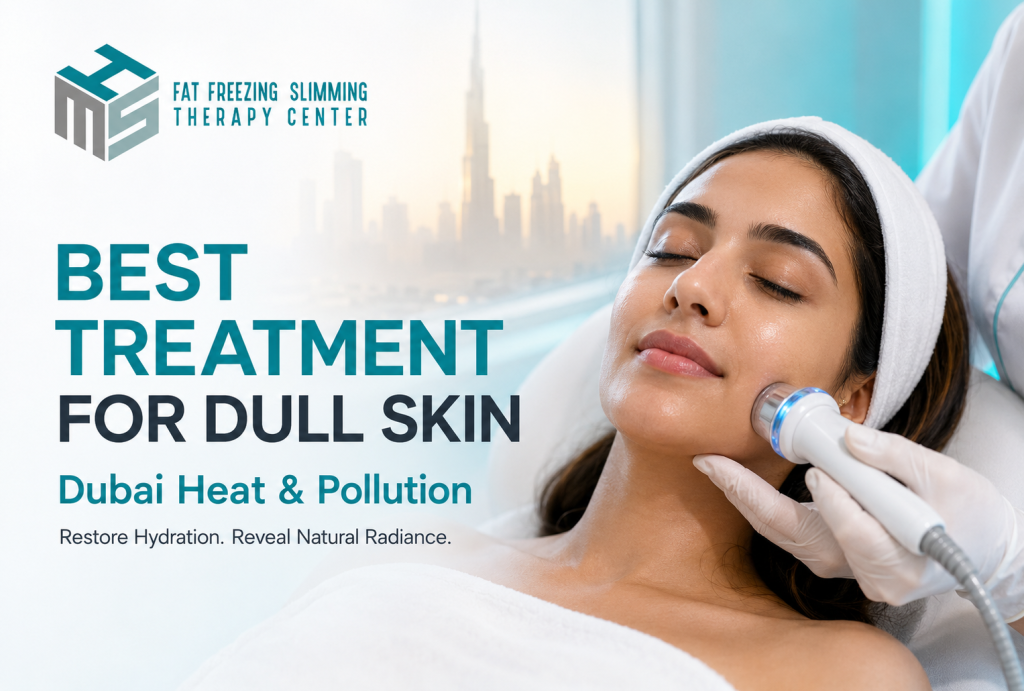
Best Treatment for Dull Skin Caused by Dubai Heat and Pollution
Skin can look fresh in the morning and tired by late afternoon in Dubai. A normal day may include ultraviolet exposure, intense heat, sweat, fine dust, vehicle emissions and hours in air conditioning. Together, these conditions can disturb the barrier, leave residue around pores and make the surface reflect light unevenly. The result is dullness, roughness, dehydration, congestion or patchy tone.
The best Skin Treatment is not simply the strongest facial. It is the option that matches the cause. Dehydrated skin needs a different plan from skin that is congested, pigmented, inflamed or sun-damaged. Treating the wrong problem may create a short glow while leaving the underlying stress untouched.
This guide compares professional options, practical home care and warning signs. It is educational, not a diagnosis; persistent irritation, a new rash, a suspicious lesion or rapidly changing pigment needs qualified medical assessment.
Why Dubai Heat and Pollution Make Skin Look Dull
Dullness is a description, not one condition. When dead cells accumulate, water content falls or pigment becomes irregular, the surface reflects light unevenly and can appear flat or tired.
Heat, sweat and repeated cleansing
Sweat mixed with sunscreen, makeup, sebum and airborne particles can feel heavy. Repeated washing with a strong foaming cleanser may remove residue but also strip protective lipids. Tightness after cleansing, stinging moisturiser or flaky areas can signal dehydration even when the forehead is oily.
A suitable Skin Treatment accounts for this oil-water imbalance. Gentle cleansing, measured exfoliation and barrier-supporting hydration are more useful than chasing a “squeaky clean” feeling.
Ultraviolet and visible-light exposure
UVA contributes to premature ageing and uneven pigment; UVB is strongly associated with sunburn. Visible light may also matter for melasma and post-inflammatory marks. The American Academy of Dermatology’s guidance on dark spots recommends broad-spectrum, water-resistant SPF 30 or higher and notes the value of iron-oxide tinted sunscreen for visible-light-related pigmentation.
No professional Skin Treatment compensates for daily unprotected exposure. Consistent protection helps preserve procedural results.
Dust, particulate matter and urban residue
Dubai air can contain mineral dust, road residue and urban pollutants. The World Health Organization’s pollutant overview identifies particulate matter, ozone and nitrogen dioxide among pollutants of concern. Not every dull day is “pollution damage,” but gentle evening cleansing is sensible.
Scrubbing particles away is not the answer; friction can increase irritation. Use a mild cleanser followed by moisturiser.
Air conditioning and rapid temperature changes
Long hours in air conditioning can increase surface water loss. Moving between outdoor heat and cool indoor rooms can reveal dehydration lines, separated makeup and powder-catching roughness.
An effective Skin Treatment then prioritises hydration before resurfacing. Exfoliating irritated skin may create one bright day followed by a sensitive week.
Identify Your Type of Dullness Before Choosing a Procedure
“Lost glow” can describe several problems. Use these clues as a starting point, not a diagnosis.
Dehydrated dullness
Tightness after washing, evening dehydration lines and makeup clinging to dry areas point toward hydration and gentler cleansing before strong acids.
Congested dullness
Blackheads, closed bumps or a fast-returning film suggest congestion. Painful or inflamed acne needs clinical evaluation.
Pigmented dullness
Patchy colour, post-acne marks or tone that worsens after sun exposure suggests pigment. Sunscreen is central, and corrective procedures must respect the individual’s skin tone and pigment tendency.
Rough or sun-damaged dullness
Gradual roughness, uneven makeup, fine lines or mottled tone may need a planned resurfacing or collagen-supporting course rather than one event facial.
Sensitive or inflamed dullness
Redness, burning, itching or persistent flaking makes brightening the wrong first goal. A safe Skin Treatment first addresses irritation and possible dermatitis, rosacea, acne or product overuse.
What Is the Best Skin Treatment for Dubai-Related Dullness?
For many clients, the answer is a sequence. Cleansing and hydration can refresh the surface; a superficial peel can target rough cells; microneedling may suit selected scars or texture; RF microneedling is a more intensive option for overlapping texture, pores, lines and mild laxity. Mesotherapy or skin boosters may suit selected dehydration concerns.
HMS Fat Freezing offers a range of professional skin treatments in Dubai. The most useful consultation question is not “Which procedure is most powerful?” It is “Which problem are we treating first, and how will we protect the result?”
Hydrafacial-style cleansing and hydration
A multi-step facial combining cleansing, controlled exfoliation, extraction and hydration is a practical first Skin Treatment for mild congestion or dehydration, usually with less recovery than stronger resurfacing.
An immediate glow does not correct deep pigment, established scars or significant sun damage. HMS’s guide to the best Hydrafacial in Dubai helps clients compare hydration and pore cleansing with longer-term remodelling.
Superficial chemical peel
A superficial peel can improve mild roughness, uneven tone and selected congestion. Acid type, concentration, contact time and preparation must fit the skin; stronger is not automatically better, especially when dark marks follow irritation.
The HMS chemical peel service covers controlled exfoliation for tone and texture. The FDA warning on chemical peels advises against certain high-concentration home products because of burns, infection, pigment change and scarring risks.
Microneedling
Microneedling creates controlled micro-injuries to stimulate repair and may suit selected texture, acne scars or fine lines. It is not a first choice for sunburned, infected or inflamed skin.
Before this Skin Treatment, disclose keloids, poor healing, cold sores, active acne, recent procedures and medicines. HMS explains mesotherapy and microneedling, while FDA safety guidance notes possible redness, bruising, itching, tightness and peeling.
RF microneedling
RF microneedling combines needles with radiofrequency energy and may be considered when texture, pores, scars, lines or mild laxity overlap. It is more intensive than a hydrating facial.
HMS explains its approach to RF microneedling. A 2025 FDA safety communication reported serious complications with certain uses, reinforcing the need for careful selection, suitable settings and trained providers.
Hydration-focused mesotherapy or skin boosters
These options may suit persistently crepey or dehydrated skin that has not responded to topical care. Protocols differ, so ask what product and technique will be used, who administers it and which reactions are possible.
This Skin Treatment should be personalised, not chosen from a social-media image. The goal is hydrated, even-looking skin.
Professional Skin Treatment Comparison
| Option | Best suited to | Typical recovery experience | Main advantage | Important limitation |
|---|---|---|---|---|
| Deep-cleansing hydrating facial | Surface buildup, mild congestion and dehydration | Usually little to none; temporary redness is possible | Fast improvement in softness and freshness | Results are mainly superficial and require maintenance |
| Superficial chemical peel | Rough surface, mild discoloration and selected congestion | Flaking, tightness or sensitivity may occur for several days | Customisable resurfacing | Wrong strength or poor aftercare may trigger burns or pigment changes |
| Microneedling | Uneven texture, selected acne scars and fine lines | Redness and sensitivity for several days; varies by depth | Supports gradual texture improvement | Not suitable for every condition; a course may be needed |
| RF microneedling | Texture plus pores, scars, lines or mild laxity | Swelling, redness and pinpoint crusting may occur | Addresses several structural concerns together | Greater cost, risk and recovery than a basic facial |
| Mesotherapy or skin booster | Persistent dehydration and crepey-looking skin | Small bumps, bruising or swelling may occur temporarily | Targets hydration and skin quality | Product, technique and suitability require careful assessment |
This is a decision aid, not a promise. The same Skin Treatment varies with settings, technique, sensitivity and barrier condition.
A Three-Phase Dubai Dull-Skin Recovery Plan
Trying to cleanse, peel, needle and brighten at once increases uncertainty. A phased plan shows what the skin tolerates and what actually helps.
Phase 1: Reset the barrier for 10 to 14 days
For 10 to 14 days, use a gentle cleanser, suitable moisturiser and morning sunscreen. Stop scrubs, brushes and layered exfoliating acids. If plain moisturiser stings, postpone elective resurfacing and seek advice.
This preparation is part of the Skin Treatment. It can reduce discomfort and reveal whether product irritation caused much of the dullness.
Phase 2: Select one primary in-clinic goal
Choose the procedure according to the dominant concern:
- Surface residue plus dehydration: begin with a cleansing and hydration facial.
- Roughness plus mild uneven tone: discuss a superficial peel.
- Established texture or selected acne scars: assess suitability for microneedling.
- Texture plus laxity or deeper remodelling goals: discuss RF microneedling and its risks.
- Persistent dehydration despite good topical care: ask whether a hydration-focused injectable approach is appropriate.
Do not schedule an unfamiliar Skin Treatment immediately before a wedding or flight. Even low-downtime care can cause redness, flaking or swelling, so follow the recommended timing margin.
Phase 3: Protect and maintain
Follow written aftercare, keep the routine simple, avoid deliberate sun exposure and never pick flaking skin. Reintroduce actives only when advised. Maintenance may be periodic facials, a corrective course or consistent home care.
The Home Routine That Makes Professional Results Last
Morning routine
Cleanse as needed, moisturise and apply broad-spectrum, water-resistant SPF 30 or higher, consistent with AAD sunscreen recommendations. Reapply after sweating, swimming, towel drying or long outdoor exposure.
Pigment-prone clients can ask about iron-oxide tinted sunscreen. Shade, a hat and sunglasses complement any corrective Skin Treatment.
Evening routine
Remove makeup and water-resistant sunscreen without aggressive rubbing, then moisturise. Ceramides, glycerin and hyaluronic acid can support hydration, but a tolerated formula matters more than one fashionable ingredient.
Retinoids, vitamin C, azelaic acid and exfoliating acids may help selected concerns, but introduce them slowly and modify them around procedures as instructed.
During the working day
Blot rather than rub sweat, and do not leave gym sweat under makeup for hours. Extra drinking water does not replace topical barrier care or sunscreen.
Pros and Cons of Professional Treatment for Dull Skin
Pros
- A personalised Skin Treatment can target the dominant cause instead of relying on trial-and-error products.
- Professional cleansing or resurfacing provides controlled exfoliation.
- A planned course can address hydration first, then texture or pigment.
- Consultation can identify contraindications and warning signs.
- Written aftercare helps protect results in Dubai’s strong sun and heat.
Cons
- Results vary, and no ethical provider can guarantee a particular degree of brightness or pore reduction.
- Redness, sensitivity, flaking, swelling, bruising or breakouts may occur.
- Stronger options require more recovery and stricter aftercare.
- One visit cannot cancel ongoing UV exposure, dehydration or pollution.
- Choosing a procedure based on price or social-media popularity rather than suitability can lead to disappointment or complications.
HMS Fat Freezing Expert Recommendations
HMS uses a consultation-led approach that can match cleansing, resurfacing, microneedling, RF-based or hydration-focused options to the dominant concern.
HMS Fat Freezing specialists recommend the following practical principles when considering a Skin Treatment for Dubai-related dullness:
- Treat active irritation before cosmetic dullness. Burning, severe peeling or inflamed acne changes the priority.
- Choose one measurable first goal. Decide whether the appointment is primarily for hydration, congestion, pigment or texture.
- Disclose your full routine. Retinoids, acids, bleaching products, recent waxing, laser sessions and prescription medicines can affect timing and tolerance.
- Plan around sun exposure. A beach weekend immediately after resurfacing is poor timing, even if the procedure is described as low downtime.
- Photograph consistently. Compare progress in the same light every two to four weeks.
- Escalate gradually. Move deeper only when the likely benefit justifies it.
This turns the Skin Treatment into a process with a baseline, goal, aftercare plan and review point.
Common Mistakes That Keep Dubai Skin Looking Tired
Over-exfoliation can create brief polish followed by stinging and flaking. Oiliness is not proof of hydration, and sunscreen is not only for beach days; commuting exposure adds up.
Changing products weekly also hides triggers. Repeated glow facials cannot diagnose melasma, dermatitis, acne or a changing lesion. Cosmetic Skin Treatment must not delay medical care.
When to Seek a Dermatologist Instead of Booking a Facial
Seek assessment for persistent itching, pain, oozing, crusting, widespread redness, sudden pigment change, severe acne or a lesion changing in size, shape or colour.
Disclose pregnancy, breastfeeding, isotretinoin or other medicines, keloids, immunosuppression and uncontrolled conditions. The right choice may be to modify or postpone Skin Treatment.
Frequently Asked Questions
1. What is the quickest treatment for dull skin before an event in Dubai?
A gentle cleansing and hydration facial is often considered when the goal is a fresher look with limited expected downtime. However, a first-time procedure can still cause temporary redness or a breakout. Book early enough to observe your response, keep the home routine stable and avoid trying a strong peel immediately before the event. The best quick Skin Treatment is one your skin has tolerated before.
2. Is Hydrafacial better than a chemical peel for dull skin?
Neither is universally better. A Hydrafacial-style procedure is usually more focused on cleansing, extraction and hydration, while a chemical peel provides controlled resurfacing and may be more appropriate for roughness or selected discoloration. Dehydrated, sensitive skin may benefit from a gentler starting point. Pigment or texture concerns may justify a carefully selected peel after assessment.
3. How often should I get a facial in Dubai?
Frequency depends on skin type, procedure intensity, goals and home care. A mild maintenance facial may be scheduled periodically, while peels and microneedling require treatment-specific intervals and recovery. More frequent is not always more effective. Ask the practitioner to explain what should improve before the next session and how progress will be reviewed.
4. Can pollution permanently damage my skin?
Air pollution is a broad exposure, and its effect varies with pollutant type, concentration, duration and individual susceptibility. Dullness after a dusty day is not proof of permanent damage. Consistent gentle cleansing, moisturising and photoprotection are sensible. Persistent pigment, inflammation or textural change deserves assessment rather than a pollution “detox” product.
5. Can I use a face scrub every day to remove Dubai dust?
Daily physical scrubbing is more likely to irritate the barrier than to provide extra cleanliness. Use a mild cleanser and fingertips, rinse thoroughly and pat dry. If water-resistant sunscreen or heavy makeup remains, consider a compatible gentle first cleanse. A professional Skin Treatment can address stubborn congestion without turning everyday cleansing into abrasion.
6. Which treatment is safest for brown or deeper skin tones?
Safety depends on diagnosis, device or peel settings, practitioner experience and the person’s tendency to develop dark marks. There is no single procedure that is automatically safest for every deeper skin tone. Conservative selection, patch or test approaches when appropriate, strict sun protection and a plan for post-inflammatory pigmentation are important discussion points.
7. Does microneedling remove dullness after one session?
Microneedling is generally chosen for gradual improvement in concerns such as texture, selected scars or fine lines, not as a one-night brightening trick. Redness can initially make the complexion look less even. A course may be recommended depending on the indication, and results develop over time. Ask what endpoint is realistic for your concern before consenting.
8. How long should I avoid the sun after a chemical peel?
The answer depends on peel type, depth and individual reaction. Follow the practitioner’s specific instructions and treat sun avoidance and protection as essential throughout healing. Do not pick peeling skin. If marked pain, blistering, increasing redness or unexpected darkening develops, contact the treating provider promptly rather than applying more actives.
9. Why is my skin oily but still dull and dehydrated?
Oil refers mainly to sebum; dehydration refers to insufficient water in the outer skin layers. Heat, air conditioning, harsh cleansing and strong active products can create a shiny yet tight complexion. The appropriate Skin Treatment may combine gentle pore care with hydration and barrier support rather than trying to remove every trace of oil.
10. How do I know whether my treatment is working?
Define the outcome before starting. For hydration, track tightness and makeup application. For congestion, count recurring clogged areas. For pigment, take photographs in consistent lighting every few weeks. For texture, assess touch and standardised images rather than day-to-day mirror changes. A good plan includes a review date and a decision to continue, modify or stop.
Conclusion: The Best Glow Comes From Correct Sequencing
Dubai heat and pollution do not create one universal skin problem. One person needs residue removed from congested pores; another needs the barrier repaired; another is dealing with pigment intensified by sun exposure; and another needs gradual textural remodelling. That is why the best Skin Treatment begins with diagnosis of the dominant concern and uses the least intensive effective step.
For many clients, the sensible sequence is simple: calm the barrier, protect against UV exposure, choose one targeted professional procedure and maintain the result with consistent home care. A dramatic treatment menu is less valuable than a plan that your skin can tolerate and your schedule can support.
To discuss a personalised Skin Treatment for dull, dehydrated, congested or uneven-looking skin, book a consultation with HMS Fat Freezing. Individual suitability, expected results, recovery and risks should be reviewed before any procedure.
Contact HMS Fat Freezing
Address: HAMSAH BUILDING, OFFICE 407 & 408, BLOCK-A, Business Center, beside Ansar Gallery, Dubai
Phone: +971 4 583 2989
Email: info@hmsfatfreezing.com
Website: https://hmsfatfreezing.com/
Editorial and medical-use note: This article is educational and does not replace examination or personalised medical advice. Treatment availability, suitability, protocols and expected recovery can change. Verify current details directly with HMS Fat Freezing and consult an appropriately qualified medical professional for persistent or concerning symptoms.