
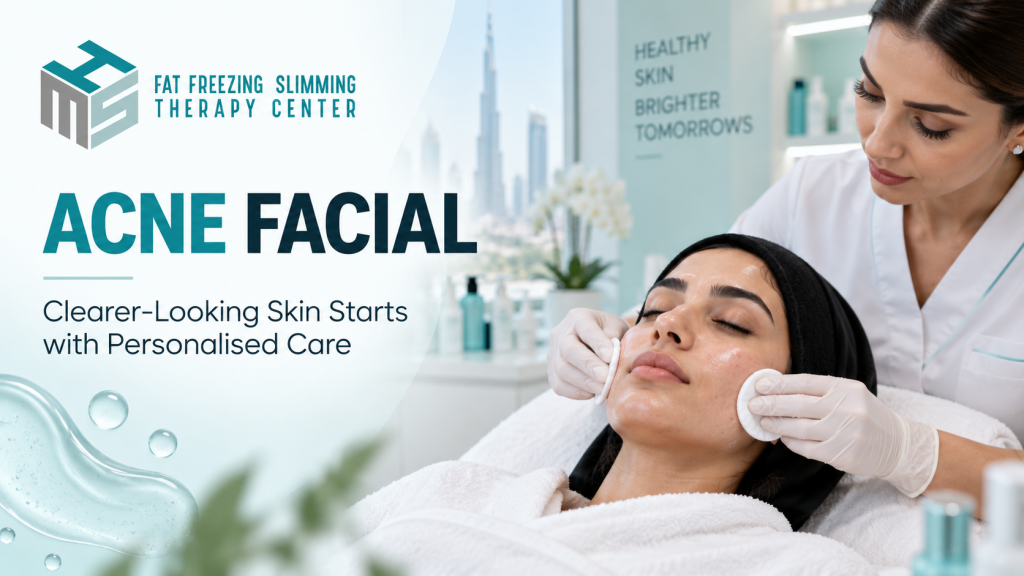
Acne Facial: A Practical Guide to Clearer, Calmer and Better-Balanced Skin
Acne rarely has one simple cause. Excess oil, blocked follicles, hormonal changes, inflammation, unsuitable cosmetics, stress and inconsistent skincare may all contribute to breakouts. This is why aggressively scrubbing the face or repeatedly changing products seldom produces lasting improvement.
A professional acne facial takes a more structured approach. It is designed to remove surface buildup, address suitable blackheads and whiteheads, calm visibly stressed skin and support a healthier skin environment. Unlike an ordinary beauty facial, it should be adapted to the person’s acne type, sensitivity, oil production and current skincare or medication routine.
The treatment can be particularly helpful for oily, congested or comedonal skin. However, it is not a substitute for medical care when acne is painful, cystic, widespread or causing scars. Understanding that distinction is one of the most important parts of choosing the right treatment.
This guide explains what an acne-focused facial involves, who may benefit, what it can realistically achieve and how to protect your results after the appointment.
Contact HMS Fat Freezing for Acne Facial Treatment
What Is an Acne Facial?
An acne facial is a professional skin treatment developed for people experiencing excessive oiliness, clogged pores, blackheads, whiteheads and certain mild breakouts. Depending on the condition of the skin, it may include cleansing, controlled exfoliation, steam or another softening method, selective extraction, a calming mask and non-comedogenic finishing products.
The purpose is not to squeeze every visible spot. Effective treatment is based on identifying what can be addressed safely and what should be left alone.
For example, a superficial blackhead may be suitable for careful extraction. A deep, red and painful lump is not. Applying force to an inflamed lesion can increase swelling, damage surrounding tissue and raise the possibility of post-inflammatory pigmentation or scarring.
The dedicated HMS Acne Facial service follows a personalised approach based on congestion, oil levels, sensitivity and the type of acne present. This assessment matters because two people who describe their skin as “oily and acne-prone” may require very different treatment steps.
Why Acne Develops Even When You Wash Your Face
Acne is not simply the result of an unclean face. It develops within the pilosebaceous unit—the hair follicle and its associated oil gland. Several processes may occur together:
- The sebaceous glands produce excessive sebum.
- Dead skin cells accumulate instead of shedding normally.
- Oil and cells form a plug inside a follicle.
- Microorganisms within the follicle contribute to inflammation.
- Hormonal activity increases oil production or sensitivity.
- Picking, friction or irritating products worsen the inflammation.
Blackheads are not dark because they contain dirt. They are open comedones in which the follicular material has been exposed to air. Whiteheads are closed follicles, while papules and pustules involve more inflammation.
The NHS acne overview advises washing acne-affected areas gently and avoiding repeated washing, squeezing and oil-based products. Excessive cleansing can irritate the skin without removing the deeper follicular blockage.
An acne facial therefore aims to improve the conditions around congested skin rather than treating acne as a hygiene failure.
Contact HMS Fat Freezing for Acne Facial Treatment
What Happens During an Acne Facial?
No responsible clinic should perform exactly the same facial on every client. The following steps describe a typical appointment, although the order and products may change according to the assessment.
1. Skin consultation and assessment
The specialist should examine the location and appearance of the breakouts, the level of inflammation, visible dehydration, oil distribution, sensitivity and existing pigmentation.
You may be asked about:
- Prescription or over-the-counter acne products
- Retinoid use
- Recent chemical peels, laser procedures or waxing
- Allergies and previous product reactions
- Pregnancy or breastfeeding
- History of eczema, rosacea or cold sores
- Current medications and medical treatment
This information helps prevent inappropriate combinations. Skin using prescription retinoids, for instance, may be more reactive and should not automatically receive strong exfoliation.
Contact HMS Fat Freezing for Acne Facial Treatment
2. Gentle cleansing
The face is cleansed to remove makeup, sunscreen, sweat, excess sebum and environmental residue. Double cleansing may be appropriate when a client is wearing water-resistant sunscreen or heavier makeup.
A suitable cleanser should leave the skin clean without creating an excessively tight feeling. That tight sensation is not evidence of deeper cleansing; it may indicate that the skin barrier has been stripped of too much protective oil.
3. Controlled exfoliation
Exfoliation loosens accumulated surface cells and may make some clogged pores easier to clear. The method could involve an enzyme treatment, a carefully selected acid or another professional exfoliating product.
The objective is controlled renewal—not visible aggression. More peeling does not necessarily mean a better result. Excessive exfoliation may cause redness, sensitivity and rebound oiliness while making post-acne marks look more pronounced.
Clients considering stronger resurfacing can discuss whether a professionally selected chemical peel is more appropriate at another stage of their skin plan.
4. Pore preparation
Some protocols use gentle steam, warm towels or specialised solutions to soften surface debris before extraction. Steam is not mandatory and may be avoided when the skin is highly sensitive, flushed or affected by certain vascular conditions.
The method should be determined by the skin rather than by a fixed facial routine.
5. Selective extraction
Extraction is often the most misunderstood stage of an acne facial. It should be selective, hygienic and conservative.
Suitable blackheads and certain non-inflamed whiteheads may be removed using controlled pressure and sterile techniques. Deep papules, pustules, nodules and cysts should not be aggressively squeezed. When material does not release with minimal controlled pressure, continuing to force the area can cause unnecessary trauma.
A good session is not measured by the number of pores extracted. It is measured by how safely congestion is addressed while preserving the skin barrier.
6. Calming or balancing mask
After exfoliation and any suitable extractions, a mask may be used to soothe the skin, reduce the appearance of temporary redness, absorb excess surface oil or restore hydration.
Oily skin can still be dehydrated. A person may produce considerable sebum while lacking adequate water in the outer layers of the skin. Automatically using a harsh, drying mask can worsen this imbalance.
Contact HMS Fat Freezing for Acne Facial Treatment
7. Optional supportive technology
Depending on the assessment and treatment protocol, an acne facial may include an additional supportive step such as LED light. Not every person needs a device-based add-on, and results depend on the specific technology, settings and treatment plan.
Clients should ask why an add-on is being recommended, what evidence supports it, what sensations to expect and whether it changes the aftercare requirements.
8. Moisturiser and sun protection
The treatment normally concludes with lightweight hydration and daytime sun protection. This is important because exfoliated or recently treated skin may be more vulnerable to irritation and ultraviolet exposure.
Contact HMS Fat Freezing for Acne Facial Treatment
Acne Facial Benefits: What Can It Realistically Do?
A well-planned acne facial can support acne-prone skin in several useful ways.
It can reduce visible pore congestion
Controlled exfoliation and appropriate extraction may clear suitable blackheads and whiteheads. This can make the skin surface appear smoother and reduce the temptation to perform unsafe extractions at home.
It removes surface buildup
Sunscreen, cosmetics, dead cells, sweat and sebum can accumulate on the skin. Professional cleansing removes this buildup without relying on abrasive scrubbing.
It supports oil management
The treatment can remove excess surface oil and help clients select products that manage shine without stripping the skin. This distinction is important because aggressive degreasing may lead to irritation rather than better acne control.
It provides professional observation
A treatment appointment gives the specialist an opportunity to notice patterns that may be missed at home. Breakouts concentrated near the hairline might suggest a hair-product issue. Irritation around the mouth may not behave like ordinary acne. Uniform itchy bumps may also deserve a different assessment.
A facial does not diagnose medical conditions, but responsible observation can indicate when a dermatologist should become involved.
Contact HMS Fat Freezing for Acne Facial Treatment
It can improve skincare consistency
Many people with acne use too many active ingredients at the same time. A professional appointment can help simplify the routine and clarify which products should be paused before or after treatment.
It may temporarily improve texture and freshness
Once surface buildup is removed and the skin is hydrated appropriately, it may feel softer and appear fresher. These immediate cosmetic improvements should not be confused with permanently curing the biological causes of acne.
Acne Facial Versus a Regular Facial
| Feature | Acne Facial | Regular Facial |
|---|---|---|
| Primary goal | Address congestion, excess oil and acne-prone skin | Relaxation, hydration or general skin maintenance |
| Initial assessment | Focuses on acne type, sensitivity and active products | Usually focuses on general skin type and cosmetic concerns |
| Exfoliation | Carefully adjusted to inflammation and tolerance | May use general exfoliation not intended for active acne |
| Extractions | Selective removal of suitable comedones | May be limited, optional or performed routinely |
| Product choice | Lightweight, calming and non-comedogenic products | May include richer oils, creams or fragranced products |
| Inflamed spots | Usually avoided during extraction | May not receive acne-specific evaluation |
| Home-care guidance | Usually includes acne-compatible aftercare | Often provides general maintenance advice |
| Medical limitations | Should identify when dermatologist care is needed | Not necessarily designed around acne severity |
Clients can also review the broader range of facial treatments at HMS Fat Freezing when their primary concern is hydration, ageing, dullness or general maintenance rather than acne congestion.
Who Is a Suitable Candidate?
An acne facial may be worth considering if you have:
- Oily or combination skin
- Recurring blackheads or whiteheads
- Mild, non-inflamed congestion
- Rough texture caused by surface buildup
- Occasional breakouts
- Difficulty selecting acne-compatible skincare
- A tendency to perform damaging extractions at home
- Skin that needs professional cleansing before a long-term care plan
Suitability cannot be decided from a single label such as “oily skin.” Someone with an impaired barrier may appear shiny while also experiencing burning, flaking and dehydration. In that case, calming and barrier support may be more appropriate than extraction or strong exfoliation.
When a Facial Is Not Enough
An acne facial should not be presented as a cure for every type of acne. Medical assessment is important when you have:
- Painful nodules or cysts
- Rapidly worsening breakouts
- Acne covering large areas of the face, chest or back
- Bleeding, crusting or signs of infection
- Persistent acne that has not responded to appropriate care
- Developing scars or deep indentations
- Significant emotional distress related to the condition
- A suspected hormonal condition
- A sudden acne-like eruption after beginning medication
The American Academy of Dermatology Acne Resource Center explains that clearer skin requires both acne-friendly skincare and treatment selected for the types of blemishes present.
Prescription treatments may be needed for moderate or severe disease. The NHS acne treatment guide describes options including topical retinoids, benzoyl peroxide, azelaic acid, antibiotics and specialist-managed isotretinoin. These are medical decisions and should not be replaced by salon or clinic facials.
Active Acne, Dark Marks and Scars Are Different Problems
Clients often use the word “acne” to describe three separate concerns:
- Active acne: Current blackheads, whiteheads, papules, pustules, nodules or cysts.
- Post-inflammatory marks: Flat red, brown or grey areas remaining after a spot heals.
- Acne scars: Permanent changes in skin texture, including depressions or raised tissue.
One treatment cannot address all three in the same way.
An acne facial is most relevant to surface congestion, oil management and supportive care. Pigmentation requires a plan that considers skin tone, inflammation and sun exposure. Textural scars may require procedures selected according to scar type and depth.
For deep, narrow scars, clients can learn about the clinic’s ice-pick facial treatment options. Scar procedures are generally considered after active acne is under reasonable control; otherwise, new breakouts may continue creating new marks.
Benefits and Limitations
Pros of an Acne Facial
- Offers professional cleansing tailored to acne-prone skin
- May reduce suitable blackheads and whiteheads
- Helps remove accumulated surface oil and product residue
- Can discourage unsafe squeezing at home
- Allows skincare products to be reviewed
- Can support a consistent acne-management plan
- May provide an immediate improvement in surface smoothness
- Can be adjusted for oiliness, dehydration and sensitivity
Cons and limitations
- It does not cure hormonal or cystic acne
- Temporary redness can occur after exfoliation or extraction
- Aggressive treatment can worsen inflammation or pigmentation
- Multiple appointments may be required for recurring congestion
- Results depend heavily on home care and treatment suitability
- It cannot permanently erase enlarged pores
- It is not a replacement for prescription treatment
- Unsuitable products or excessive extraction may damage the skin barrier
The most valuable expectation is realistic progress. A careful acne facial may support clearer-looking skin, but lasting acne management frequently involves consistent home care, trigger identification and medical treatment when indicated.
How Often Should You Book an Acne Facial?
There is no universal timetable. Frequency depends on the type and amount of congestion, skin sensitivity, response to the first session, products used at home and whether the client is receiving medical acne treatment.
Some people may initially benefit from appointments several weeks apart, while others need less frequent maintenance. Sensitive or actively treated skin may require longer intervals.
Be cautious of any recommendation for frequent intensive facials without reassessment. Skin needs time to recover from exfoliation and extraction. Scheduling should be based on visible progress and tolerance rather than a prepaid calendar alone.
Before Your Appointment
To help the specialist make a safe decision, prepare a list or photographs of the skincare and medications you currently use.
Before the appointment:
- Do not pick or squeeze spots.
- Avoid trying a strong new product immediately beforehand.
- Report retinoids, benzoyl peroxide, exfoliating acids and prescription medication.
- Mention recent waxing, laser treatment, microneedling or peels.
- Explain any history of eczema, rosacea, allergies or cold sores.
- Avoid arriving with sunburned or severely irritated skin.
- Ask whether any active product should be paused, and for how long.
Do not discontinue prescribed medication without speaking to the clinician who prescribed it.
Acne Facial Aftercare
The first few days after an acne facial should focus on protection and barrier support.
Keep the routine simple
Use a gentle cleanser, suitable moisturiser and broad-spectrum sunscreen. Avoid introducing several new products while the skin is settling.
Avoid picking
A pore that still looks congested after the treatment should not be attacked at home. Picking transfers bacteria, increases inflammation and can turn a short-lived blemish into a long-lasting mark.
Pause unnecessary exfoliation
Do not immediately combine scrubs, exfoliating pads, strong acids and cleansing brushes. Follow the personalised timeline provided by your specialist.
Use sun protection
Sun exposure can worsen the appearance of post-inflammatory marks and irritate recently exfoliated skin. Choose a non-comedogenic sunscreen suited to your skin and apply it consistently.
Be cautious with acne medication
The US Food and Drug Administration’s OTC acne-treatment monograph notes that using multiple topical acne medications at the same time can increase dryness and irritation. Ask when you should restart ingredients such as salicylic acid, benzoyl peroxide or retinoids.
Keep common contact surfaces clean
Change pillowcases regularly, clean your phone screen and wash reusable makeup tools. These steps do not cure acne, but they reduce unnecessary exposure to oil, residue and irritants.
A Practical Home Routine for Acne-Prone Skin
A complicated routine is not automatically a better routine. For many people, a consistent foundation is more useful.
Morning
- Cleanse gently or rinse as advised.
- Apply a prescribed or professionally recommended product if applicable.
- Use a lightweight, non-comedogenic moisturiser.
- Apply broad-spectrum sunscreen.
Evening
- Remove makeup and water-resistant sunscreen.
- Cleanse gently.
- Apply the acne treatment recommended for your skin.
- Finish with a compatible moisturiser.
Introduce only one significant new product at a time. If several products are started together and the skin becomes irritated, it becomes difficult to identify the cause.
Expert Recommendations from HMS Fat Freezing
The following practical principles reflect the personalised, skin-condition-led approach used by HMS Fat Freezing.
Treat the skin you have today
A client’s skin can change with climate, hormones, stress, medication and product use. A protocol that worked months ago may need adjustment. Each acne facial should begin with a fresh assessment.
Do not confuse dryness with progress
Peeling and tightness do not prove that acne products are working. An impaired barrier can make the face sting, appear red and tolerate fewer useful ingredients. Oil control should be balanced with adequate hydration.
Extract less, but extract safely
Not every visible bump should be removed. Conservative extraction of appropriate comedones is preferable to forceful treatment that leaves swelling and marks.
Separate acne control from scar correction
Active breakouts should be stabilised before an aggressive scar programme is considered. Trying to treat acne, pigmentation and deep scars all at once can create unnecessary irritation.
Build a routine the client can follow
A sustainable three- or four-step routine usually performs better than a shelf full of products used inconsistently. The best plan is one that matches the client’s tolerance, schedule and acne severity.
Know when to refer
A responsible aesthetic provider recognises the boundary between supportive skin treatment and medical acne management. Nodules, cysts, scarring and persistent inflammation warrant consultation with a qualified dermatologist.
Frequently Asked Questions
1. Does an acne facial remove pimples permanently?
No. An acne facial may clear suitable surface congestion and improve oil management, but it cannot permanently eliminate the hormonal, inflammatory or genetic factors involved in acne. Long-term improvement may require consistent skincare and dermatologist-prescribed treatment.
2. Can I get an acne facial when I have active breakouts?
It depends on the type of breakout. Mild congestion and certain non-inflamed lesions may be treated carefully. Painful pustules, nodules and cysts should not be aggressively extracted. A skin assessment is essential before treatment begins.
3. Is extraction painful?
You may experience pressure or brief discomfort, particularly in congested areas. Extraction should not involve prolonged force or intense pain. If a blockage does not release safely, it should generally be left for another approach.
4. Will my face become red after the treatment?
Mild temporary redness may occur, especially after exfoliation or extraction. Significant swelling, blistering, severe pain or worsening irritation is not an expected cosmetic result and should be reported promptly to the treatment provider.
5. How soon will I see results?
The skin may feel cleaner and smoother shortly after an acne facial, while some congestion may appear reduced. Biological acne improvement takes longer. Medical treatments commonly require weeks or months, so an instant clear-skin promise should be viewed cautiously.
6. Can an acne facial help hormonal acne?
It may support surface cleansing and general skin maintenance, but it does not correct the hormonal driver. Breakouts that follow a menstrual pattern, persist around the jawline or occur with other hormonal symptoms should be discussed with a qualified medical professional.
7. Can teenagers have this treatment?
Teenagers with mild congestion may be suitable candidates after proper assessment and any required parental or guardian consent. A gentle protocol is important. Moderate or severe teenage acne should receive medical attention early to reduce the risk of permanent scarring.
8. Can I wear makeup after an acne facial?
It is generally better to minimise heavy makeup immediately after treatment, particularly following extraction or exfoliation. If makeup is necessary, follow the specialist’s instructions and choose clean, non-comedogenic products and tools.
9. Does an acne facial remove acne scars and dark spots?
It may improve surface freshness, but it will not remove deep scars. Flat post-acne marks and indented scars require different strategies. The correct option depends on whether the concern is pigmentation, redness, an ice-pick scar, a rolling scar or another textural change.
10. Is an acne facial safe during pregnancy?
A modified facial may be possible, but pregnancy must be disclosed before treatment because some skincare ingredients and procedures may not be appropriate. Obtain advice from your obstetric or medical professional when there is any uncertainty.
Conclusion
An acne facial is most effective when it is precise, conservative and personalised. Its value lies not in harsh scrubbing or extracting every blemish, but in carefully cleansing congested skin, treating appropriate comedones, supporting the barrier and helping clients make better home-care decisions.
The treatment has clear limitations. It cannot replace dermatologist-led care for cystic acne, persistent inflammation or scarring. When used for the right skin concerns and combined with consistent aftercare, however, it can become a useful part of a broader acne-management strategy.
If your skin feels oily, congested or difficult to manage, begin with an assessment rather than guessing which treatment you need. The team at HMS Fat Freezing can evaluate your visible skin condition, explain appropriate treatment options and provide personalised preparation and aftercare guidance.
Book an Acne Facial Consultation in Dubai
HMS Fat Freezing
HAMSAH BUILDING, OFFICE 407 & 408, BLOCK-A
Business Center, beside Ansar Gallery
Dubai, United Arab Emirates
Phone: +971 4 583 2989
Email: info@hmsfatfreezing.com
Website: https://hmsfatfreezing.com/