
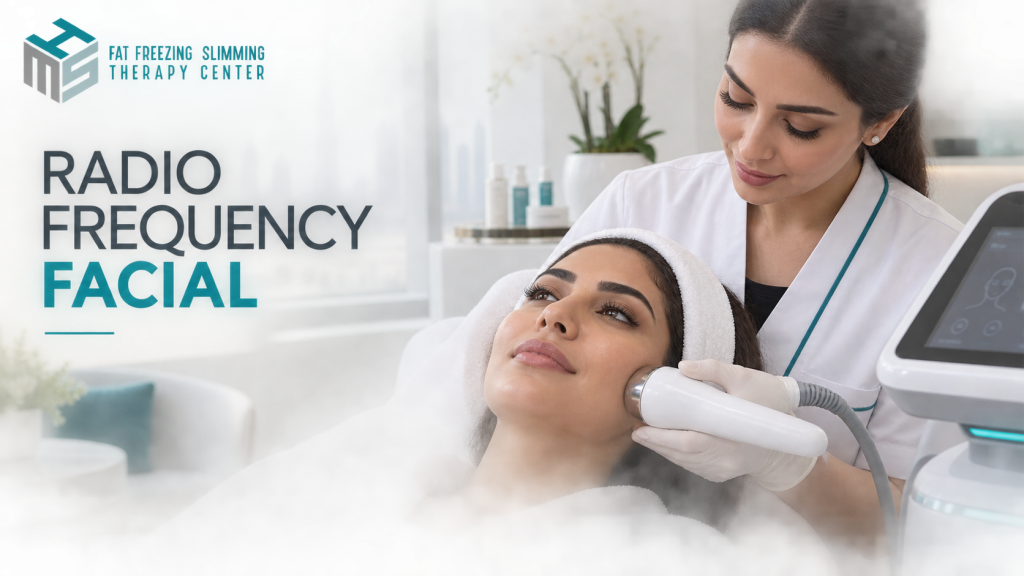
Radio Frequency Facial: A Practical Guide to Firmer, Smoother-Looking Skin
A skincare product can hydrate the surface of your face, but it cannot always address the gradual loss of firmness occurring deeper within the skin. That difference explains why the Radio Frequency Facial has attracted attention among people who want visible rejuvenation without injections, surgery or a long recovery period.
The treatment uses controlled radiofrequency energy to warm selected layers of facial tissue. That warmth supports the skin’s natural collagen-remodelling response and may gradually improve mild laxity, fine lines and uneven texture.
It sounds straightforward, but good treatment involves much more than moving a warm applicator across the face. The device, energy level, contact technique, treatment depth and condition of the client’s skin all matter. The most effective plan is rarely the most aggressive one; it is the one correctly matched to the person’s skin, facial structure and expectations.
This guide explains how a Radio Frequency Facial works, what it can realistically achieve and how it differs from treatments such as HIFU, HydraFacial and RF microneedling. It also covers preparation, aftercare, potential disadvantages and the questions worth asking before booking an appointment.
Contact HMS Fat Freezing for Radio Frequency Facial Treatment
What Is a Radio Frequency Facial?
A Radio Frequency Facial is a non-invasive aesthetic treatment that delivers radiofrequency energy through an applicator placed against the skin. The energy encounters resistance within the tissue and is converted into controlled heat.
Rather than removing the surface of the skin, a standard non-invasive RF treatment is designed to create a thermal response beneath it. The practitioner keeps the applicator moving and adjusts the energy according to the treatment area, device protocol, skin condition and client comfort.
The resulting warmth can produce two related effects:
- Existing collagen fibres may temporarily contract, contributing to an early feeling of firmness.
- The controlled thermal response can encourage longer-term collagen remodelling.
Collagen is one of the structural proteins that helps skin maintain its strength and resilience. Natural collagen production and organisation change with age, cumulative sun exposure, lifestyle habits and hormonal factors. RF cannot stop that process, but it may help improve how mildly lax or crepey skin looks.
A systematic review indexed by the National Library of Medicine found clinical evidence that monopolar and bipolar radiofrequency devices can produce measurable improvements in facial and body skin laxity. It also noted that results and complication profiles vary according to the technology used.
That last point is important. “Radiofrequency” describes an energy type, not one universal treatment. Different devices can deliver energy at different depths and intensities.
How Does the Treatment Support Collagen?
People sometimes describe an RF facial as “melting wrinkles.” That is not an accurate explanation.
During a Radio Frequency Facial, carefully controlled energy raises the temperature of selected tissue without intentionally damaging or removing the skin’s surface. This thermal stimulation initiates a repair and remodelling response. Over the following weeks, collagen fibres can reorganise while new structural support gradually develops.
This is why treatment results should be assessed on two timelines.
The immediate effect
Skin can look refreshed, plumper or slightly firmer soon after an appointment. Some of that early improvement may be related to temporary collagen contraction, circulation and hydration. It should not automatically be interpreted as the final result.
The progressive effect
Collagen remodelling takes time. Changes in firmness and texture may become more noticeable over the following weeks or months. The speed and extent of improvement depend on age, baseline laxity, treatment settings, number of sessions, general health and individual biological response.
A practical way to evaluate progress is to take photographs under the same lighting, from the same distance and with the same facial expression. Comparing a bright bathroom selfie with a photograph taken outdoors will not provide a reliable assessment.
Contact HMS Fat Freezing for Radio Frequency Facial Treatment
What Can a Radio Frequency Facial Improve?
The treatment is generally best suited to early or moderate cosmetic concerns rather than severe sagging.
A personalised Radio Frequency Facial plan may help improve the appearance of:
- Mild laxity along the cheeks or jawline
- Early loss of facial firmness
- Fine lines
- Slightly crepey skin
- Uneven-looking texture
- Softness beneath the chin
- Tired or less-defined facial contours
- Age-related changes around the lower face
It may also appeal to someone who wants a gradual, natural-looking change. Because the treatment does not add artificial volume, it does not create the same effect as dermal filler. Friends may notice that the person looks refreshed without immediately identifying a procedure.
Clients interested in a broader selection of cleansing, hydrating and rejuvenating options can also explore the clinic’s facial treatments in Dubai.
What it cannot do
A Radio Frequency Facial cannot replicate a surgical facelift. It will not remove a large amount of excess skin, dramatically reposition facial tissue or correct every type of wrinkle.
Deep expression lines caused by repeated muscle movement may require a different approach. Significant volume loss may also need to be assessed separately, as tightening skin without addressing lost volume will not always produce the desired balance.
Treatment should therefore begin with the question, “What is causing this concern?” rather than, “Which device is currently popular?”
Contact HMS Fat Freezing for Radio Frequency Facial Treatment
What Happens During an Appointment?
Although individual protocols vary, a professional appointment usually follows a recognisable sequence.
Consultation and assessment
The practitioner reviews your goals, medical history, medications, previous aesthetic procedures and current skincare routine. Your skin is assessed for laxity, irritation, active lesions and other factors that could influence treatment.
This stage should not feel like a sales formality. It determines whether a Radio Frequency Facial is appropriate and whether another treatment might suit the concern better.
Cleansing and preparation
Makeup, sunscreen, oil and surface impurities are removed. Depending on the device, a conductive gel or medium may be applied to help the applicator move evenly and maintain consistent contact.
Controlled energy delivery
The handheld applicator is moved across planned treatment zones. Most clients describe the sensation as gradually increasing warmth, similar to a warm facial massage.
The practitioner should continue checking comfort and observing the skin. More heat is not automatically better. Excessive energy, slow movement or poor contact can increase the risk of unwanted thermal injury.
Completion and aftercare
The skin is cleansed and suitable soothing or hydrating products may be applied. Sunscreen is particularly important when leaving the clinic during daylight hours.
Treatment time varies by device and the number of areas addressed, but facial appointments commonly fit comfortably into a normal day.
Contact HMS Fat Freezing for Radio Frequency Facial Treatment
Radio Frequency Facial Results: What Is Realistic?
The best candidates usually want refinement rather than transformation.
A Radio Frequency Facial may make the jawline appear slightly neater, the cheeks feel firmer or fine lines look softer. Improvements tend to develop progressively, which can be an advantage for clients who prefer discreet results.
However, results vary. Two people of the same age can respond differently because their skin thickness, collagen condition, sun history and degree of laxity are not identical.
Consider these practical examples:
- A 35-year-old with early softness around the jaw may notice improved definition after an appropriate course.
- A 48-year-old with mild cheek and lower-face laxity may see firmer texture but should not expect surgical lifting.
- A 60-year-old with substantial excess skin may receive only modest improvement and could be better served by discussing other options with a qualified medical professional.
According to the Cleveland Clinic’s overview of RF skin tightening, changes may develop over several months as the skin produces new collagen. Maintenance may be needed as natural ageing continues.
No ethical provider should guarantee a specific percentage of tightening or promise permanent results.
Contact HMS Fat Freezing for Radio Frequency Facial Treatment
How Many Sessions Will You Need?
There is no responsible universal answer.
Some technologies are designed around a single intensive session, while gentler devices may be used in a series. Your treatment frequency should reflect the device protocol, skin response, target area and overall objective.
At HMS Fat Freezing, the recommended number of Radio Frequency Facial sessions should be determined after consultation rather than copied from a standard package. This prevents undertreatment, unnecessary appointments and the assumption that every face needs the same energy exposure.
Progress should be reviewed between sessions. If the skin is improving, the next step can be adjusted accordingly. If no meaningful change is visible after an appropriate interval, simply adding more sessions without reassessment may not be the right answer.
Contact HMS Fat Freezing for Radio Frequency Facial Treatment
RF Facial vs Other Facial Treatments
The following comparison can help clarify which treatment category may align with a particular concern. It is not a substitute for an individual assessment.
| Treatment | Primary purpose | Skin penetration | Typical downtime | Often considered for |
|---|---|---|---|---|
| Radio Frequency Facial | Controlled heating and collagen support | Non-invasive thermal delivery | Minimal | Mild laxity, fine lines and firmer-looking skin |
| RF microneedling | Fractional injury plus RF energy | Needles enter the skin | Several days may occur | Texture, scars, wrinkles and tightening |
| HIFU | Focused ultrasound at selected depths | Non-invasive focused energy | Usually minimal | Deeper lifting and contour support |
| HydraFacial | Cleansing, exfoliation, extraction and hydration | Primarily surface-focused | Little to none | Congestion, dehydration and immediate radiance |
| Chemical peel | Controlled chemical exfoliation | Depth varies by peel | Varies | Pigmentation, texture, acne or surface ageing |
| Surgical facelift | Repositions deeper tissue and removes excess skin | Surgical | Significant | Advanced laxity and substantial lifting |
A HydraFacial is usually more appropriate when the main goals are cleansing, hydration and immediate brightness. A Radio Frequency Facial places greater emphasis on firmness and collagen remodelling.
Similarly, HIFU treatment uses focused ultrasound rather than radiofrequency energy. The ideal option depends on treatment depth, facial anatomy, comfort preferences and the severity of laxity.
Radio Frequency Facial vs RF Microneedling
These procedures are frequently confused, even though they are not interchangeable.
Contact HMS Fat Freezing for Radio Frequency Facial Treatment
A conventional non-invasive Radio Frequency Facial delivers energy through an applicator resting on the skin. RF microneedling uses needle-like electrodes that penetrate the skin before delivering energy at selected depths.
Because RF microneedling breaks the skin and places concentrated heat below its surface, it has a different risk profile, recovery period and clinical application.
In October 2025, the US Food and Drug Administration issued a safety communication concerning reports of serious complications with certain uses of RF microneedling devices. Reported problems included burns, scarring, fat loss, nerve damage and disfigurement. The FDA specifically described RF microneedling as a medical procedure and advised against using these devices at home.
The American Academy of Dermatology subsequently emphasised the importance of appropriate medical expertise, facial-anatomy knowledge and consultation with a qualified dermatologist when considering cosmetic procedures.
This information should not be carelessly applied to every non-invasive RF facial. It does, however, reinforce a broader lesson: clients should know exactly which procedure and device they are receiving.
Contact HMS Fat Freezing for Radio Frequency Facial Treatment
Pros and Cons
Potential advantages
- No surgical incisions
- No intentional skin penetration with a standard non-invasive treatment
- Minimal disruption to daily activities
- Gradual, discreet-looking improvements
- Can address several facial areas in one appointment
- May support firmer and smoother-looking skin
- Suitable for clients who do not want injectable treatments
- Can be incorporated into a broader skin-maintenance plan
Potential disadvantages
- Results are usually subtle rather than dramatic
- Multiple sessions may be recommended
- Maintenance treatments may be necessary
- Temporary redness, warmth, tenderness or swelling can occur
- Outcomes vary between individuals
- Incorrect settings or technique can cause burns or unwanted tissue effects
- It cannot replace surgery for advanced skin laxity
- Treatment may not be suitable with certain medical conditions or implants
The absence of incisions does not make a treatment risk-free. A professional Radio Frequency Facial still requires appropriate equipment, training, screening and temperature management.
Who May Be a Good Candidate?
A suitable candidate is often someone with mild or early skin laxity who understands that results will be gradual.
You may be considered for treatment if:
- You want firmer-looking skin without surgery.
- You have mild fine lines or texture changes.
- Your expectations are realistic.
- Your skin is healthy at the time of treatment.
- You can follow aftercare instructions.
- You are prepared to wait for collagen remodelling.
Skin colour alone does not determine candidacy. Radiofrequency does not rely on targeting pigment in the same way as certain light-based technologies. Nevertheless, settings must still be selected carefully for the individual.
Who Should Avoid or Postpone Treatment?
A Radio Frequency Facial may need to be avoided or postponed during pregnancy, over active infections, open wounds, severe inflammation or recently sunburned skin.
People with pacemakers, defibrillators, implanted electronic equipment or metal in or near the treatment area must disclose this information before treatment. Previous facial surgery, fillers, threads, dental hardware and other aesthetic procedures should also be discussed.
Additional assessment may be required for clients with:
- Impaired sensation in the treatment area
- Conditions affecting healing
- Uncontrolled medical conditions
- A history of abnormal scarring
- Active rosacea or eczema flare-ups
- Recent aggressive peels, lasers or resurfacing
- Medicines that alter healing or skin sensitivity
Do not stop prescribed medication simply to qualify for an aesthetic appointment. Discuss the situation with the prescribing clinician and treatment provider.
Possible Side Effects and Warning Signs
Temporary warmth or mild redness can occur after a properly performed Radio Frequency Facial. Some clients may experience minor tenderness or swelling. These reactions should generally settle rather than intensify.
Contact the provider promptly if you develop:
- Blistering
- Increasing pain
- Persistent or worsening swelling
- Changes in sensation
- Unusual skin discolouration
- Crusting or signs of a burn
- Symptoms of infection
Take clear photographs and avoid applying strong acids, retinoids or unapproved home remedies to an unexpected reaction.
Preparing for Your Appointment
Preparation does not need to be complicated.
In the days before treatment, avoid deliberately tanning or irritating the skin. Tell the clinic about recent injectables, threads, laser procedures, peels or other energy-based treatments.
On the appointment day:
- Arrive with clean skin if possible.
- Bring an accurate medication and health history.
- Remove metal jewellery around the treatment zone.
- Point out dental implants or facial hardware.
- Explain any reduced sensitivity, tingling or numbness.
- Ask which areas will be treated and what sensation to expect.
If a practitioner cannot clearly explain what device will be used, how it differs from RF microneedling or why it suits your concern, pause before proceeding.
Aftercare That Actually Matters
Most clients can return to ordinary activities after a non-invasive Radio Frequency Facial, but the skin should still be treated gently.
Use a mild cleanser, simple moisturiser and broad-spectrum sunscreen. Avoid very hot showers, steam rooms, saunas and strenuous exercise for the period recommended by the practitioner, particularly if warmth or redness remains.
Do not try to “boost” the result by using an at-home RF device immediately after professional treatment. Stacking heat-based procedures without professional guidance can irritate the skin and makes total energy exposure difficult to judge.
Daily sun protection is one of the most useful long-term measures. Collagen-focused treatment cannot compensate for repeated unprotected ultraviolet exposure. Sleep, adequate protein intake, smoking avoidance and consistent skincare also influence how the skin ages.
Expert Recommendations From HMS Fat Freezing
The HMS Fat Freezing team recommends approaching a Radio Frequency Facial as part of a considered skin plan rather than a one-off trend.
Start with the concern, not the machine
“Skin tightening” can mean anything from improving a slightly soft jawline to correcting significant hanging skin. Those objectives require different strategies. A face-to-face assessment helps determine whether RF is likely to deliver enough improvement.
Do not chase excessive heat
Clients sometimes assume that a hotter session will create a stronger result. Effective treatment depends on controlled, even energy—not on enduring unnecessary discomfort. Report sharp heat, stinging or pain immediately.
Treat the face as a three-dimensional structure
A technically tighter area is not always a more attractive one. Facial fat, bone structure, skin thickness and natural asymmetry must be considered. Conservative treatment is especially important on naturally lean faces where unwanted volume loss would be noticeable.
Use consistent photographs
Take baseline and follow-up photographs in neutral lighting, without filters and with the head in the same position. This makes subtle changes easier to assess and reduces the influence of wishful thinking or day-to-day variation.
Combine treatments only for a clear reason
Pairing procedures can be useful when separate concerns exist—for example, hydration plus mild laxity. But every additional treatment should have a defined purpose, suitable timing and compatible recovery plan.
Clients can learn more about the clinic’s dedicated Radio Frequency Facial service or arrange a personalised assessment through the HMS Fat Freezing contact page.
Frequently Asked Questions
1. Does a Radio Frequency Facial really work?
It can produce measurable improvements in mild skin laxity and firmness, but results vary. Evidence supports the use of certain monopolar and bipolar RF technologies for skin tightening. Device quality, practitioner technique, treatment settings and individual collagen response influence the outcome. Expect refinement, not the effect of surgical lifting.
2. How long do RF facial results last?
There is no fixed duration for everyone. Collagen remodelling may develop over several months, while natural ageing continues in the background. Sun exposure, smoking, skincare, age and maintenance treatments all influence longevity. Your provider should recommend review points rather than promise permanent results.
3. How many RF facial sessions are normally needed?
Some clients receive a course of treatments, while certain devices use a different protocol. The correct number depends on the technology, treatment intensity and condition of the skin. A provider should reassess progress instead of selling an identical package to every client.
4. Is a Radio Frequency Facial painful?
Most people describe a non-invasive treatment as warm rather than painful. You should communicate throughout the appointment because sharp heat, burning or intense discomfort is not something to tolerate silently. The practitioner can adjust energy, movement or contact when necessary.
5. Can RF reduce a double chin?
RF may improve the appearance of mild skin looseness beneath the chin, but it is not automatically a fat-reduction procedure. A double chin can result from fat, skin laxity, anatomy or a combination of factors. Assessment is necessary to identify which component should be addressed.
6. Can radiofrequency cause facial fat loss?
Unwanted fat loss is a concern associated with inappropriate depth, excessive energy or certain RF procedures. Risk depends on the device and how it is used. This is one reason lean faces require conservative planning and why clients should choose a trained provider who understands facial anatomy.
7. Can I wear makeup after treatment?
Makeup may be possible once the skin has settled, depending on the device and your reaction. If redness or sensitivity is present, it may be better to keep the skin clean and use only recommended products. Follow the specific instructions supplied after your appointment.
8. Is RF facial better than HIFU?
Neither is universally better. They use different forms of energy and may target tissue at different depths. RF can be useful for surface-to-dermal firmness and texture, while HIFU may be considered when deeper focused treatment is appropriate. Anatomy, laxity and treatment goals should guide the choice.
9. Can I have an RF facial every week?
Only follow the schedule recommended for the specific device. More frequent energy treatment does not guarantee faster collagen production and may increase irritation or unnecessary exposure. Collagen remodelling needs time, so results should be reviewed at clinically appropriate intervals.
10. What age is best for starting RF facials?
There is no ideal birthday for beginning treatment. Candidacy depends more on visible concerns, skin health and expectations than age. Someone in their thirties may seek help for early laxity, while an older client may still be suitable if the expected improvement is realistic.
Is It Worth Considering?
A Radio Frequency Facial is worth considering when you want gradual improvement in mild firmness, texture or early facial laxity and prefer to avoid surgery or injections. Its strongest feature is not dramatic transformation—it is the possibility of a subtle result with limited interruption to everyday life.
The quality of the outcome depends on thoughtful assessment. Good treatment recognises when RF is appropriate, when settings should be conservative and when another option would serve the client better.
For some people, the right result is a slightly firmer jawline. For others, it is smoother texture or a refreshed appearance that does not look “done.” The goal should be believable improvement rather than an exaggerated promise.
Book a Consultation With HMS Fat Freezing
HMS Fat Freezing provides personalised facial and aesthetic consultations in Dubai. The team can assess your skin, discuss your goals and determine whether a Radio Frequency Facial or another treatment is more appropriate.
HMS Fat Freezing
Hamsah Building, Offices 407 & 408
Block A, Business Center
Beside Ansar Gallery, Dubai, UAE
Phone: +971 4 583 2989
Email: info@hmsfatfreezing.com
Website: https://hmsfatfreezing.com/
This article is educational and does not replace an individual medical assessment. Suitability, risks and expected results should be discussed with an appropriately qualified professional before treatment.