
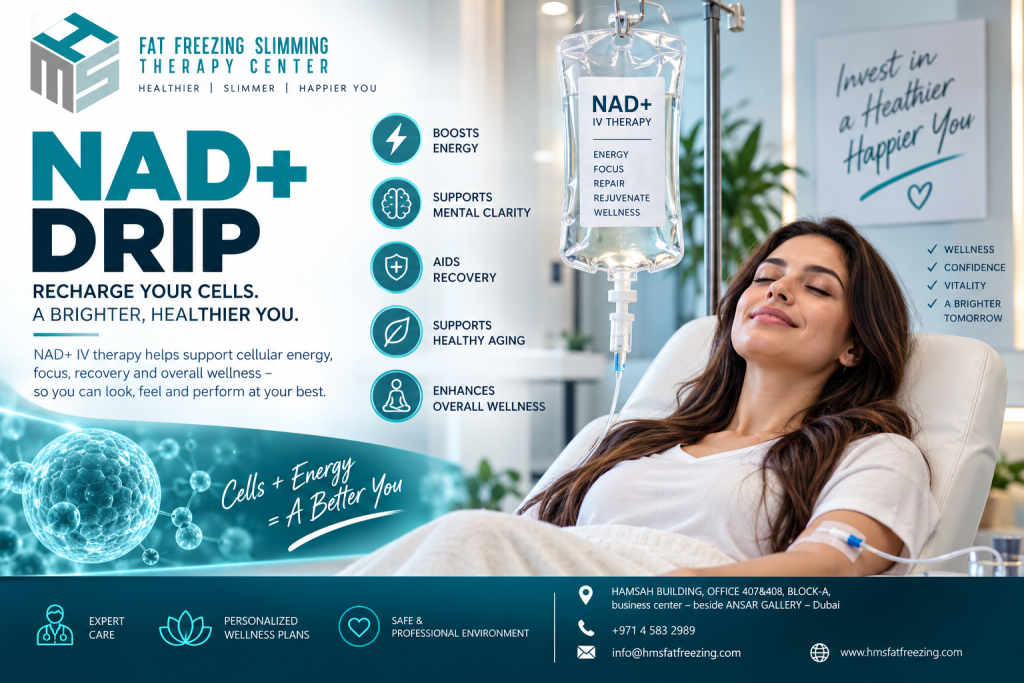
NAD+ Drip: What It Is, How It Works, Benefits, Safety and What to Expect
Walk into the wellness market today and you will encounter NAD+ everywhere from capsules and powders to longevity supplements and intravenous infusions. Among these options, the NAD+ Drip has attracted particular attention because it administers nicotinamide adenine dinucleotide intravenously rather than relying on an oral supplement.
The biological interest in NAD+ is legitimate. NAD+, short for nicotinamide adenine dinucleotide, is a coenzyme involved in cellular energy metabolism, redox reactions and several cellular signaling processes. Researchers are actively investigating NAD+ metabolism in aging and disease.
But there is an important distinction between saying NAD+ is biologically essential and saying that an NAD+ Drip has been clinically proven to make people younger, dramatically increase energy, reverse aging or cure disease.
Those claims require clinical evidence—and the evidence for intravenous NAD+ as a general anti-aging or wellness intervention remains limited.
A 2026 systematic review covering 33 human intervention studies found that NAD+-related interventions demonstrate biological activity, but clinical effectiveness for anti-aging and wellness outcomes remains inconclusive. Crucially, the review found no eligible outcomes trials evaluating intravenous or intramuscular NAD+ itself for anti-aging or wellness indications.
That context should shape how anyone evaluates NAD+ therapy.
This guide explains the science behind the NAD+ Drip, what researchers actually know, what remains uncertain, potential side effects and practical questions to ask before considering treatment.
What Is an NAD+ Drip?
An NAD+ Drip is an intravenous infusion containing nicotinamide adenine dinucleotide. An IV line allows the preparation to enter the bloodstream during a supervised infusion session.
NAD+ itself is not a newly discovered molecule or simply a wellness-industry invention. It is naturally present in the human body and plays fundamental roles in cellular metabolism.
The growing commercial interest is instead based on the idea that influencing NAD+ availability could potentially affect processes associated with metabolic health and aging.
Research into this field includes several approaches:
- direct NAD+ administration;
- nicotinamide riboside (NR);
- nicotinamide mononucleotide (NMN);
- nicotinamide and related compounds;
- lifestyle approaches that affect metabolic pathways.
These interventions should not be treated as interchangeable. A clinical study investigating oral NMN, for example, does not automatically prove that intravenous NAD+ produces the same result.
That distinction is one of the most important things consumers should understand.
What Does NAD+ Actually Do in the Body?
NAD+ participates in numerous biochemical reactions. One of its best-established roles involves cellular energy metabolism.
NAD+ and Cellular Energy
Cells need to convert nutrients into usable energy.
NAD+ acts as an electron carrier in metabolic reactions involved in processes that ultimately contribute to ATP production. ATP is commonly described as the cell’s usable energy currency.
This biological role partly explains why NAD+ is frequently marketed in relation to energy.
However, the reasoning:
“NAD+ participates in energy metabolism, therefore an NAD+ infusion will make you feel significantly more energetic”
is not automatically scientifically valid.
A molecule having an essential physiological function does not mean increasing its supply beyond normal conditions necessarily produces a proportional improvement in that function.
NAD+ and Cellular Signaling
NAD+ also acts as a substrate for enzymes involved in cellular signaling, including sirtuins and poly(ADP-ribose) polymerases (PARPs).
These pathways have generated considerable scientific interest because they relate to processes including metabolic regulation, cellular stress responses and DNA repair.
A major review in Endocrine Reviews concluded that NAD+ biology has substantial therapeutic potential but also emphasized that important questions about clinical pharmacology, metabolism and therapeutic mechanisms remain unanswered.
Why Has the NAD+ Drip Become Popular?
The rise of longevity medicine has moved NAD+ from research journals into mainstream wellness discussions.
People considering an NAD+ Drip are commonly interested in areas such as:
- energy and vitality;
- wellness support;
- recovery;
- mental performance;
- healthy aging;
- metabolic health;
- maintaining an active lifestyle.
The scientific interest behind some of these areas is real.
The problem arises when preliminary biological research, animal studies or trials of oral NAD+ precursors are converted into definitive claims about IV NAD+.
A 2025 Nature Metabolism review found that although preclinical research supports NAD+-targeted strategies, human trials of NAD+ precursor supplementation have generally demonstrated limited efficacy, while the available evidence regarding NAD+ dynamics in human tissues remains relatively sparse.
So the appropriate question isn’t simply:
“Does NAD+ matter?”
Clearly, it does.
A more clinically useful question is:
“Does receiving additional NAD+ intravenously produce meaningful benefits for the specific outcome I want?”
For many wellness claims, science cannot yet provide a definitive answer.
Potential NAD+ Drip Benefits: Evidence vs Marketing
Consumers may encounter long lists of supposed NAD+ Drip benefits online. It helps to separate biological plausibility from demonstrated clinical outcomes.
1. Cellular Energy Metabolism
NAD+ unquestionably participates in cellular energy metabolism.
That provides a scientifically plausible reason to investigate NAD+-boosting strategies. It does not establish that IV NAD+ reliably improves subjective energy in otherwise healthy individuals.
2. Healthy Aging Research
NAD+ metabolism has become an important area of aging research.
Preclinical studies have produced interesting findings, particularly in animal models. Translating those results into human anti-aging treatments, however, has proved considerably more complicated.
A recent systematic review concluded that human evidence for anti-aging and wellness outcomes remains inconclusive.
3. NAD+ Levels
Studies of oral precursors such as NMN and NR have demonstrated that certain interventions can increase NAD+-related metabolites or NAD+ measurements.
For example, a randomized placebo-controlled study involving 30 healthy participants found that 250 mg/day of oral NMN for 12 weeks increased whole-blood NAD+ levels.
That finding is interesting—but it concerns oral NMN, not an NAD+ Drip.
4. Metabolic Research
NAD+-targeted interventions are being studied for possible effects on metabolic and age-related conditions.
Human research has produced mixed findings. Reviews report that while biochemical target engagement is relatively consistent with certain oral precursors, improvements in physiological outcomes have been heterogeneous.
5. Cognitive and Mental Performance Claims
NAD+ biology intersects with neurological research, but claims that an IV infusion will reliably sharpen memory, eliminate brain fog or dramatically improve cognitive performance go beyond the established evidence for general wellness use.
People experiencing persistent cognitive symptoms should seek appropriate medical assessment rather than assuming low NAD+ is the underlying cause.
NAD+ Drip vs Oral NAD+ Precursors
Understanding this distinction prevents one of the most common mistakes when researching NAD therapy.
| Feature | NAD+ Drip | Oral NAD+ Precursors |
|---|---|---|
| Administration | Intravenous | Capsules/tablets |
| Examples | NAD+ infusion | NMN, NR |
| Requires IV access | Yes | No |
| Research base | Limited for general wellness IV use | More human trials available |
| Direct medical supervision | Generally required | Depends on product/use |
| Convenience | Requires appointment and infusion time | Usually taken at home |
| Evidence for increasing NAD-related biomarkers | Limited direct IV evidence | Demonstrated in several studies |
| Evidence for broad anti-aging outcomes | Inconclusive | Inconclusive |
| IV-specific risks | Yes | No IV-line risk |
| Cost/commitment | Typically higher | Typically lower |
This comparison does not establish one approach as clinically superior.
In fact, a major gap in current research is the lack of strong head-to-head trials determining which approach produces meaningful clinical outcomes.
What Happens During an NAD+ Drip Session?
Protocols differ among clinics, so a reputable provider should explain exactly what its procedure involves.
Before the Infusion
A proper process should begin with medical screening rather than immediately inserting an IV.
This may include reviewing:
- current medications;
- supplements;
- allergies;
- pregnancy or breastfeeding status;
- medical conditions;
- previous IV reactions;
- kidney or liver issues where relevant;
- reason for requesting treatment.
This step matters because wellness treatments still involve medical considerations.
During the Infusion
An IV cannula is placed into a suitable vein, and the infusion is administered according to the clinic’s protocol.
Patients should be monitored appropriately during treatment.
Infusion speed matters because rapid or poorly tolerated administration can contribute to uncomfortable symptoms.
After the Session
The clinic should provide instructions concerning hydration, activities and symptoms requiring medical attention.
Responses should not be promised in advance. Some people may report subjective changes after wellness infusions, while others may notice little or nothing.
Anecdotal experience cannot establish clinical effectiveness.
How Long Does an NAD+ Drip Take?
There is no universal duration because formulations, doses and infusion protocols differ.
Recent real-world evidence illustrates why this matters.
A 2026 retrospective pilot study compared four consecutive days of commercially administered 500 mg IV NAD+ with IV nicotinamide riboside. Participants receiving IV NAD+ reported gastrointestinal symptoms, increased heart rate and chest pressure during treatment; symptoms resolved after infusion. The NAD+ group’s average infusion duration was approximately 97 minutes compared with 37 minutes for the NR group.
This was a retrospective pilot rather than a large randomized efficacy trial, so its results should not be generalized too broadly. It nevertheless demonstrates why infusion tolerability and administration rate deserve attention.
Ask the clinic about the expected duration of your specific protocol rather than relying on generic internet estimates.
Is an NAD+ Drip Safe?
Safety needs a more nuanced answer than simply calling NAD+ “natural.”
NAD+ occurs naturally in the body. An intravenous preparation, however, introduces additional considerations such as formulation quality, sterility, dose, infusion rate and IV-related complications.
A particularly important warning comes from the U.S. Food and Drug Administration.
The FDA has warned compounders against using food-grade NAD+ ingredients to prepare sterile intravenous products because unsuitable ingredients can carry contamination and endotoxin risks. The agency reported adverse events following injectable NAD+ products, including severe chills, shaking, vomiting and fatigue, with some cases requiring medical treatment.
This does not mean every NAD+ infusion causes these reactions. It does demonstrate why sourcing, preparation standards and clinical oversight matter.
Possible NAD+ Drip Side Effects
Reported or potential issues can include:
- nausea or gastrointestinal discomfort;
- abdominal cramping;
- flushing or discomfort;
- headache or lightheadedness;
- increased heart rate;
- chest pressure during infusion;
- IV-site irritation;
- infection or other complications associated with intravenous access;
- reactions related to contaminated or improperly compounded products.
The 2026 retrospective study reported moderate-to-severe gastrointestinal symptoms, increased heart rate and chest pressure among some people receiving NAD+ IV; these symptoms resolved when infusion was completed.
Any chest symptoms, breathing difficulty, severe reaction or other concerning symptoms during an infusion warrant immediate clinical attention.
Who Should Speak to a Doctor Before Considering NAD+ Therapy?
Everyone considering intravenous wellness treatment benefits from appropriate screening, but this becomes particularly important if you:
- have cardiovascular disease;
- have kidney or liver disease;
- take prescription medication;
- have significant chronic health conditions;
- have previously reacted to IV treatments;
- are pregnant or breastfeeding;
- are undergoing cancer treatment;
- are seeking treatment for unexplained fatigue, cognitive changes or another persistent symptom.
Persistent tiredness, for example, can have numerous causes. Anemia, thyroid disorders, sleep problems, medication effects, nutritional deficiencies and other conditions may require proper evaluation.
An NAD+ Drip should not be used as a substitute for diagnosing unexplained symptoms.
Pros and Cons of NAD+ Drip Therapy
Potential Advantages
Direct intravenous administration: It bypasses gastrointestinal absorption.
Professionally supervised setting: When appropriately delivered, patients can be monitored during treatment.
Scientifically interesting target: NAD+ plays established roles in cellular metabolism and signaling.
Active research field: Researchers continue investigating NAD+ metabolism and potential therapeutic applications.
Limitations and Disadvantages
Limited IV-specific wellness evidence: Much of the human research concerns oral NAD+ precursors rather than intravenous NAD+ itself.
Anti-aging benefits remain unproven: Current evidence does not establish IV NAD+ as a proven treatment for reversing human aging.
Possible infusion reactions: Gastrointestinal symptoms, chest pressure and increased heart rate have been reported in recent observational research.
IV-related risks: Any intravenous procedure carries risks associated with venous access.
Product quality matters: FDA warnings highlight concerns about inappropriate ingredients being used in compounded sterile NAD+ preparations.
Cost and time: Repeated infusions can require substantially more commitment than oral approaches.
What to Ask Before Booking an NAD+ Drip in Dubai
The quality of your questions can be more useful than the length of the clinic’s benefits list.
Ask:
Who determines whether I am suitable for the treatment?
There should be an appropriate clinical assessment rather than a purely sales-driven process.
What exactly is in the IV?
You should know what is being administered.
What dose is being used and why?
A clinic should be able to explain its protocol rather than simply stating that higher doses are better.
How is the product sourced and prepared?
Sterility and pharmaceutical-quality sourcing are important for injectable preparations.
Who administers and monitors the infusion?
Ask about the healthcare professional involved.
What side effects should I expect?
A trustworthy consultation discusses limitations and risks as clearly as potential benefits.
What happens if I develop symptoms during the infusion?
The facility should have an appropriate clinical response process.
Which benefits are supported specifically by human trials of IV NAD+?
This question helps separate evidence concerning IV NAD+ from research involving NMN, NR or animal models.
Expert Recommendations from HMS Fat Freezing
For people exploring wellness treatments at HMS Fat Freezing, the most useful approach is to begin with the objective rather than the treatment name.
Define What You Want to Improve
“Better wellness” is difficult to measure.
Instead, identify the reason you are considering an NAD+ Drip.
Is it energy? Recovery? General wellness? A specific symptom?
If you are experiencing persistent symptoms, clinical assessment may be more appropriate than assuming NAD+ is the solution.
Don’t Treat an Infusion as a Shortcut
No wellness IV should replace the foundations that strongly influence health:
adequate sleep, regular physical activity, appropriate nutrition, hydration, stress management and medical care when necessary.
Research reviews of NAD+-targeted interventions have themselves noted the need to compare pharmacological approaches with physiological strategies such as exercise and dietary interventions.
Ask for Evidence Specific to the Treatment
If someone cites an NMN study while discussing an NAD+ infusion, ask whether the same result has been demonstrated with intravenous NAD+.
Route, molecule and dose matter.
Avoid Guaranteed Results
Statements such as “reverses aging,” “detoxifies your body,” “guarantees more energy” or “repairs your DNA” should be approached cautiously unless supported by robust evidence for the specific treatment and outcome.
At HMS Fat Freezing, clients interested in wellness and aesthetic services can explore the HMS Fat Freezing website and discuss appropriate options with the clinic team.
For people exploring broader body-contouring options, the clinic’s resources on fat freezing treatments can help explain how non-invasive aesthetic services differ from IV wellness therapies. You can also review HMS Fat Freezing services in Dubai before arranging a consultation.
Reliable Scientific Resources for NAD+ Research
Consumers who want to investigate NAD+ beyond marketing material should prioritize peer-reviewed and regulatory sources.
The PubMed systematic review of NAD+ supplementation provides a recent overview of preclinical and human evidence.
The Nature Metabolism review of NAD+ precursor supplementation discusses the current human evidence and challenges involved in translating NAD+ biology into therapies.
The Endocrine Reviews assessment of NAD+ in aging biology provides detailed discussion of mechanisms, potential applications and remaining uncertainties.
The FDA’s warning concerning ingredients used in compounded sterile NAD+ products is particularly relevant when evaluating injectable NAD+ safety and sourcing.
Frequently Asked Questions About NAD+ Drip Therapy
1. What is an NAD+ Drip used for?
An NAD+ Drip is offered by some wellness providers for purposes associated with energy, recovery, healthy aging and general wellness. NAD+ has established biological roles in cellular metabolism, but robust clinical evidence supporting IV NAD+ for broad wellness or anti-aging outcomes remains limited.
Consumers should distinguish between the biological importance of NAD+ and proven clinical benefits from receiving it intravenously.
2. Does NAD+ Drip increase energy?
NAD+ participates directly in cellular energy metabolism, which makes energy an important area of scientific interest.
However, this biochemical role does not establish that an NAD+ Drip will reliably increase perceived energy in healthy people. High-quality clinical trials specifically evaluating IV NAD+ for this purpose are still limited.
3. Is NAD+ Drip an anti-aging treatment?
NAD+ metabolism is actively studied in aging research, but an NAD+ Drip should not be described as a proven treatment for reversing aging.
A 2026 systematic review concluded that clinical effectiveness of NAD+ augmentation for anti-aging and wellness remains inconclusive and identified no eligible clinical-outcomes trials of IV or intramuscular NAD+ itself for these indications.
4. How quickly does an NAD+ Drip work?
There is no scientifically established universal timeline for wellness benefits.
Infusion duration also varies according to dose and protocol. A recent retrospective study involving 500 mg NAD+ infusions reported an average administration time of approximately 97 minutes, but that particular protocol should not be assumed to represent every clinic or dose.
5. How often should you get an NAD+ Drip?
There is no universally established evidence-based frequency for general wellness or anti-aging purposes.
Protocols advertised by commercial clinics can vary considerably. The appropriate question is why a particular frequency is being recommended and what evidence supports it for your intended outcome.
6. What are the side effects of NAD+ IV therapy?
Reported symptoms can include gastrointestinal discomfort, nausea, increased heart rate and chest pressure during infusion. Standard IV risks, such as irritation and infection, also apply.
The FDA has additionally reported adverse events associated with injectable NAD+ products where endotoxin contamination was a concern, highlighting the importance of appropriate sterile preparation.
7. Is an NAD+ Drip better than NMN or NR supplements?
There is not enough evidence to make that conclusion.
Oral NMN and NR have actually been investigated in more human clinical studies than IV NAD+ for wellness applications. Reviews indicate that these oral precursors can affect NAD+-related biomarkers, but evidence for meaningful functional health benefits remains inconsistent.
8. Can NAD+ Drip help with weight loss?
An NAD+ Drip should not be presented as a proven weight-loss treatment.
NAD+ participates in metabolic pathways, but involvement in metabolism is not equivalent to evidence that intravenous NAD+ produces clinically meaningful fat loss.
People pursuing weight management should distinguish metabolic research from demonstrated weight-loss outcomes.
9. Can NAD+ IV improve brain fog or concentration?
Research into NAD+ metabolism and neurological function is ongoing, but there is insufficient evidence to guarantee that an NAD+ IV infusion will resolve brain fog or improve concentration.
Persistent or worsening cognitive symptoms deserve medical evaluation because many different medical, sleep, nutritional and psychological factors can contribute.
10. What should I look for when choosing NAD+ Drip therapy in Dubai?
Prioritize appropriate medical screening, qualified healthcare professionals, clear ingredient and dosing information, sterile preparation standards, monitoring during the infusion and transparent discussion of risks.
Be cautious when a provider guarantees dramatic anti-aging, weight-loss, detoxification or disease-treatment results.
Conclusion: Should You Consider an NAD+ Drip?
The science surrounding NAD+ is much more interesting—and much more nuanced—than the typical wellness advertisement suggests.
NAD+ is an essential coenzyme involved in cellular energy metabolism and multiple signaling processes. Researchers have compelling reasons to investigate whether modifying NAD+ metabolism could eventually have therapeutic applications.
But biological importance should not be confused with established treatment effectiveness.
Human studies show that some NAD+ precursors can alter NAD+-related biomarkers, yet clinical improvements have been inconsistent. Most importantly for anyone considering an NAD+ Drip, high-quality clinical evidence specifically supporting intravenous NAD+ for anti-aging and general wellness remains limited. A recent comprehensive review found no eligible outcomes trials of IV or intramuscular NAD+ itself for those purposes.
That does not make NAD+ research irrelevant. It means expectations should match the evidence.
If you are considering an NAD+ Drip in Dubai, focus less on dramatic promises and more on practical questions: Who is assessing you? What formulation is being administered? How was it prepared? What dose is being recommended? What evidence supports your specific goal? How will you be monitored?
Those questions matter because IV therapy is still an invasive medical procedure, even when offered in a wellness setting.
The strongest approach is therefore neither unquestioning enthusiasm nor automatic dismissal. It is informed decision-making based on your health, your objectives, appropriate professional assessment and the evolving clinical evidence.
Contact HMS Fat Freezing
For information about available treatments, consultations and wellness services, contact:
HMS Fat Freezing
HAMSAH BUILDING, OFFICE 407 & 408, BLOCK-A
Business Center, beside Ansar Gallery
Dubai, United Arab Emirates
Phone: +971 4 583 2989
Email: info@hmsfatfreezing.com
Website: HMS Fat Freezing
Medical note: This article is educational and does not diagnose, treat or replace individualized medical advice. NAD+ IV therapy should be considered only after appropriate clinical assessment, particularly for people with existing medical conditions or persistent symptoms.