
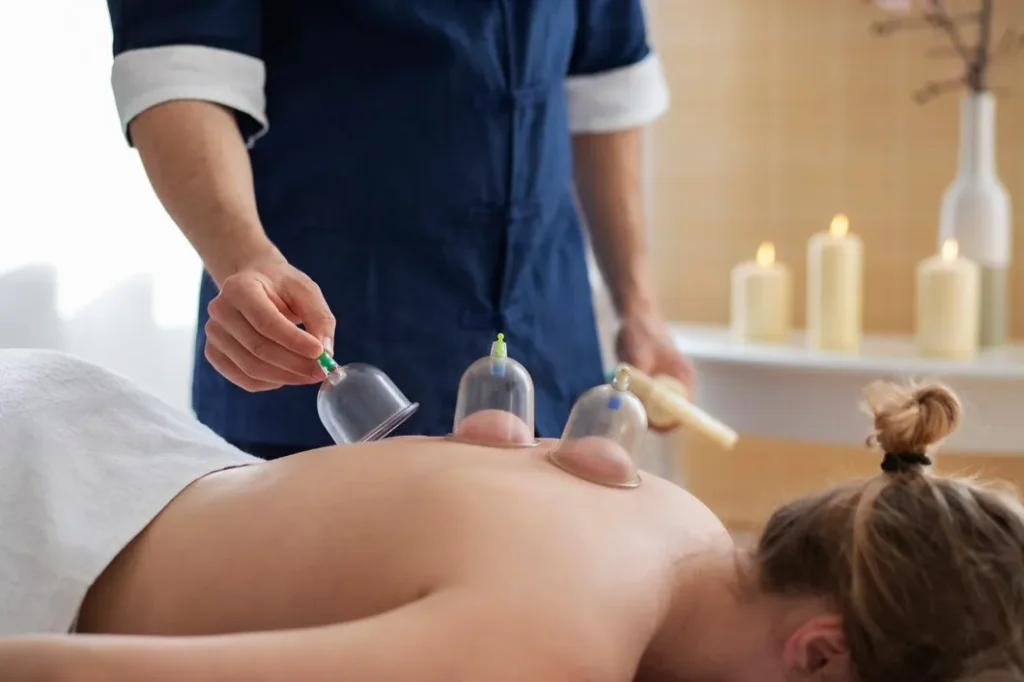
Complete Guide to Hijama Cupping Therapy
Hijama has moved from being a traditional wellness practice familiar mainly within Middle Eastern, Islamic, and Asian communities to a therapy increasingly discussed by athletes, office professionals, fitness enthusiasts, and people looking for complementary approaches to muscular discomfort and general well-being.
Yet there is also considerable confusion surrounding it. Does it really remove toxins? Is wet cupping better than dry cupping? Why does the skin become dark after treatment? How often should you undergo a session? And, most importantly, what does modern research actually say about its benefits?
This complete guide to Hijama Cupping Therapy separates traditional beliefs from what current evidence can reasonably support. It also explains the procedure, potential benefits, safety considerations, preparation, aftercare, and the questions worth asking before booking a session.
At HMS Fat Freezing, Hijama is approached as a complementary wellness treatment rather than a substitute for appropriate medical diagnosis or conventional healthcare.
According to the U.S. National Center for Complementary and Integrative Health (NCCIH), research into cupping exists, but much of the available evidence is of relatively low quality. Cupping may provide some benefit for pain, although stronger research is still needed before firm conclusions can be made for many other health claims.
That distinction is important when considering Hijama Cupping Therapy responsibly.
What Is Hijama Cupping Therapy?
Hijama Cupping Therapy is a form of cupping in which suction is created over selected areas of the skin. The Arabic term Hijama is commonly associated with wet cupping, where superficial skin pricks or small incisions are made and suction is reapplied so that a limited amount of blood is drawn into the cup.
Dry cupping uses suction without breaking the skin.
Cleveland Clinic describes cupping as a traditional therapy in which cups create suction against the skin. It is commonly used by people seeking relief from muscular discomfort, neck or back pain and other symptoms, although scientific evidence remains mixed.
At HMS Fat Freezing, the existing Hijama Cupping Therapy service includes consultation, preparation of the treatment area, cup placement and individualized aftercare guidance.
The Basic Principle Behind Cupping
When a practitioner places a cup on the skin and creates negative pressure, tissue underneath the cup is gently drawn upward.
This creates a localized mechanical effect involving the skin, superficial tissue and small blood vessels. The visible circular marks seen after treatment are largely related to this suction effect rather than proof that harmful substances have been physically extracted from the body.
This is an important distinction.
Traditional Hijama systems may describe the process using concepts such as stagnant blood or detoxification. Modern medical evidence has not established cupping as a method for removing undefined systemic “toxins.” Claims about detoxification should therefore be understood as traditional interpretations rather than scientifically established mechanisms.
Wet Hijama vs Dry Cupping
People often use the terms Hijama and cupping interchangeably, but there are meaningful differences.
| Feature | Wet Hijama | Dry Cupping |
|---|---|---|
| Suction used | Yes | Yes |
| Skin punctured | Yes, superficially | No |
| Small amount of blood removed | Yes | No |
| Infection-control requirements | Higher | Lower |
| Typical marks | Circular marks plus minor superficial wounds | Circular suction marks |
| Common reason people choose it | Traditional Hijama practice, pain or wellness | Muscle tension, relaxation, recovery |
| Recovery considerations | Requires wound hygiene | Primarily skin-mark aftercare |
| Suitable for everyone? | No | No |
Because wet Hijama Cupping Therapy breaks the skin barrier, hygiene is especially important. Appropriate single-use equipment, skin preparation, practitioner training and responsible handling of blood-contaminated material are essential.
How Does Hijama Cupping Therapy Work?
A professional session should start before the first cup touches the skin.
1. Health Screening and Consultation
The practitioner should ask about your general health, medications, previous medical conditions, skin problems and the reason you are seeking treatment.
For example, someone taking anticoagulant medication requires different consideration from a healthy gym-goer looking for relief from post-training muscular tightness.
This is why Hijama Cupping Therapy should never be approached as a one-protocol-fits-everyone service.
2. Selecting Treatment Areas
The back and shoulders are common cupping locations, although the exact points depend on the reason for treatment and the practitioner’s assessment.
A client who spends eight hours working at a laptop may describe shoulder and upper-back tightness, while someone who trains intensively may be concerned primarily about specific muscular areas.
The practitioner should assess the individual rather than simply covering the entire back with cups.
3. Initial Suction
Cups are positioned on selected points and suction is created.
The skin rises gently inside each cup. Most people experience pulling, tightness or pressure rather than sharp pain.
If suction becomes excessively painful, the practitioner should adjust it.
4. Superficial Skin Pricking in Wet Hijama
During wet Hijama Cupping Therapy, cups are removed and the practitioner makes controlled superficial pricks or very small scratches in the treated skin.
The skin should never be subjected to uncontrolled or unnecessarily deep cutting.
5. Second Suction
Cups are reapplied briefly. A small quantity of blood collects inside them before the cups are removed.
The treatment area is then cleaned appropriately.
6. Post-Treatment Instructions
Good treatment does not end when the cups come off.
Patients should receive guidance regarding skin care, hydration, strenuous exercise, bathing, infection warning signs and any individual precautions.
Potential Benefits of Hijama Cupping Therapy
The benefits of Hijama Cupping Therapy need to be discussed carefully because traditional use is much broader than established scientific evidence.
Musculoskeletal Pain Relief
Pain is one of the better-researched applications of cupping.
NCCIH states that cupping may help reduce pain, although the evidence is not considered strong enough to establish certainty.
A review available through the U.S. National Library of Medicine also discusses possible roles for dry and wet cupping in pain management while acknowledging limitations in the evidence base.
For someone experiencing recurring back or shoulder discomfort, Hijama Cupping Therapy may therefore be considered as a complementary option after appropriate assessment—not as a replacement for investigating persistent, severe or unexplained pain.
Muscle Tension and Recovery
Cupping is commonly used around tight muscular areas.
Imagine a recreational athlete who trains legs four times each week. Their goal may not be treating a disease at all; they may simply want a complementary recovery session after demanding workouts.
In such situations, cupping’s mechanical suction and the relaxation associated with treatment may make it an appealing wellness option.
However, severe muscle pain, weakness, swelling or pain following an injury should first be medically assessed.
Relaxation
Many clients report feeling relaxed following Hijama Cupping Therapy.
Part of the experience may come from lying still, slowing down, receiving focused physical treatment and reducing muscular tension.
A person who works long hours at a desk, for example, may value the session as much for the structured recovery time as for the cupping itself.
Temporary Local Circulatory Effects
The suction produced by cupping affects superficial tissue and blood flow in the treated area.
Cleveland Clinic notes that cupping increases blood flow around the area where suction is applied.
That should not, however, be turned into exaggerated claims that Hijama Cupping Therapy permanently “cleans the blood” or cures circulatory disease.
Complementary Wellness
Some clients choose Hijama because it is meaningful within their cultural or traditional health practices.
That preference can coexist with evidence-based medicine.
The useful question is not whether traditional and modern healthcare must compete. It is whether the therapy is being performed safely, responsibly and without discouraging necessary medical treatment.
What Hijama Cupping Therapy Should Not Be Expected to Do
Responsible practitioners should be comfortable discussing limitations.
Current evidence does not justify presenting Hijama Cupping Therapy as a proven cure for chronic diseases, diabetes, hypertension, infertility, cancer or serious immune disorders.
Similarly, claims that Hijama removes all toxins, dramatically strengthens immunity or replaces medication go beyond what reliable clinical evidence currently supports.
NCCIH specifically notes that there is not enough high-quality research to reach conclusions about cupping for many conditions.
That does not mean someone cannot enjoy or benefit from the experience. It means expectations should match the quality of evidence.
What Do the Dark Cupping Marks Mean?
The circular red, brown or purple patches following Hijama Cupping Therapy are among the treatment’s most recognizable features.
They do not provide a diagnostic map of toxins.
Suction affects superficial blood vessels and tissues, producing discoloration similar in appearance to bruising. Cleveland Clinic lists skin discoloration and bruising among expected effects of cupping.
Darker marks do not automatically mean you were “more toxic,” and lighter marks do not mean the treatment failed.
Skin tone, suction intensity, treatment duration, individual vascular response and previous cupping history can all influence appearance.
How Long Do Hijama Marks Last?
Marks usually fade gradually, although the exact time varies considerably between individuals.
Some disappear relatively quickly, while darker marks can remain noticeable for several days or longer.
If you have an important wedding, beach holiday, photography session or formal event approaching, schedule Hijama Cupping Therapy far enough in advance for visible marks to settle.
That practical planning is often overlooked.
Is Hijama Cupping Therapy Painful?
Most clients describe suction as pressure, pulling or tightness.
Wet Hijama includes superficial skin puncturing, so brief discomfort is possible.
Sharp, severe or escalating pain is not something you should simply tolerate because someone tells you “Hijama has to hurt to work.”
More suction is not automatically better.
A skilled practitioner should aim for an appropriate therapeutic level rather than the strongest possible vacuum.
Risks and Side Effects
Even traditional or natural therapies can cause side effects.
Possible effects associated with Hijama Cupping Therapy include:
- Temporary circular bruising or skin discoloration
- Tenderness
- Mild soreness
- Skin irritation
- Dizziness or light-headedness
- Scarring in some circumstances
- Burns if inappropriate heat-based techniques are used
- Infection, particularly when skin is broken
- Bloodborne infection risk if hygiene and equipment practices are inadequate
NCCIH warns that wet cupping can lead to infection, scarring and blood loss, and that repeated wet cupping in some circumstances may contribute to anemia. It also highlights the possibility of transmitting bloodborne diseases when equipment is reused without proper sterilization.
Cleveland Clinic similarly identifies bruising, burns and skin infection among possible complications.
Who Should Avoid Hijama or Seek Medical Clearance?
Hijama Cupping Therapy is not appropriate for every person or every situation.
Extra caution or medical clearance may be required for people who:
- Take anticoagulants or blood-thinning medicines
- Have bleeding or clotting disorders
- Have significant anemia
- Have active skin infections, open wounds or ulcers
- Have fragile or severely damaged skin
- Are pregnant, particularly depending on treatment location
- Have serious underlying medical conditions
- Are prone to fainting during procedures involving needles or blood
- Have recently undergone surgery
- Have unexplained persistent pain, fever or systemic symptoms
Do not hide medications or medical conditions simply because you want to qualify for treatment.
The consultation is part of the safety process.
Pros and Cons of Hijama Cupping Therapy
Pros
Complementary option for muscular discomfort: Some evidence suggests cupping may help certain pain conditions, though further high-quality research is needed.
Non-drug approach: People interested in wellness approaches that do not involve additional medication may find cupping appealing.
Customizable: Cup position and suction can be adapted to the individual.
Relaxing experience: Many people incorporate Hijama Cupping Therapy into broader recovery and wellness routines.
Cultural familiarity: Hijama has a longstanding place within traditional health practices.
Cons
Visible marks: Bruising or discoloration may remain after treatment.
Evidence limitations: Many popular health claims surrounding Hijama remain insufficiently proven.
Wet cupping breaks the skin: This introduces additional hygiene and infection considerations.
Not suitable for everyone: Medical conditions and medications may make treatment inappropriate.
Practitioner quality matters: Poor technique or inadequate infection-control practices can significantly increase risk.
Preparing for Hijama Cupping Therapy
Preparation does not need to be complicated.
Tell the Practitioner About Your Health
Provide accurate information regarding medications, allergies, blood disorders, previous reactions to needles, chronic conditions and recent procedures.
Avoid Arriving Severely Dehydrated
Normal hydration is sensible before treatment unless a healthcare professional has instructed you otherwise.
Dubai’s climate makes this particularly relevant for people who have been outdoors, exercising or fasting.
Wear Practical Clothing
Choose clothing that makes the intended treatment area accessible and will not rub unnecessarily against freshly treated skin afterward.
Plan Around Activities
Do not schedule your first Hijama Cupping Therapy immediately before an important event.
The possibility of bruising, tenderness or mild fatigue makes it sensible to allow recovery time.
Aftercare Following Hijama
After wet cupping, skin care becomes especially important because superficial wounds are present.
Keep the Area Clean
Follow the practitioner’s hygiene instructions carefully.
Avoid touching freshly treated areas unnecessarily with unwashed hands.
Avoid Aggressive Scrubbing
Fresh cupping marks do not need exfoliation.
Give your skin time to settle.
Monitor the Skin
Temporary redness and markings are expected, but increasing pain, warmth, pus, spreading redness, significant swelling or fever should not be dismissed as a normal “detox reaction.”
Those signs warrant medical assessment.
Return to Exercise Sensibly
People receiving Hijama Cupping Therapy for sports recovery sometimes make the mistake of completing an intense workout immediately afterward.
Depending on how you feel and which areas were treated, a lighter recovery period may be more comfortable.
How Often Should You Have Hijama?
There is no scientifically established universal schedule requiring everyone to receive Hijama every week, month or on particular calendar dates.
The appropriate interval depends on:
- Why you are receiving treatment
- Whether you are choosing wet or dry cupping
- How your skin recovers
- Your overall health
- Whether you experienced any side effects
- Practitioner assessment
- Medical advice where relevant
More sessions do not necessarily produce more benefit.
At HMS Fat Freezing, individualized assessment is more appropriate than automatically booking identical Hijama Cupping Therapy schedules for every client.
Hijama vs Massage: Which Is Better?
The treatments create very different physical experiences.
Massage uses pressure, movement and manual manipulation. Cupping uses negative pressure or suction.
Someone who dislikes direct deep-tissue pressure may prefer cupping. Another person may prefer massage because it does not usually create circular skin marks.
Neither treatment should automatically be described as universally superior.
Hijama vs Other Wellness Treatments
HMS Fat Freezing offers multiple services for people whose goals extend beyond cupping.
Someone focusing primarily on body contouring, for example, may be more interested in Fat Freezing, while clients interested in body texture and non-invasive contouring can explore Endosphere Treatment.
For people considering nutrient infusions, HMS also provides information about IV Drips. These are different interventions with different indications and safety considerations, so they should not be treated as interchangeable wellness packages.
For more detailed Hijama-related reading, HMS has also published its guide to Hijama Therapy for Stress and Muscle Recovery.
What Makes a Good Hijama Practitioner?
The quality of Hijama Cupping Therapy depends heavily on who performs it and how the procedure is managed.
Look beyond attractive social-media photographs.
A responsible provider should be willing to explain:
Hygiene Protocols
Anything intended for single use should actually be single use.
Wet cupping requires especially strict handling because blood is involved.
Health Screening
If a practitioner wants to start treatment without asking about your health or medications, consider that a warning sign.
Realistic Claims
Be cautious if someone promises to cure serious diseases, guarantees detoxification or recommends stopping prescribed medication.
Complementary therapy should complement—not undermine—appropriate healthcare.
Clear Aftercare
You should leave knowing what is normal, what to avoid and what symptoms require attention.
Expert Recommendations from HMS Fat Freezing
Based on a responsible, individualized approach to Hijama Cupping Therapy, HMS Fat Freezing recommends focusing on five principles.
1. Choose Hijama for a Clear Reason
Do not book treatment simply because a social-media video makes dramatic cup marks look impressive.
Know whether your goal is relaxation, complementary muscle recovery, traditional wellness practice or support for a specific discomfort.
2. Do Not Judge Success by the Amount of Blood
During wet cupping, more blood does not equal a better result.
Treatment should be controlled and conservative.
3. Separate Wellness Claims From Medical Treatment
If you have persistent back pain, migraines, neurological symptoms, joint swelling or another recurring problem, obtain appropriate medical evaluation.
Hijama Cupping Therapy may be complementary, but it should not delay the diagnosis of an underlying condition.
4. Give Your Body Time to Respond
Do not chase increasingly aggressive suction because your first session did not create dramatic dark marks.
Comfort, skin response and overall experience matter more than appearance.
5. Prioritize Hygiene Above Price
For wet Hijama especially, infection control is not an optional luxury.
A small price difference should never outweigh clean technique, proper assessment and professional treatment standards.
Evidence-Based Resources for Further Reading
People researching Hijama Cupping Therapy should balance clinic information with independent medical resources.
Useful references include:
- National Center for Complementary and Integrative Health – Cupping for an evidence-focused overview of current research and safety considerations.
- Cleveland Clinic – Cupping Therapy for a clinically reviewed explanation of types, possible benefits and side effects.
- NCBI Bookshelf – Cupping Therapy for a healthcare-oriented discussion of the procedure and research.
- PubMed Central review of cupping therapy for deeper discussion of proposed mechanisms and clinical research.
Frequently Asked Questions About Hijama Cupping Therapy
1. What is Hijama Cupping Therapy used for?
People commonly seek Hijama Cupping Therapy for muscular discomfort, relaxation, recovery and traditional wellness purposes. Pain is among the more frequently researched applications, but evidence remains limited and varies by condition. It should not be advertised as a proven cure for serious illnesses.
2. Is Hijama scientifically proven?
There is scientific research into cupping, particularly concerning pain, but the overall evidence is mixed. NCCIH states that much of the existing research is low quality and that stronger studies are required before conclusions can be reached for many proposed benefits.
3. What is the difference between Hijama and cupping?
Cupping is the broader category. Dry cupping applies suction without breaking the skin. Hijama Cupping Therapy commonly refers to wet cupping, where superficial skin punctures are followed by additional suction so a small amount of blood is removed.
4. Does Hijama remove toxins from the body?
The idea of “detoxification” is common in traditional explanations of Hijama, but modern clinical evidence has not demonstrated that cupping removes undefined systemic toxins from the body. The liver, kidneys and other physiological systems perform the body’s normal waste-processing functions. It is more accurate to discuss Hijama Cupping Therapy in terms of its mechanical effects and possible role in pain or relaxation rather than making unsupported detox claims.
5. How long do Hijama marks stay on the body?
Marks vary according to skin characteristics, suction intensity and treatment duration. They generally fade over time, but darker marks may remain visible for several days. Anyone preparing for an event should take this into account before scheduling Hijama Cupping Therapy.
6. Can I shower after Hijama?
Follow the specific post-treatment instructions given by your practitioner, particularly after wet Hijama because the skin has been superficially punctured. Keeping the area clean and avoiding unnecessary irritation are more important than following a universal internet rule about an exact number of hours.
7. Is Hijama safe?
When performed appropriately, many people tolerate cupping without major complications. However, risks include bruising, skin irritation, burns, infection, scarring and, with wet cupping, concerns related to blood exposure. Infection-control standards are therefore especially important for Hijama Cupping Therapy.
8. Can I have Hijama while taking blood thinners?
People taking anticoagulants or medications that affect bleeding should not simply book wet cupping without discussing their medication and medical history with an appropriate healthcare professional. Because Hijama Cupping Therapy can involve superficial bleeding, this information is essential for safety.
9. How many Hijama sessions do I need?
There is no universally correct number. Frequency should depend on your goal, health status, type of cupping, skin recovery and response to previous treatment. A professional consultation should determine whether another session is appropriate rather than automatically selling a large package.
10. Where can I get Hijama Cupping Therapy in Dubai?
HMS Fat Freezing provides Hijama Cupping Therapy in Dubai alongside other wellness, body-contouring and aesthetic services. The clinic’s Hijama service information describes individualized consultation, treatment preparation, cup application and post-treatment guidance.
Conclusion: Is Hijama Cupping Therapy Worth Considering?
Hijama Cupping Therapy occupies an interesting space between longstanding traditional practice and emerging—but still incomplete—modern research.
Its history should not be dismissed simply because it is traditional, but its popularity should not be used as proof for every health claim made about it either.
The strongest approach sits between those extremes.
People interested in muscular relaxation, complementary pain management, recovery or traditional Hijama practice may find the treatment worthwhile when it is performed responsibly. At the same time, clients should understand that evidence for many broader claims remains limited.
The practitioner matters. Hygiene matters. Medical screening matters. And realistic expectations matter.
For HMS Fat Freezing, the aim should be to make Hijama Cupping Therapy part of an informed wellness strategy—not to position it as a cure-all.
If you have persistent or unexplained symptoms, obtain appropriate medical assessment first. When Hijama is suitable for you, choose a provider who explains both the potential advantages and the limitations of the therapy.
Book a Hijama Consultation at HMS Fat Freezing Dubai
For professional consultation and more information about Hijama Cupping Therapy, contact:
HMS Fat Freezing
Address: HAMSAH BUILDING, OFFICE 407 & 408, BLOCK-A, Business Center – beside ANSAR GALLERY – Dubai
Phone: +971 4 583 2989
Email: info@hmsfatfreezing.com
Website: https://hmsfatfreezing.com/
You can also explore the dedicated Hijama Cupping Therapy service page before scheduling your consultation. HMS Fat Freezing’s website currently lists Hijama among its available services and confirms the clinic’s Dubai contact information.
Medical disclaimer: This article is for general educational purposes and does not replace diagnosis, treatment or personalized medical advice from a qualified healthcare professional.