
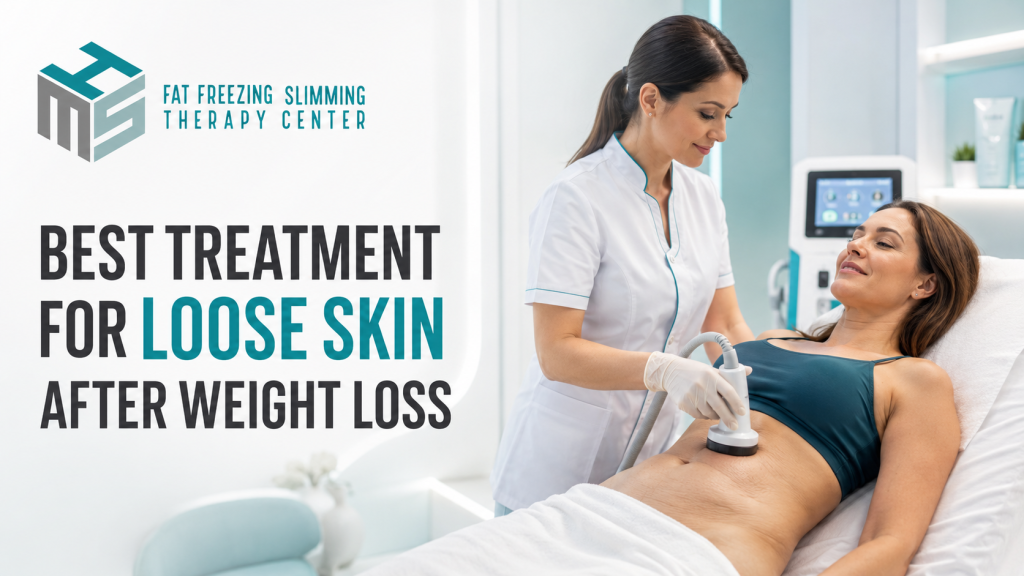
What Is the Best Treatment for Loose Skin After Weight Loss?
After weight loss, skin may remain soft, creased or hanging around the abdomen, arms, thighs, breasts, jawline or neck. This can follow lifestyle changes, bariatric surgery or rapid loss supported by GLP-1 medication.
So, what is the best Skin Treatment for loose skin after weight loss? The honest answer depends on how much loose skin is present. Mild laxity may respond well to radiofrequency, HIFU, RF microneedling or a carefully planned combination. Moderate laxity often needs several sessions and realistic expectations. Large, heavy folds of excess skin generally cannot be removed by a non-surgical device; surgical body contouring is usually the definitive option.
The right plan separates true excess skin, residual fat and lost volume or muscle. They can look similar but need different solutions. This guide explains the principal options and the assessment approach used by HMS Fat Freezing technicians in Dubai.
Contact HMS Fat Freezing for Skin Treatment
Medical note: This article is educational and does not replace an in-person assessment. Results, suitability, risks and recovery vary. People with painful rashes, open skin, infection, a new lump or other medical symptoms should consult an appropriately qualified healthcare professional.
Why Skin Becomes Loose After Weight Loss
Skin is supported by collagen and elastin. After being stretched for a long time, it may not recoil completely when fat volume decreases.
The amount of laxity is influenced by:
- the total amount of weight lost;
- how long the skin was stretched;
- the speed and recency of weight loss;
- age and natural collagen levels;
- genetics and skin thickness;
- pregnancy history;
- smoking and cumulative sun exposure;
- nutrition, muscle mass and general health; and
- the body area being assessed.
Dubai’s frequent ultraviolet exposure can accelerate collagen breakdown. Air conditioning may make skin feel dry, although dryness is not structural looseness. Sunscreen and moisturiser support skin quality but cannot remove surplus skin.
Loose skin, remaining fat or volume loss?
Before choosing a Skin Treatment, it helps to identify what is producing the contour.
Loose skin is usually thin, mobile and easy to pinch. Residual fat feels thicker and gives a fold more weight. Volume loss can create facial hollows that exaggerate laxity, while reduced muscle can leave body skin less supported. Further fat reduction may therefore make a thin, deflated area look looser.
Contact HMS Fat Freezing for Skin Treatment
What Is the Best Skin Treatment for Each Degree of Loose Skin?
There is no universal winner. The most suitable Skin Treatment is the least invasive option capable of producing a meaningful improvement for the actual degree of laxity.
Mild laxity: energy-based collagen stimulation
Mild looseness may appear as fine creasing, reduced firmness or a small amount of softness without a heavy hanging fold. Non-surgical radiofrequency, HIFU and RF microneedling may be considered. These procedures create controlled energy at selected tissue depths to encourage collagen remodelling.
Results develop gradually rather than overnight because new collagen takes time to organise. The objective is usually firmer, smoother-looking skin not surgical-level removal. A client with mild abdominal creasing after losing 10 kilograms may therefore be a much better candidate than someone with a large apron of skin after losing 50 kilograms.
Moderate laxity: combination treatment may be more useful
Moderate laxity often includes visible folds or a softer contour, but not a large amount of heavy, overhanging tissue. One Skin Treatment may deliver only a partial change. A staged plan might combine deep-focused tightening with surface or dermal remodelling, depending on the area, skin thickness and device suitability.
For example, a practitioner may consider HIFU for deeper tissue support and RF microneedling for texture and dermal firmness. Mechanical treatments may be incorporated when cellulite, fluid retention or tissue texture also affects the appearance. Combining procedures should have a clinical reason; more technology is not automatically better.
Severe excess skin: surgical removal is usually the definitive route
When loose skin hangs in a substantial fold, causes repeated chafing or remains far beyond what collagen contraction could reasonably improve, no non-surgical Skin Treatment can make that tissue disappear. Surgical body contouring physically removes surplus skin and reshapes the supporting tissue.
Depending on the location, this may include abdominoplasty, a lower-body lift, arm lift, thigh lift, breast lift or another tailored operation. Surgery involves scars, anaesthesia, recovery and medical risks, so assessment by a properly qualified plastic surgeon is essential. The American Society of Plastic Surgeons’ body-contouring overview explains that these procedures are designed to address excess sagging skin and tissue after major weight loss.
Contact HMS Fat Freezing for Skin Treatment
Comparison of Loose-Skin Treatment Options
| Treatment | Best suited to | How it may help | Typical downtime | Main limitation |
|---|---|---|---|---|
| Radiofrequency (RF) | Mild facial or body laxity | Controlled heat supports collagen remodelling and gradual firming | Usually minimal | Cannot remove substantial excess skin |
| HIFU | Mild-to-moderate laxity in suitable areas | Focused ultrasound targets selected deeper layers for tightening | Usually minimal; tenderness can occur | Results are gradual and depend strongly on correct assessment and technique |
| RF microneedling | Mild-to-moderate laxity with crepey texture, enlarged pores or scars | Microneedles deliver RF energy into the dermis to support texture and collagen renewal | Redness and sensitivity may last several days | Not appropriate for everyone; multiple sessions may be needed |
| Endosphere Therapy | Cellulite, puffiness and tissue texture accompanying mild laxity | Compressive microvibration may improve the look of texture and support contouring | Little to no downtime | Does not excise loose skin or replace surgery |
| Strength training and weight stability | Nearly everyone after weight loss, when medically suitable | Muscle development may improve the underlying contour; stability allows clearer assessment | Exercise recovery only | Does not remove surplus skin |
| Surgical body contouring | Moderate-to-severe hanging skin, especially after major weight loss | Physically removes excess skin and reshapes the area | Significant, procedure-dependent recovery | Scars, cost, anaesthesia and surgical risks |
How the Main Non-Surgical Options Work
Radiofrequency skin tightening
Radiofrequency converts electrical energy into controlled heat within targeted tissue. The treatment is intended to promote collagen contraction and longer-term remodelling without cutting the skin. It is commonly considered for mild-to-moderate looseness on areas such as the face, neck, abdomen or arms, depending on the device and practitioner assessment.
The appeal of this Skin Treatment is limited downtime and a gradual result that can look natural. Its limitation is equally important: heating collagen is not the same as removing centimetres of extra tissue. HMS offers a Radio-Frequency Facial for suitable facial concerns and provides assessment before recommending a plan.
Contact HMS Fat Freezing for Skin Treatment
HIFU for deeper tightening
High-intensity focused ultrasound delivers energy at controlled depths below the surface. The skin above the treatment point is not cut. HIFU is often selected when a client wants a non-invasive option for lifting and tightening, especially around the lower face, jawline and neck; availability for body areas depends on the device and clinical protocol.
A common mistake is judging HIFU after only a few days. Some immediate tightness may be noticed, but collagen remodelling develops over the following weeks and months. Read more about HIFU treatment in Dubai and how suitability is evaluated at HMS.
RF microneedling for laxity plus texture
RF microneedling combines controlled needle penetration with radiofrequency energy. It can be useful when looseness is accompanied by crepey texture, fine lines, enlarged pores or certain scars. Because needles enter the skin, pre-treatment screening, hygiene, energy settings and aftercare are important.
Someone seeking firmer abdominal skin and someone treating facial acne scars may both receive RF microneedling, but the technique and treatment plan should not be identical. Skin type, pigment response, scar history and the treatment area must guide the parameters. HMS’s comparison of RF microneedling and HIFU helps explain their different depths and uses.
Endosphere Therapy for texture and contour support
Endosphere Therapy uses compressive microvibration delivered through rotating silicone spheres. It is usually discussed for cellulite, fluid retention, circulation support and smoother-looking body contours. It may complement a Skin Treatment plan when the visual concern is a mixture of mild laxity and uneven texture.
It should not be positioned as an alternative to skin-removal surgery. Its role is supportive and cosmetic. Learn more about Endosphere Treatment at HMS Fat Freezing.
Surgery after major weight loss
Surgery is the only option that can directly cut away a significant amount of redundant skin. It may also improve functional concerns such as friction and difficulty fitting clothing. However, candidacy is based on more than appearance. A surgeon may assess weight stability, nutritional status, smoking, medications, previous operations, wound-healing risk and plans for pregnancy.
The goal should be a safer, proportionate contour—not a scar-free or “perfect” body. Procedures may need to be staged rather than completed in one operation. The peer-reviewed review on body contouring after massive weight loss discusses the distinct patterns and planning considerations seen in this group.
A Practical Decision Framework Before Booking
Before booking, ask five questions: Has your weight stabilised? Is the concern thin loose skin, remaining fat, cellulite or lost volume? Would modest firming satisfy you, or do you want a fold removed? How much downtime can you accept? Are there medical or skin factors that affect suitability?
Stand naturally during assessment rather than pulling the area tight. A professional pinch and movement check can help distinguish thin, mobile skin from a thicker fat layer. This prevents an unsuitable fat-reduction procedure being used on an already deflated area.
Disclose pregnancy or breastfeeding, implanted electronic devices, blood-thinning medication, active skin disease, infection, impaired sensation, poor healing, previous procedures and relevant medical conditions. Never stop prescribed medication to qualify for a cosmetic procedure without advice from the prescribing clinician.
Pros and Cons of Non-Surgical Skin Treatment
Pros
- No surgical incision for RF, HIFU or external mechanical treatments.
- Usually less downtime than operative skin removal.
- Gradual collagen remodelling can produce a subtle, natural-looking change.
- Plans can be tailored to facial or body areas and combined when clinically justified.
- May improve associated texture concerns, depending on the technology selected.
- Suitable clients can often return to normal routines relatively quickly.
Cons
- Results are less dramatic than surgical excision.
- A course of sessions may be required, increasing total time and cost.
- Improvement varies with age, tissue quality, degree of laxity and adherence to aftercare.
- Temporary redness, swelling, tenderness, bruising or altered sensation may occur, depending on the procedure.
- Poor candidate selection can lead to disappointing results.
- No device can completely remove large, hanging folds of skin.
What Creams, Collagen Supplements and Exercise Can—and Cannot—Do
A moisturiser can improve dryness, while daily broad-spectrum sunscreen helps protect collagen. Neither will contract a large fold. The American Academy of Dermatology’s guidance on firming sagging skin notes that results depend on the amount of sagging and treatment selected.
Adequate protein and micronutrients support normal tissue health, but excessive supplements do not guarantee tighter skin. Resistance training can build muscle beneath the skin and improve the contour; it cannot remove surplus tissue. After bariatric surgery or medication-supported weight loss, discuss nutrition and supplements with a doctor or registered dietitian.
HMS Fat Freezing Technicians’ Recommendations
Based on the assessment-led approach used at HMS Fat Freezing, the most useful starting point is not choosing a machine from social media. It is defining the tissue problem and setting a result that the chosen Skin Treatment can realistically deliver.
HMS technicians recommend:
- Allow the body time to settle. Recent weight loss can continue to change the skin’s appearance. Where appropriate, monitor the area after weight stabilises before committing to an extensive plan.
- Photograph consistently. Use the same posture, lighting, distance and time of day. Changes in shadows or abdominal tension can otherwise create misleading “results.”
- Do not reduce more fat automatically. If the area is already thin and deflated, further fat reduction may worsen the visual looseness.
- Match depth to the concern. HIFU, surface RF and RF microneedling affect tissue differently. Device selection should follow an assessment of skin thickness, area and texture.
- Plan around Dubai sun exposure. Follow procedure-specific sun guidance, especially after treatments that temporarily increase skin sensitivity. Use broad-spectrum sunscreen and protective clothing.
- Judge a course at the correct time. Collagen-based results need time. Comparing photographs too early can lead to unnecessary additional treatment.
- Seek a surgical opinion when appropriate. Ethical non-surgical care includes explaining when a device is unlikely to meet the client’s goal.
Clients exploring several options can begin with HMS’s overview of skin-tightening treatments without surgery.
What Results Should You Expect?
With a suitable non-surgical Skin Treatment, expect improvement rather than removal. Skin may feel firmer, fine creasing may soften and contours may look smoother over the following weeks or months. Maintenance may be recommended because ageing continues.
Surgery creates a larger change by removing tissue, but involves scars and recovery. Ask what improvement is realistic, how many sessions may be needed, when results will be assessed and what happens if response is limited. If those answers remain unclear, pause before purchasing a package.
Frequently Asked Questions
1. Can loose skin tighten naturally after weight loss?
Some mild looseness may improve as weight stabilises and the tissue remodels, particularly in younger people with good skin elasticity and a smaller total weight loss. The extent is unpredictable. Significant hanging skin is unlikely to disappear naturally. Maintaining stable weight, adequate nutrition, resistance exercise and sun protection supports overall skin health but does not guarantee contraction.
2. Which Skin Treatment works fastest for loose skin?
“Fastest” is not always the best criterion. Energy-based procedures can have minimal downtime, but collagen changes develop gradually. Surgery produces the most substantial physical reduction of excess skin, yet involves preparation, scars and recovery. The right Skin Treatment depends on laxity severity, treatment area, health, expected change and tolerance for downtime.
3. Is HIFU or RF better after weight loss?
HIFU delivers focused ultrasound at selected deeper levels, while RF-based treatments heat targeted tissue using radiofrequency. RF microneedling also creates controlled microchannels and may suit texture concerns. Neither is universally superior. A practitioner may recommend one or a staged combination based on the area, skin thickness, laxity and contraindications.
4. Can a Skin Treatment remove an apron belly?
A substantial apron of hanging skin generally cannot be removed by a non-surgical device. RF or HIFU may improve limited laxity in selected cases, but surgical assessment is appropriate when the goal is physical removal of a large fold. If the fold causes repeated rashes, odour, wounds or pain, seek medical advice rather than treating it only as a cosmetic concern.
5. Does RF microneedling work on loose stomach skin?
It may improve mild-to-moderate abdominal crepiness or laxity in a suitable client by supporting dermal remodelling. Outcomes depend on skin quality, severity and treatment parameters. It will not replicate an abdominoplasty or remove a large amount of excess tissue. An in-person assessment is needed to determine whether expected improvement justifies the course.
6. How many sessions will I need?
The number varies by technology, treatment area, degree of laxity, tissue response and desired outcome. Some HIFU plans involve fewer sessions with longer intervals, while RF or RF microneedling may be recommended as a course. Avoid fixed session promises before assessment. Ask when photographs will be reviewed and how the plan will be adjusted according to response.
7. Can exercise tighten loose skin?
Exercise cannot remove extra skin, but resistance training can build muscle and improve the contour beneath it. This may make mild looseness less noticeable while supporting strength, metabolic health and weight maintenance. Training should be gradual and medically appropriate, particularly after bariatric surgery, injury or a long period of inactivity.
8. Will collagen supplements fix loose skin?
Evidence does not support treating collagen supplements as a reliable way to remove post-weight-loss skin. Adequate protein and micronutrients are important for normal tissue health, but supplements cannot excise redundant tissue. Discuss deficiencies and supplements with a qualified clinician, especially after bariatric surgery or when taking medication.
9. When should I consider skin-removal surgery?
Consider a consultation with a qualified plastic surgeon when skin hangs substantially, interferes with movement or clothing, repeatedly becomes irritated, or when non-surgical improvement would not satisfy your goal. Weight stability, health, nutrition, smoking status, future pregnancy plans, scars and recovery all influence timing and candidacy.
10. Is non-surgical Skin Treatment safe for every skin tone?
Many radiofrequency and ultrasound procedures can be used across a range of skin tones, but safety still depends on the specific device, settings, operator, medical history and skin condition. RF microneedling also requires careful technique and aftercare to reduce irritation and pigment changes. Ask about practitioner training, contraindications and a plan appropriate to your skin.
Conclusion: Choose the Treatment That Matches the Tissue
The answer is an accurate match between the problem and solution. Mild laxity may respond to RF, HIFU or RF microneedling. Moderate looseness may benefit from a staged combination and careful review. Severe hanging skin usually needs a plastic-surgery consultation if complete removal is the goal.
A responsible Skin Treatment plan avoids using a procedure too weak for the concern or reducing fat in an already deflated area. HMS consultations consider tissue quality, weight history and realistic goals before a treatment or referral is recommended.
Book a Personalised Consultation at HMS Fat Freezing
HMS Fat Freezing
HAMSAH BUILDING, OFFICE 407 & 408, BLOCK-A, Business Center – beside ANSAR GALLERY – Dubai, United Arab Emirates
Phone: +971 4 583 2989
Email: info@hmsfatfreezing.com
Website: https://hmsfatfreezing.com/
During consultation, bring details of recent weight changes, medications, medical conditions and previous aesthetic procedures. The team can then discuss whether a non-surgical Skin Treatment is suitable and what degree of improvement is realistic.