
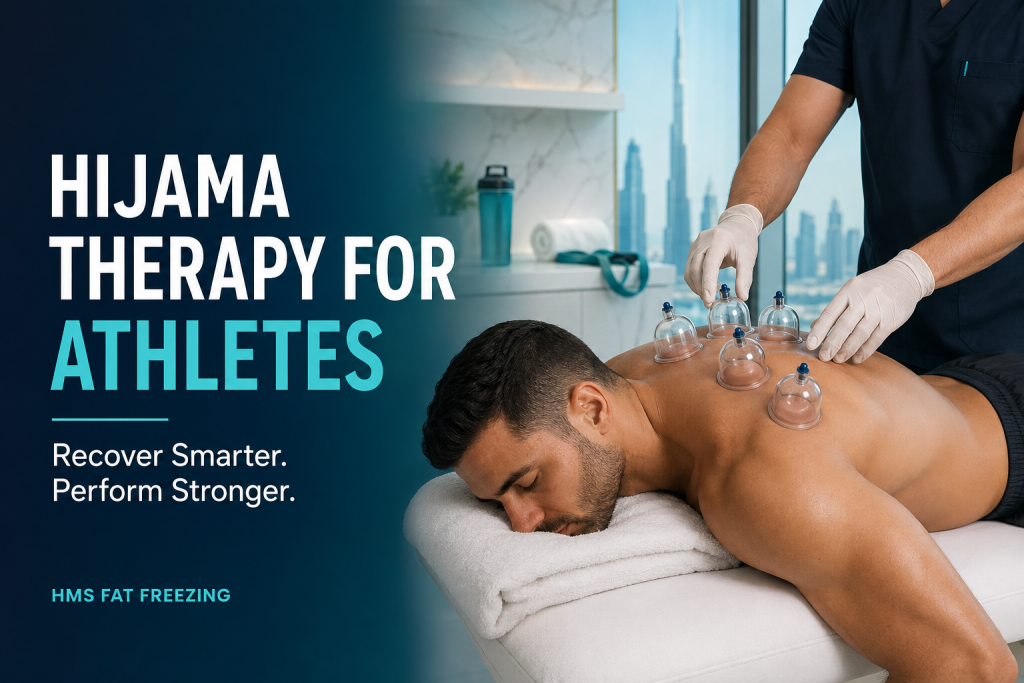
Hijama Therapy for Athletes: Benefits, Recovery, Safety and Timing
Athletic recovery is no longer treated as time left over between training sessions. Competitive athletes and committed recreational players now plan sleep, nutrition, hydration, mobility work and recovery with almost the same attention they give to training.
This search for better recovery has increased interest in Hijama Therapy, especially after the distinctive circular marks of cupping were seen on swimmers, football players, runners and other high-level athletes. Those marks made cupping highly visible, but visibility is not the same as scientific proof.
Some athletes report temporary relief from muscular tightness, improved relaxation or a greater sense of readiness after cupping. Research has identified possible benefits for pain perception and range of motion, but study quality is inconsistent. There is not strong evidence that cupping reliably increases strength, speed, endurance or competitive performance.
At HMS Fat Freezing, Hijama Therapy should be viewed as a complementary recovery option. It does not replace sports medicine, physiotherapy, injury diagnosis, appropriate training loads, sleep or nutrition.
The practical question is therefore not, “Can Hijama make every athlete perform better?” It is, “For an appropriately screened athlete, can it be incorporated safely into a broader recovery programme?”
Contact HMS Fat Freezing for Hijama Therapy
What Is Hijama Therapy?
Hijama is commonly associated with wet cupping. A practitioner creates suction using cups, removes them, makes controlled superficial skin pricks and reapplies suction so that a limited amount of blood is drawn into the cups.
Dry cupping creates suction without puncturing the skin. Both approaches leave temporary circular marks because negative pressure draws the skin and superficial tissue into the cup.
The two treatments are often discussed as though they were identical, but the difference is important for athletes. Wet Hijama Therapy breaks the skin barrier and therefore involves wound hygiene, blood-exposure precautions and a more cautious return to swimming or contact training.
Dry cupping does not involve bleeding, although bruising, tenderness, skin irritation and temporary discomfort can still occur.
Athletes unfamiliar with the procedure can first review HMS Fat Freezing’s complete guide to Hijama cupping for a broader explanation of preparation, procedure, safety and aftercare.
Contact HMS Fat Freezing for Hijama Therapy
Why Athletes Are Interested in Hijama
Training deliberately creates physical stress. Muscles experience loading, energy stores are used, body temperature rises and the nervous system is challenged. Appropriate recovery allows the athlete to adapt to that stress.
Interest in Hijama Therapy often comes from four practical concerns:
- Post-training muscular soreness
- A sensation of tightness or heaviness
- Limited comfortable movement
- Mental difficulty switching from competition to recovery
Cupping creates a different sensation from massage. Massage uses compression and movement, while cupping applies negative pressure that lifts superficial tissue.
Some athletes prefer this pulling sensation, particularly when direct deep-tissue pressure feels uncomfortable. Others choose Hijama because it has cultural or traditional significance.
Neither personal preference nor tradition proves a physiological outcome. However, both can influence whether an athlete finds a recovery session comfortable and worthwhile.
Contact HMS Fat Freezing for Hijama Therapy
What Current Research Says About Cupping for Athletes
The evidence needs to be interpreted without exaggeration.
A systematic review of cupping in amateur and professional athletes reported possible improvements in perceived pain, disability and range of motion. However, outcomes varied substantially, most trials had an unclear or high risk of bias, and none of the included studies reported safety outcomes adequately. PubMed’s record of the systematic review provides further details.
A later analysis of cupping in musculoskeletal and sports rehabilitation described the evidence as low to moderate. Meanwhile, a 2024 umbrella review concluded that available reviews were generally of low methodological quality and found insufficient evidence to recommend cupping confidently for athletic musculoskeletal pain.
The National Center for Complementary and Integrative Health offers a suitably cautious summary: cupping may help reduce pain, but the evidence is not strong, and there is insufficient high-quality research for many other claimed benefits.
This means Hijama Therapy may be considered for subjective comfort or complementary recovery, but an athlete should not assume that it will:
- Increase maximum strength
- Improve sprint speed
- Raise aerobic capacity
- Remove lactic acid
- Eliminate “toxins”
- Heal a torn muscle
- Correct a biomechanical problem
- Prevent overtraining
- Replace rehabilitation
An athlete who feels better after a session may still have a genuine positive experience. The correct interpretation is simply narrower: a temporary improvement in perceived soreness or comfort does not automatically demonstrate tissue healing or improved performance.
Contact HMS Fat Freezing for Hijama Therapy
How Hijama Therapy May Fit into Athletic Recovery
Temporary change in pain perception
Pain and soreness are influenced by tissue state, training load, sleep, stress, expectation and the nervous system. The sensory input created by suction may temporarily change how an athlete perceives a tight or sore area.
That may make normal movement feel more comfortable for some people. It should not be used to hide pain so that an athlete can continue training through an injury.
Pain is information. If discomfort returns with loading, worsens or affects technique, professional assessment is more important than repeatedly reducing the sensation.
Contact HMS Fat Freezing for Hijama Therapy
Short-term movement comfort
Some cupping studies have reported changes in range of motion. An athlete might feel less restricted when moving a shoulder, hip or back after a session.
This does not prove that the treatment lengthened muscle tissue or corrected joint mechanics. A temporary change in comfort may allow easier movement, but lasting mobility usually requires appropriate strength, technique and progressive movement work.
Relaxation and recovery routine
Recovery is partly behavioural. An athlete who schedules a quiet session, lies still and temporarily disconnects from training demands may experience meaningful relaxation.
Hijama Therapy can act as a structured signal that training has ended and recovery has begun. This psychological effect should not be dismissed, but it should also not be mislabelled as detoxification.
Contact HMS Fat Freezing for Hijama Therapy
Temporary local tissue response
Cupping creates a local mechanical effect involving the skin, superficial tissue and small blood vessels. This explains the characteristic marks.
Dark circles do not show that more toxins were extracted. Their colour varies with suction strength, duration, skin characteristics, treatment history and individual vascular response.
Contact HMS Fat Freezing for Hijama Therapy
Hijama Therapy Is Not a Shortcut to Better Performance
Athletes are particularly vulnerable to recovery marketing because even a small performance improvement can seem valuable. That makes it important to distinguish recovery support from performance enhancement.
A runner may feel relaxed after Hijama Therapy, sleep well and complete an enjoyable training session the next day. That personal outcome is worthwhile. It does not prove that Hijama directly improved running economy or aerobic capacity.
Similarly, a weightlifter may experience less perceived shoulder tightness after cupping. If poor overhead mobility comes from technique, joint structure, previous injury or insufficient strength control, cupping will not correct the underlying issue by itself.
Contact HMS Fat Freezing for Hijama Therapy
The foundations of athletic recovery remain:
- Adequate sleep
- Appropriate energy and protein intake
- Regular hydration
- Planned training loads
- Rest or low-intensity recovery
- Sport-specific strength and mobility
- Injury assessment when required
- Psychological recovery
Complementary treatments should sit around these foundations rather than replacing them.
Contact HMS Fat Freezing for Hijama Therapy
Dry Cupping vs Wet Hijama for Athletes
| Feature | Dry cupping | Wet Hijama |
|---|---|---|
| Suction applied | Yes | Yes |
| Skin punctured | No | Yes, superficially |
| Blood removed | No | Small controlled amount |
| Infection-control requirements | Standard skin and equipment hygiene | Higher due to broken skin and blood exposure |
| Common post-treatment effect | Circular marks and tenderness | Circular marks, tenderness and superficial wounds |
| Return-to-swimming considerations | Depends on skin response | Greater caution until treated skin has closed |
| Contact-sport considerations | Marks may be tender | Wounds must be protected; immediate contact may be unsuitable |
| Common reason athletes choose it | Muscle tension, relaxation or mobility comfort | Traditional practice, wellness or complementary recovery |
| Suitable immediately before competition? | Usually not ideal for a first session | Generally requires more careful scheduling |
| Suitable for everyone? | No | No |
Wet treatment is not automatically stronger, more effective or more appropriate. The decision should reflect the athlete’s health, training schedule, sport, skin condition and personal preference.
Contact HMS Fat Freezing for Hijama Therapy
When Should Athletes Schedule Hijama?
Timing deserves more attention than it usually receives.
During a lighter training period
A rest day, recovery day or low-load training block is generally more practical than scheduling a first session immediately before a major workout.
This gives the athlete time to observe skin response, tenderness, energy levels and comfort without pressure to perform.
Not immediately before an important competition
Athletes respond differently. Some feel relaxed; others experience temporary tenderness, light-headedness or fatigue. Visible marks may also matter in sports with uniforms, photography or appearance requirements.
A first Hijama Therapy session should not be treated as an experiment on competition day.
Contact HMS Fat Freezing for Hijama Therapy
Away from high-contact sessions
Rugby, martial arts, wrestling, football and other contact sports create friction, impact and sweat. Wet-cupping sites may be uncomfortable or more vulnerable immediately after treatment.
Athletes should receive individual return-to-training guidance and ensure that broken skin has healed appropriately.
With extra planning for swimmers
Wet Hijama creates superficial wounds. Entering a public pool, sea or shared recovery facility before the skin has closed may increase irritation or contamination concerns.
Swimmers should discuss session timing and wound aftercare with the practitioner rather than scheduling treatment between daily pool sessions without a recovery window.
Around the athlete’s complete calendar
The right timing depends on more than one workout. Consider travel, competition, strength training, massage, physiotherapy, heat exposure and recovery sessions scheduled during the same week.
Contact HMS Fat Freezing for Hijama Therapy
A Practical Example: Planning Hijama During a Training Week
Consider an amateur footballer with the following schedule:
- Monday: strength training
- Tuesday: team practice
- Wednesday: recovery day
- Thursday: high-intensity tactical session
- Friday: light training
- Saturday: match
- Sunday: rest
Scheduling a first wet-cupping session on Friday night could leave insufficient time to assess soreness or skin response before Saturday’s match.
Wednesday may be more practical, provided there is no injury requiring medical assessment and the practitioner considers treatment appropriate. The player can monitor recovery before the next high-intensity session.
The decision changes if the athlete has an active skin problem, takes medication affecting bleeding or reports sharp hamstring pain. In that situation, Hijama Therapy may be unsuitable, and sports-medical assessment becomes the priority.
This illustrates an important principle: good scheduling begins with the athlete’s condition and workload, not with a standard clinic package.
Contact HMS Fat Freezing for Hijama Therapy
Body Areas Commonly Requested by Athletes
Treatment areas should be selected after assessment rather than by copying photographs of professional athletes.
Upper back and shoulders
Swimmers, boxers, tennis players and strength athletes often report tightness around the upper back and shoulder region. However, shoulder pain may also reflect tendon injury, instability or neck involvement.
Lower back
Cyclists, runners, lifters and team-sport athletes may experience lower-back fatigue. Persistent pain, leg weakness, numbness or bowel and bladder changes require medical evaluation—not cupping.
Thighs and calves
Runners and footballers may request cupping around heavily trained lower-body muscles. Suspected strains, severe swelling, unexplained calf pain or symptoms following direct trauma should be assessed before treatment.
Arms and forearms
Climbers, racquet-sport players and combat athletes sometimes seek support for forearm tightness. Pain linked with weakness, loss of grip or nerve symptoms requires further investigation.
Cup placement should avoid wounds, active rashes, infected skin, recent bruising and areas where suction is clinically inappropriate.
Contact HMS Fat Freezing for Hijama Therapy
Pros and Cons of Hijama Therapy for Athletes
Potential advantages
- May provide temporary relief from perceived muscle soreness
- Some athletes report improved relaxation
- Can be customised according to comfort and treatment area
- Offers a non-drug complementary recovery option
- May temporarily improve comfortable movement for certain people
- Can be incorporated into a structured recovery day
- Has cultural and traditional importance for many clients
- Dry and wet approaches provide different options
Limitations and disadvantages
- Evidence for athletic performance enhancement is weak
- Visible marks may last several days or longer
- Wet cupping creates superficial wounds
- Infection is possible if hygiene standards are inadequate
- Treatment may cause tenderness or temporary discomfort
- Athletes may use short-term pain relief to ignore an injury
- It is unsuitable for some health conditions and medications
- Repeated wet cupping may contribute to blood loss or anaemia
- Response varies, so results cannot be guaranteed
Risks and Athlete-Specific Safety Considerations
The NCCIH safety guidance notes possible effects including persistent skin discolouration, scars, burns and infection. Rare serious complications have also been reported. Repeated wet cupping may contribute to anaemia in some circumstances.
Athletes need to consider several additional issues.
Contact HMS Fat Freezing for Hijama Therapy
Blood-thinning medication
Anticoagulants and other medicines or supplements that affect bleeding can alter risk. Athletes must disclose all medications and relevant supplements during screening.
They should not stop prescribed medication simply to qualify for treatment.
Existing sports injuries
Cupping is not a diagnostic test. Applying cups around an injured region does not reveal whether the athlete has a tear, fracture, tendon injury or stress reaction.
Sudden pain, severe weakness, joint instability, major swelling or inability to bear weight requires appropriate assessment.
Contact HMS Fat Freezing for Hijama Therapy
Skin infections and shared facilities
Athletes frequently use shared gyms, mats, changing rooms, pools and showers. Wet-cupping wounds require careful hygiene and protection until healed.
Treatment should not be performed over fungal infections, bacterial skin conditions, open wounds or unexplained rashes.
Dehydration and Dubai’s climate
Training outdoors or in non-air-conditioned environments can increase fluid loss. An athlete arriving dehydrated, overheated or light-headed may not be an appropriate candidate for treatment at that time.
Hydration needs should normally be addressed through regular fluid intake. IV therapy or any medical intervention should not be promoted as a routine substitute for appropriate hydration habits.
Weight-category sports
Athletes cutting weight for boxing, wrestling, mixed martial arts or other categories may already be dehydrated and physiologically stressed. Wet Hijama Therapy during an aggressive weight cut requires particular caution and may be unsuitable.
Contact HMS Fat Freezing for Hijama Therapy
Who Should Avoid Hijama or Seek Medical Clearance?
An athlete should disclose their complete health history. Additional caution or medical clearance may be necessary for people who:
- Take anticoagulants or antiplatelet medication
- Have a bleeding or clotting disorder
- Have anaemia or a history of low haemoglobin
- Have an active infection or fever
- Have open wounds, ulcers or skin disease
- Are recovering from surgery
- Have uncontrolled medical conditions
- Are pregnant
- Frequently faint during blood-related procedures
- Have unexplained severe pain or neurological symptoms
- Are significantly dehydrated
- Have recently experienced a concussion
- Are being investigated for a serious sports injury
A professional practitioner should be willing to postpone or refuse a session when safety is uncertain.
Preparing for a Hijama Session
Share accurate health information
Tell the practitioner about medications, supplements, allergies, previous reactions, recent injuries and medical conditions. “Athletic” does not automatically mean medically suitable.
Avoid arriving immediately after exhaustive exercise
A severely fatigued, overheated or dehydrated athlete may need rest, fluids, cooling or medical attention rather than immediate cupping.
Eat and hydrate normally
Follow individual medical advice, but do not intentionally arrive depleted. Athletes who are fasting or cutting weight should discuss this openly during consultation.
Wear practical clothing
Loose clothing can reduce rubbing against treated areas. Consider where cups will be placed when choosing what to wear home.
Take baseline notes
Record soreness, movement comfort, sleep quality and training load before the session. This creates a more useful comparison than judging success by the darkness of the marks.
Aftercare and Return to Training
Post-treatment decisions depend on whether the athlete received dry cupping or wet Hijama Therapy, the treated area and the individual response.
Keep treated skin clean
Follow the practitioner’s wound-care instructions. Do not repeatedly touch the area with unwashed hands, and avoid harsh products or aggressive scrubbing.
Monitor for infection
Increasing redness, warmth, swelling, worsening pain, pus, red streaking or fever should not be interpreted as a “detox reaction.” These symptoms require medical advice.
Resume exercise gradually
A light walk or normal daily movement may feel comfortable, but intense lifting, sprinting or contact work immediately after treatment can irritate tender areas.
The athlete should base the return on treatment type, skin condition, overall response and professional guidance.
Protect wet-cupping sites
Avoid situations likely to expose fresh sites to friction, sweat, dirty equipment or shared water until the skin has closed and the practitioner’s aftercare criteria have been met.
Do not chase dark marks
Stronger suction does not prove greater benefit. Athletes should not request aggressive treatment merely because dramatic marks look impressive on social media.
For more specific bathing guidance, see HMS Fat Freezing’s article on showering after Hijama.
Hijama Compared with Other Recovery Methods
| Recovery method | Primary approach | Possible role | Main limitation |
|---|---|---|---|
| Hijama or cupping | Negative pressure; wet Hijama also breaks the skin | Perceived soreness, relaxation or complementary recovery | Limited evidence; marks and wet-cupping wound care |
| Sports massage | Manual pressure and tissue manipulation | Relaxation and short-term soreness management | Can cause temporary discomfort; effects vary |
| Active recovery | Low-intensity movement | Maintains movement and supports recovery routine | Must be appropriately dosed |
| Mobility exercises | Controlled movement through available range | Movement confidence and sport-specific mobility | Requires consistent practice |
| Physiotherapy | Assessment and progressive rehabilitation | Injury recovery, strength and movement restoration | Requires correct diagnosis and adherence |
| Cold-water immersion | Controlled cold exposure | May reduce perceived soreness after some activities | Can be uncomfortable and may not suit every training goal |
| Sleep and nutrition | Biological recovery foundations | Adaptation, tissue repair and energy restoration | Require daily consistency |
No recovery tool should be selected simply because it is popular. It should solve a defined problem without disrupting the athlete’s larger training plan.
Expert Recommendations from HMS Fat Freezing
1. Identify the goal before treatment
Is the athlete seeking relaxation, relief from perceived tightness, traditional wellness or support during a lighter training week? A clear goal makes it easier to evaluate whether Hijama Therapy was useful.
2. Treat pain as information
Do not use temporary comfort to justify loading an injured structure. Pain that changes technique, persists or worsens needs appropriate assessment.
3. Schedule conservatively
Avoid trying wet Hijama for the first time immediately before competition, travel, swimming or a demanding contact session.
4. Choose hygiene over dramatic treatment
Single-use equipment, appropriate skin preparation, controlled technique and safe blood-contaminated waste handling are essential for wet cupping.
5. Record the athlete’s response
Note soreness, movement, sleep and training readiness during the following days. This helps distinguish a repeatable personal benefit from a one-time impression.
6. Do not measure results by blood volume
More blood does not mean more toxins were removed or that recovery will be faster. Wet Hijama Therapy should remain controlled rather than aggressive.
7. Keep the recovery hierarchy clear
Sleep, nutrition, hydration, load management and rehabilitation have priority. Hijama may complement these foundations when suitable.
HMS Fat Freezing’s guide to Hijama for stress and muscle recovery offers further information for clients considering treatment as part of a broader wellness routine.
Helpful HMS Recovery and Wellness Guides
Athletes can use these resources to plan treatment responsibly:
- Read the benefits and limitations of Hijama treatment before setting expectations.
- Review the complete Hijama cupping safety guide for preparation and contraindications.
- Learn about showering and skin care after Hijama before scheduling around training.
- Compare Endosphere treatment and traditional massage when exploring non-Hijama recovery options.
Evidence-Based Resources for Athletes
For independent information on cupping and sports recovery, consult:
- NCCIH: Cupping—research and safety
- PubMed: Cupping in amateur and professional athletes
- PubMed: Evidence and adverse effects in sports rehabilitation
- NCBI Bookshelf: Clinical overview of cupping therapy
Research findings may change as larger, better-controlled studies become available.
Frequently Asked Questions
1. Does Hijama Therapy improve athletic performance?
There is insufficient high-quality evidence that it reliably improves strength, speed, endurance or competitive performance. Some athletes report temporary changes in soreness, movement comfort or relaxation, but those outcomes should not be interpreted as guaranteed performance enhancement.
2. Is Hijama good for post-workout muscle soreness?
It may help some athletes feel temporarily less sore, but research quality is inconsistent. Severe or unusual soreness, major swelling, weakness or dark urine after strenuous exercise requires medical attention.
3. How soon can I train after Hijama?
There is no universal time that suits every athlete. It depends on dry versus wet cupping, treatment location, skin condition, training type and individual response. Wet treatment generally requires more caution because the skin has been punctured.
4. Can I receive Hijama before a competition?
A first session immediately before competition is not recommended because tenderness, marks, fatigue or light-headedness may occur. If an athlete already uses the treatment, timing should still be planned with the practitioner and wider performance team.
5. Is dry cupping or wet Hijama better for athletes?
Neither is universally better. Dry cupping avoids blood removal and superficial wounds. Wet Hijama may be chosen for traditional or personal reasons but involves additional infection-control and aftercare considerations.
6. Can Hijama heal a sports injury?
It should not be presented as a treatment that repairs fractures, ligament tears, tendon ruptures or muscle tears. Injuries require diagnosis and appropriate rehabilitation. Cupping may sometimes be used as a complementary comfort measure if the healthcare team considers it suitable.
7. Why do athletes have dark circles after cupping?
Suction affects superficial tissue and small blood vessels, creating temporary discolouration similar to bruising. Darker marks do not prove that an athlete had more toxins or received a more effective treatment.
8. Can swimmers undergo wet Hijama?
They can be assessed for suitability, but timing requires care. Fresh superficial wounds should not be exposed prematurely to pools, sea water or shared recovery facilities. Follow individual wound-healing and practitioner guidance.
9. Can athletes on blood thinners receive Hijama?
Wet cupping may be unsuitable because it involves bleeding. Athletes taking anticoagulants or other medicines that affect bleeding need medical advice and must disclose their medication before treatment.
10. How often should an athlete have Hijama Therapy?
There is no evidence-based universal schedule. Frequency should depend on the athlete’s goal, skin recovery, response, health, training calendar and practitioner assessment. More frequent treatment does not automatically create better results.
Conclusion
Hijama Therapy can have a place in athletic recovery, but its role needs to be defined honestly. It may help some athletes feel more relaxed, less sore or temporarily more comfortable during movement. Current evidence does not support treating it as a guaranteed way to increase performance, heal injuries or remove toxins.
The most useful approach is individual and measurable. Begin with proper screening, schedule the session away from critical training or competition, follow hygiene guidance and observe how the body responds. If the perceived benefit is repeatable and the treatment does not interfere with training, it may remain one component of a broader recovery plan.
An athlete’s strongest recovery tools are still consistent sleep, sufficient nutrition, hydration, intelligent programming and appropriate rehabilitation. Hijama Therapy should complement those practices rather than compete with them.
Contact HMS Fat Freezing
For an individual consultation and further information about Hijama for athletic recovery, contact:
HMS Fat Freezing
Address: HAMSAH BUILDING, OFFICE 407 & 408, BLOCK-A, Business Center – beside ANSAR GALLERY – Dubai
Phone: +971 4 583 2989
Email: info@hmsfatfreezing.com
Website: https://hmsfatfreezing.com/
Medical disclaimer: This article is for general education only. It does not replace diagnosis, injury assessment, treatment or personalised advice from a qualified healthcare professional.