
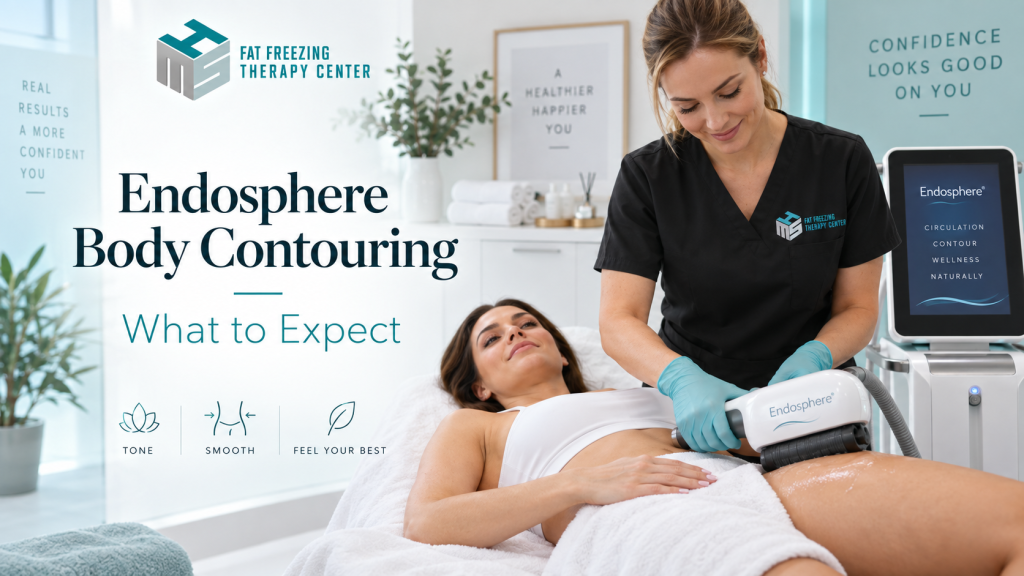
Endosphere Body Contouring: What to Expect
Body contouring has changed considerably over the last decade. People who once assumed improving body contours meant surgery, anaesthesia or significant recovery now have access to a growing range of non-invasive technologies.
One option receiving increasing attention is Endosphere, a treatment based on controlled compressive microvibration. Instead of freezing tissue, delivering injections or creating surgical incisions, the treatment uses a specialised applicator that produces rhythmic mechanical pressure across the treatment area.
At HMS Fat Freezing in Dubai, Endosphere Treatment is offered as a non-invasive body treatment designed around individual body-contouring and skin-texture goals. HMS describes sessions as typically taking approximately 30–60 minutes, depending on the areas being treated.
But what does a session actually feel like? Is the treatment designed to remove fat, improve cellulite, tighten skin or do all three? How many appointments might you need, and when should you expect to notice a difference?
This guide explains what to realistically expect from Endosphere body contouring—from your initial consultation through the treatment itself, aftercare and longer-term expectations.
What Is Endosphere Body Contouring?
Endosphere is a non-invasive mechanical treatment that uses compressive microvibration. A handheld applicator containing rotating elements moves across the skin, creating repeated rhythmic pressure and vibration.
The technique is primarily associated with goals such as:
- improving the visible texture of cellulite-prone skin;
- supporting smoother and firmer-looking skin;
- improving the appearance of selected body contours;
- providing a mechanical massage effect;
- supporting local circulation; and
- addressing areas where fluid-related puffiness may affect appearance.
It is important, however, to separate body contouring from weight loss.
The U.S. Food and Drug Administration explains that non-invasive body-contouring treatments are intended to alter the appearance or circumference of specific body areas rather than treat obesity or provide the health benefits associated with weight loss.
That distinction matters when considering Endosphere. Someone looking for smoother thigh texture is seeking a very different result from someone hoping to lose 15 kilograms.
The best treatment plans begin by defining that difference.
How Does Endosphere Work?
The basic principle behind Endosphere treatment is mechanical rather than surgical or injectable.
During the procedure, the applicator moves across targeted areas while delivering repeated compression and vibration. This creates a deep, rhythmic massage sensation.
Published research into compressive microvibration has examined potential changes in skin and subcutaneous tissue. One prospective study involved 27 women aged 40–69 with mild-to-moderate cellulite who completed 12 Endospheres sessions. Researchers reported changes in skin ultrasound measurements and body circumferences that persisted at the two-month follow-up. However, the study was small, single-centre and non-randomised, so the findings should be interpreted as promising rather than definitive proof that every patient will experience the same results.
This is a useful example of why realistic expectations matter in aesthetic medicine.
Endosphere and Cellulite
One of the main reasons people investigate this treatment is cellulite.
Cellulite is not simply “excess fat.” Mayo Clinic explains that the appearance develops when underlying fat pushes upward while fibrous connective cords pull the skin downward, producing characteristic dimpling. Genetics, hormones, skin structure, ageing, muscle tone and body composition can all influence how noticeable it becomes.
That also explains why very slim or physically active people may have cellulite.
Endosphere therefore should not be viewed as a conventional fat-loss procedure. Its mechanical action is more closely aligned with improving the appearance and texture of cellulite-prone tissue.
For people whose main concern is cellulite, HMS also offers VelaShape III body contouring, which uses a different combination of technologies. The best choice depends on whether your primary concern is cellulite, skin texture, localised fat or muscle definition.
What Happens Before an Endosphere Treatment?
A professional treatment should begin before the applicator touches your skin.
1. Consultation
Your first step should be a consultation to discuss the body areas bothering you and what you expect from treatment.
Be specific.
Instead of saying, “I want to become slimmer,” explain whether you are concerned about:
- thigh dimpling;
- uneven skin texture;
- lower-body puffiness;
- abdominal skin appearance;
- buttock contour;
- skin firmness; or
- a combination of concerns.
This allows the practitioner to determine whether Endosphere matches the problem you actually want to improve.
2. Medical and Treatment History
Disclose relevant health conditions, medications, recent procedures and previous aesthetic treatments.
According to HMS Fat Freezing’s current treatment guidance, Endosphere may not be appropriate during pregnancy or for people with active infections, inflammation, open wounds, certain blood-clotting conditions or some circulatory concerns. HMS also advises clients to disclose recent surgery, implants and medications during consultation.
Aesthetic treatments should never be approached as if contraindications do not matter simply because no surgery is involved.
3. Treatment-Area Assessment
The practitioner can then examine the targeted areas and develop an appropriate treatment plan.
For example, two people may both request thigh treatment.
One may primarily have visible cellulite and relatively firm tissue. The other may have softer tissue, fluid-related puffiness and skin laxity. Even though the treatment area is identical, the treatment priorities may differ.
What Does an Endosphere Session Feel Like?
This is one of the most common questions.
Most clients should expect a firm, repetitive, rolling massage sensation as the applicator travels across the skin.
HMS describes the treatment as generally well tolerated and similar to a firm rhythmic massage. Treatment intensity can be adjusted according to individual comfort.
You should feel mechanical pressure, but treatment does not need to become a test of pain tolerance.
Areas with more tenderness or tissue sensitivity may feel noticeably different from firmer areas.
If something becomes painful rather than simply intense, tell the practitioner immediately.
How Long Does Treatment Take?
According to HMS Fat Freezing, a focused Endosphere session may take approximately 30 minutes, while treating larger areas or multiple areas may require around 45–60 minutes.
That makes it practical for people who want body-contouring procedures without substantial downtime.
A client might, for example, arrange a treatment after work and resume a normal evening rather than having to plan several recovery days.
Which Areas Can Be Treated?
Treatment suitability must be determined individually, but body-focused protocols are commonly considered for areas such as:
- thighs;
- buttocks;
- abdomen;
- hips;
- waist;
- legs; and
- selected areas where uneven skin texture is noticeable.
Choosing the right area matters more than attempting to treat as much of the body as possible.
If cellulite on the outer thighs is the main concern, concentrating treatment there may make more sense than dividing a session across the thighs, abdomen, arms and buttocks simply to cover more territory.
What Should You Expect Immediately After Treatment?
One practical advantage of Endosphere is that the procedure is non-invasive.
There are no surgical incisions and typically no prolonged recovery period.
HMS states that downtime is generally minimal. Temporary reactions can nevertheless include:
- redness;
- sensitivity;
- tenderness; or
- mild bruising.
These effects are usually associated with the mechanical stimulation of the tissue, but individual responses vary.
You should follow any personalised aftercare instructions provided at your appointment.
Can You Return to Work?
Many people can resume routine daily activities soon after treatment.
However, treatment experience varies. Someone who develops tenderness after a stronger session may prefer to avoid unusually strenuous activity involving the same area until comfortable.
When Will You See Endosphere Results?
This is where realistic expectations become especially important.
Some people may notice that the treated area feels temporarily lighter or that the skin appears smoother relatively early. More meaningful changes in cellulite appearance and skin texture, however, are generally assessed across a course of sessions, not simply several hours after one appointment.
The published 27-participant Endospheres study assessed outcomes after 12 sessions and again two months after treatment rather than presenting a single appointment as a permanent solution.
Individual results vary according to factors including:
- baseline cellulite severity;
- skin quality;
- age;
- body composition;
- treatment area;
- number and consistency of sessions;
- lifestyle;
- hormonal factors; and
- individual tissue characteristics.
Before-and-after photographs taken under similar lighting, camera angle and posture can be more useful than relying on memory.
How Many Endosphere Sessions Do You Need?
There is no responsible answer that applies to everyone.
HMS notes that the number of treatments depends on the concern, treatment area and individual response. Some clients select a course followed by occasional maintenance.
A proper recommendation should therefore be made after assessment.
When evaluating progress, ask whether your goal is improving cellulite visibility, smoothing skin texture or changing overall contour. These are different outcomes and may progress differently.
Endosphere vs Other Body-Contouring Treatments
No body-contouring technology is automatically the best option for every concern.
| Treatment | Main Approach | Often Considered For | Downtime |
|---|---|---|---|
| Endosphere | Compressive microvibration | Cellulite appearance, skin texture, contour support | Usually minimal |
| Fat Freezing | Controlled cooling | Selected localised fat pockets | Usually limited |
| VelaShape III | RF, infrared, vacuum and mechanical massage | Cellulite and smoother-looking contours | Generally limited |
| Bodysculpting | Electromagnetic muscle stimulation | Muscle toning and definition | Usually minimal |
| Surgical Liposuction | Surgical fat removal | More significant fat removal | Considerable recovery compared with non-invasive options |
Someone with a pinchable pocket of localised abdominal fat may therefore be more suited to Fat Freezing at HMS Fat Freezing than Endosphere alone.
Meanwhile, someone primarily interested in improved muscle definition may want to discuss Bodysculpting treatment instead.
The treatment should follow the problem—not the other way around.
Pros and Cons of Endosphere
Advantages
Non-invasive treatment
There are no surgical cuts or injections involved.
Minimal downtime
Most people can continue normal daily activities relatively quickly.
Adjustable treatment intensity
Pressure can be modified according to comfort and the area being treated.
Useful for skin-texture concerns
The treatment may appeal particularly to people bothered by cellulite and uneven-looking skin.
Can fit into a broader body-contouring plan
Different technologies can address different concerns when appropriately selected.
Limitations
Not a weight-loss treatment
Endosphere should not be marketed as a substitute for healthy weight management.
Multiple sessions may be recommended
One appointment should not automatically be expected to produce maximum results.
Results vary
Age, skin condition, cellulite severity and other individual factors influence outcomes.
Maintenance may be useful
Aesthetic improvements may change over time.
Research is still developing
Existing Endospheres-specific clinical evidence includes relatively small studies, so stronger large-scale independent trials would provide greater certainty.
What Does Research Say About Cellulite Treatments?
Consumers often encounter dramatic before-and-after advertising without being told that cellulite is biologically complex.
The American Academy of Dermatology notes that different cellulite treatments have very different levels of evidence and durability. Some procedures require multiple sessions, and improvements from certain mechanical or energy-based treatments may be temporary.
Mayo Clinic similarly states that treatments intended to improve cellulite do not necessarily remove excess fat, while fat-removal procedures do not automatically correct cellulite.
That distinction is particularly relevant when evaluating Endosphere.
The most meaningful question is not simply:
“Does it make me lose fat?”
A better question is:
“Does this treatment match the structural and cosmetic concern I want to improve?”
Expert Recommendations From HMS Fat Freezing
A personalised approach is more useful than simply booking the same protocol a friend received.
HMS Fat Freezing’s current treatment approach emphasises consultation, customised treatment planning and selecting non-surgical treatments according to individual goals.
1. Define One Primary Goal
Before beginning Endosphere, decide what success means.
Is your biggest concern thigh cellulite? Skin texture around the hips? Overall contour?
A specific goal makes progress easier to evaluate.
2. Do Not Judge Your Results Only by Weight
The number on a weighing scale is a poor measure of cellulite or skin-texture improvement.
Body weight may remain nearly identical while the appearance of a treatment area changes.
3. Take Consistent Progress Photos
Use similar:
- lighting;
- clothing;
- distance;
- camera position; and
- body posture.
Without standardisation, photographs can easily exaggerate or hide changes.
4. Be Consistent With the Recommended Course
If a personalised course is recommended, irregular appointments can make results more difficult to assess.
5. Tell Your Practitioner About Changes in Your Health
New medication, surgery, pregnancy or another medical treatment may affect whether continuing your current aesthetic treatment plan is appropriate.
6. Maintain Realistic Expectations
Endosphere is designed as a non-invasive aesthetic treatment. It cannot reproduce the scale of tissue removal possible with surgery.
For the right person, a gradual improvement in skin texture or cellulite visibility may be exactly the desired outcome.
Who Is a Good Candidate for Endosphere?
A potential candidate may be someone who:
- wants a non-invasive option;
- is mainly concerned about cellulite or uneven-looking body skin;
- understands that treatment is not designed for major weight loss;
- prefers minimal interruption to normal activities;
- is willing to complete a recommended treatment course; and
- has realistic expectations about gradual cosmetic improvement.
A consultation remains necessary because suitability depends on medical history and the treatment area.
When Endosphere May Not Be the Right Choice
Endosphere should not be automatically chosen simply because it is non-surgical.
Speak with an appropriately qualified healthcare professional before cosmetic procedures if you have relevant medical conditions or are uncertain about treatment safety.
HMS specifically identifies pregnancy, active infection or inflammation, open wounds, blood-clotting conditions and certain circulatory concerns among situations that require avoiding treatment or careful assessment.
The FDA likewise recommends discussing the benefits and risks of aesthetic devices with a healthcare provider and understanding the provider’s training and experience before undergoing treatment.
Frequently Asked Questions About Endosphere
1. Is Endosphere painful?
Endosphere is generally described as a firm rhythmic massage rather than a painful procedure. Pressure can be adjusted according to individual comfort. Certain areas may naturally feel more sensitive. Tell your practitioner immediately if the sensation becomes painful or excessively uncomfortable.
2. Is Endosphere good for cellulite?
Reducing the visible appearance of cellulite is one of the main reasons people consider the treatment. Small clinical studies of compressive microvibration have reported improvements in skin characteristics following a treatment course, although larger independent studies would strengthen the evidence. Cellulite cannot be guaranteed to disappear completely.
3. Does Endosphere help you lose weight?
No. It should not be treated as a weight-loss programme. The FDA distinguishes non-invasive body contouring from medical weight loss and notes that contouring treatments do not treat obesity or provide the health benefits associated with losing excess weight.
4. How many Endosphere sessions are usually required?
The number depends on your concern, treatment area, skin condition and response. A practitioner may recommend a course rather than a single session. HMS states that some clients also choose periodic maintenance following their initial course.
5. How soon can I see Endosphere results?
Some people notice temporary changes in how the skin looks or feels relatively quickly, while cellulite and contour improvements should usually be evaluated across several sessions. Results and timing differ substantially between clients.
6. How long is an Endosphere appointment?
A focused treatment can take approximately 30 minutes, while treating larger or multiple body areas may take roughly 45–60 minutes according to HMS Fat Freezing’s current service information.
7. Does Endosphere have downtime?
Downtime is normally minimal. Temporary redness, tenderness, sensitivity or mild bruising can occur. Follow the aftercare instructions provided by your practitioner and report anything unexpected or persistent.
8. Which is better: Endosphere or fat freezing?
They address different priorities. Fat freezing is designed to target selected pockets of subcutaneous fat with controlled cooling. Endosphere is more closely associated with mechanical tissue stimulation, cellulite appearance and skin texture. The appropriate option depends on whether your concern is localised fat, cellulite, skin quality or a combination.
9. Can Endosphere permanently remove cellulite?
It is more realistic to discuss improvement in appearance rather than permanent removal. Cellulite is influenced by connective tissue anatomy, fat distribution, hormones, genetics, ageing and skin quality. Even highly fit individuals can have cellulite. Maintenance may therefore be relevant for some people.
Useful Evidence and Safety Resources
Anyone researching non-surgical body contouring should compare marketing information with independent medical resources.
The U.S. FDA guide to non-invasive body contouring provides useful guidance on expected outcomes, limitations and potential risks.
The American Academy of Dermatology guide to cellulite treatments explains how evidence differs across cellulite procedures.
The Mayo Clinic overview of cellulite provides useful information about why cellulite develops and why body weight is only one factor affecting its appearance.
For treatment-specific research, the published study of compressive microvibration and skin changes provides clinical data while also highlighting why larger controlled trials remain valuable.
Conclusion: Is Endosphere Body Contouring Worth Considering?
Endosphere occupies an interesting position within modern non-surgical body contouring because it focuses on controlled mechanical stimulation rather than injections, surgical fat removal or tissue freezing.
For someone primarily concerned about cellulite, uneven-looking skin or improving the appearance of selected body areas, it may be worth discussing during a professional consultation.
The key is knowing what the treatment can—and cannot—realistically accomplish.
Endosphere is not a substitute for weight management, and it should not be sold as an instant transformation. Results vary, several treatments may be recommended, and maintenance may sometimes form part of the long-term plan.
At HMS Fat Freezing, treatment planning can begin with an assessment of your body-contouring goals, medical history and areas of concern. From there, the team can determine whether Endosphere or another body-contouring option better matches what you want to achieve.
For clients who value a non-invasive approach, minimal downtime and gradual improvements in smoother-looking body skin, Endosphere may provide a practical addition to a personalised aesthetic treatment plan.
Contact HMS Fat Freezing Dubai
HMS Fat Freezing
HAMSAH BUILDING, OFFICE 407 & 408, BLOCK-A
Business Center – Beside ANSAR GALLERY
Dubai, United Arab Emirates
Phone: +971 4 583 2989
Email: info@hmsfatfreezing.com
Contact the HMS Fat Freezing team to arrange a personalised consultation and discuss whether Endosphere body contouring is appropriate for your treatment goals.